


Hi Giulia! Firstly, can you introduce yourself and your work?
Hello! I’m Giulia, a published children’s book illustrator, mixed media artist and educator. I was born and raised in Vicenza (Italy) and moved to the UK in 2015. I’m currently studying at the prestigious MA in Children’s Book Illustration at ARU, Cambridge.
I am also an established artist facilitator and educator for major museums across the country. I have produced and designed learning resources, interactive, STEM, and art workshops for museums, institutions, schools and care homes across the country. My work also includes illustrated editorial commissions, non-fiction zines and exhibitions.
My practice embraces the beauty of wildlife, flora and fauna, exploring the complex relationships between humanity, the natural world, and our shared ecosystems. I love experimenting with different tools and marks, when using granulated watercolours, liquid charcoals, inks, gouaches and pastels, along with combining collage and digital techniques. I like to take a sketchbook everywhere I go, to capture what I see. It’s an essential part of any artist’s work and life!
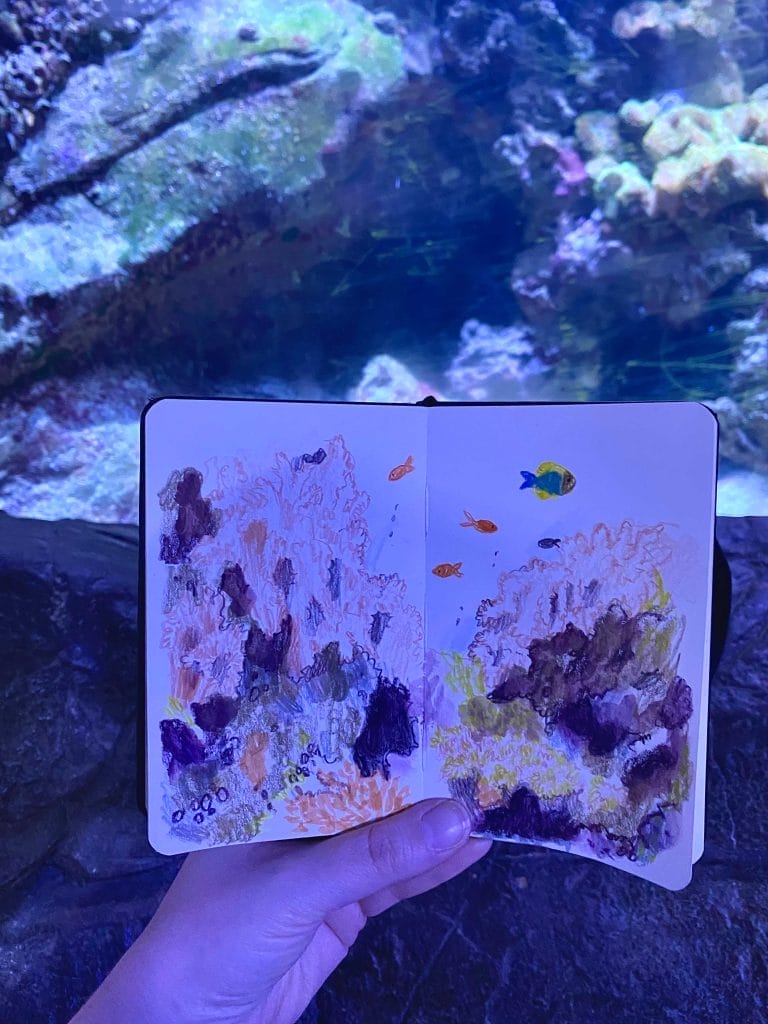
Giulia’s sketchbook in the Horniman Aquarium
How did you come to work with the Horniman?
My collaboration with the Horniman started back at the end of 2022, first to design and facilitate two workshops for the “Museum Clubs”, a 10-week after-school club, for children from disadvantaged backgrounds, where we created a climate pledge board, posters, and signage to encourage school groups, who regularly visit the museum’s Education Centre.
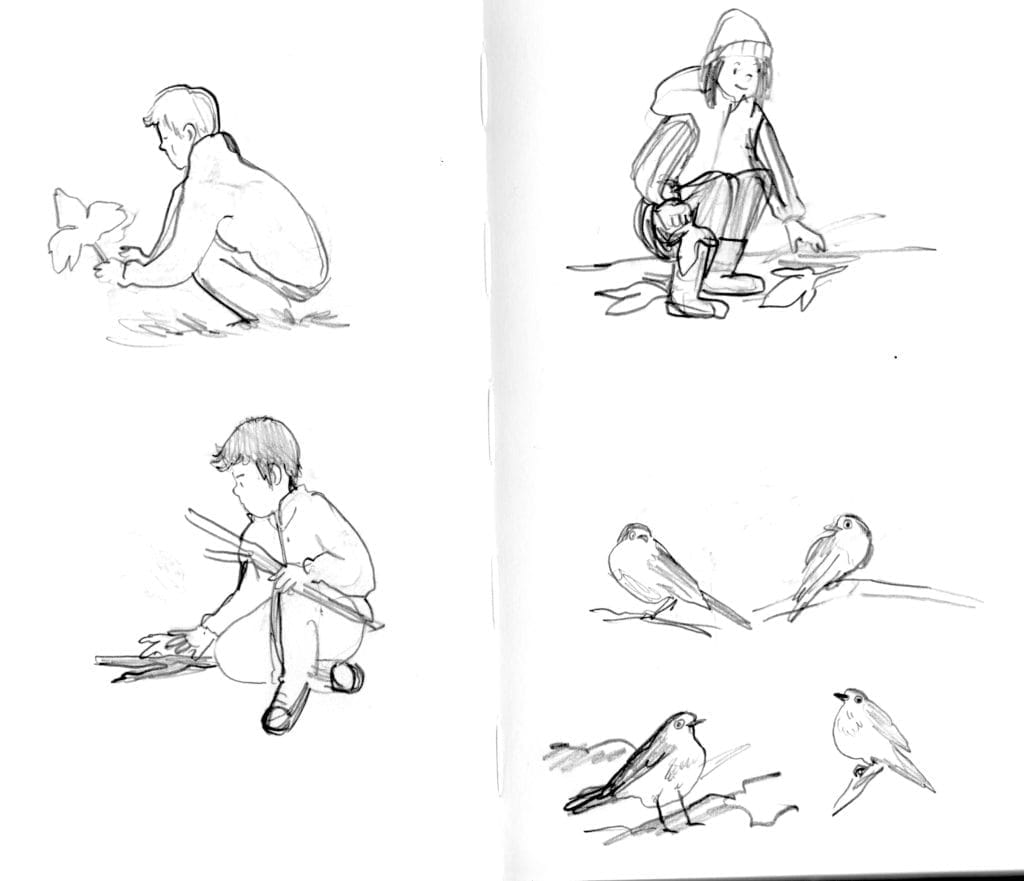
Giulia’s sketches in preparation for learning resources
Followed up in 2023 as artist in residence as part of The Wild Escape, a major new project led by Art Fund uniting hundreds of museums with schools and families in a celebration of UK wildlife and creativity.
Some of the other brilliant projects I was involved in included designing and illustrating two interactive murals for the recent exhibition The Robot Zoo, as well as creating and illustrating assets for the brand-new outdoor learning resources.
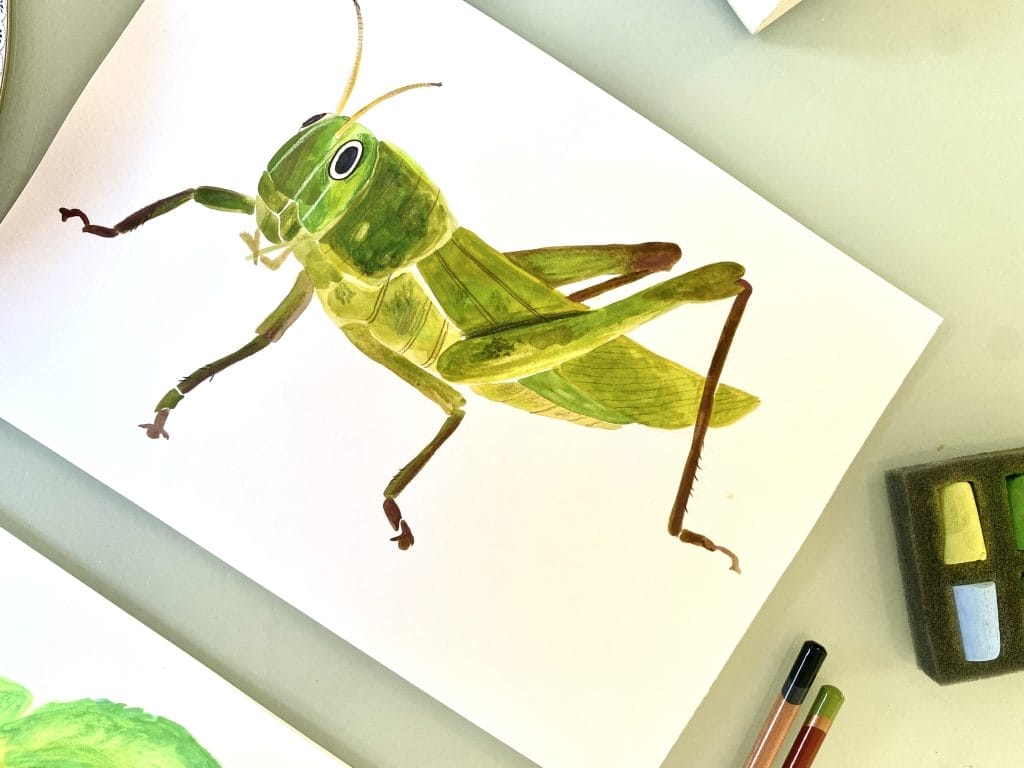
Giulia’s illustration of a grasshopper for The Robot Zoo
What was your approach when designing/coming up with ideas for Creative Creatures Play?
Due to the size of the commission and keeping a consistent visual language across the projects, I combined traditional and digital techniques to create all the final illustrations.
However, when working with digital techniques, as a traditional artist at heart, I always feel the need to start my project in a sketchbook, as the tangible feel of a pencil creating marks on paper feels more natural to me.
One of the things I like to do when working digital is keeping some of the traditional textures and natural patterns, which I prefer to achieve by using, where possible, pencils, granulated watercolours, paper collages and pastels, rather than using digital brushes.
In terms of references for my illustrations, along outsourcing online (mainly through videos and documentaries), I own a vast collection of nature non-fiction books, which helps me to get an idea of the specific animal/plant environment and habits.
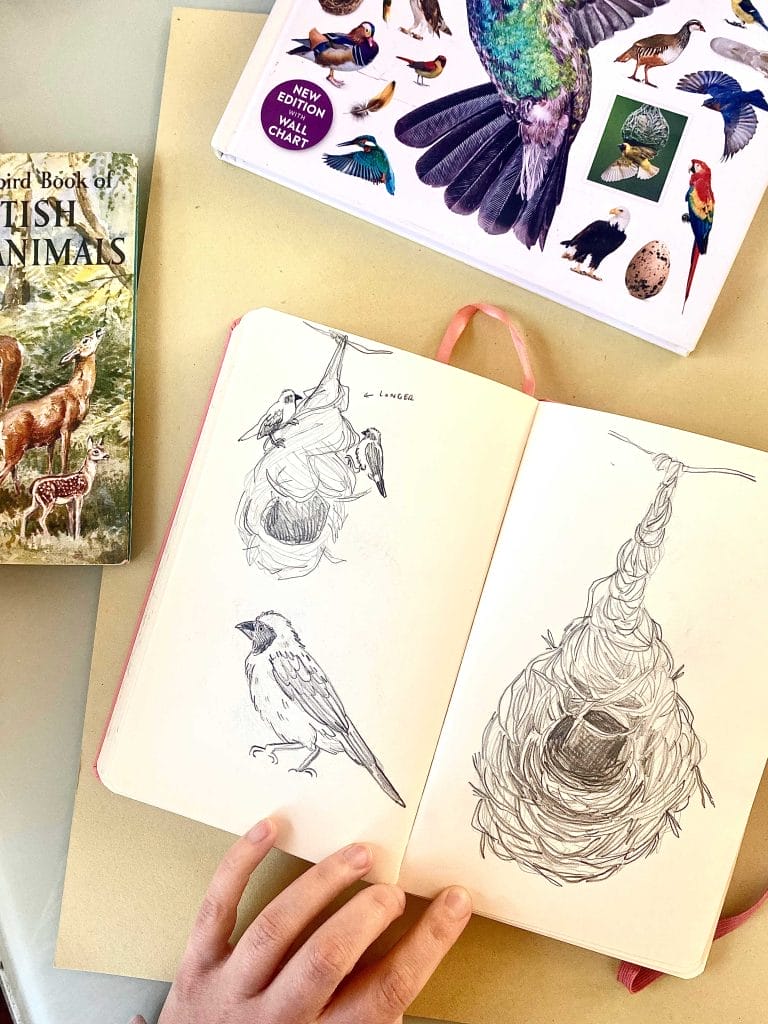
Giulia’s bird illustrations based on studies from books
How does working with museums differ from working with other kinds of work?
For much of my career, I have collaborated within the museum sector. I’ve always considered them as public, free, accessible libraries of knowledge, where there is always something new to discover and to learn about.
Having your work in a museum feels more meaningful and serving a purpose. Rather than just being an object on display, it’s about connection, and bringing back a sense of curiosity and thirst to learn that only a few spaces can achieve. It can create discussion, thinking and new ways of interpreting the world around us, as either art, culture, nature, or more.
IMAGE
A lot of your work focuses on the natural world. Are there any bits of nature that you especially love to draw or that inspire you?
I have been obsessed with the natural world since a very young age. I was raised in the Italian countryside, immersed in nature, particularly while visiting my dad’s stonemason workshop.
The workshop holds special memories as I spent years playing in the fields that surround the building, along with pretending to be a very young Mary Anning, discovering and unveiling the fossils hidden inside the giant stone blocks.
The workshop is close to a small nature reserve, where wildlife thrives, besides being one step from a busy city centre and industrial factories. Over there, you can still spot rare fireflies, barn and tawny owls and hedgehogs, cuckoos, blackcaps, goldfinches, collared-doves, herons, serins and swifts populate the tall Poplar trees, while toads and frogs perform their serenades.
Nowadays, I live on the south coast of England, after living in London for eight years. I find the local flora and fauna equally inspiring; from the seals and oystercatchers visiting the harbour, the pebbles and wildflowers that scatter the beach as foxes play
in the morning, the starling murmuration flying above me during the evenings, to the hedgehogs finding shelter in my garden, and the local wood pigeons, friendly and highly intelligent ravens, and plenty of birds like the house sparrows.
What’s next for you?
I’m about to start working on a new book. I can’t say much more than that until it’s announced officially, but you can follow me on social media, as I’m sure once I start, there will be lots of exciting updates.
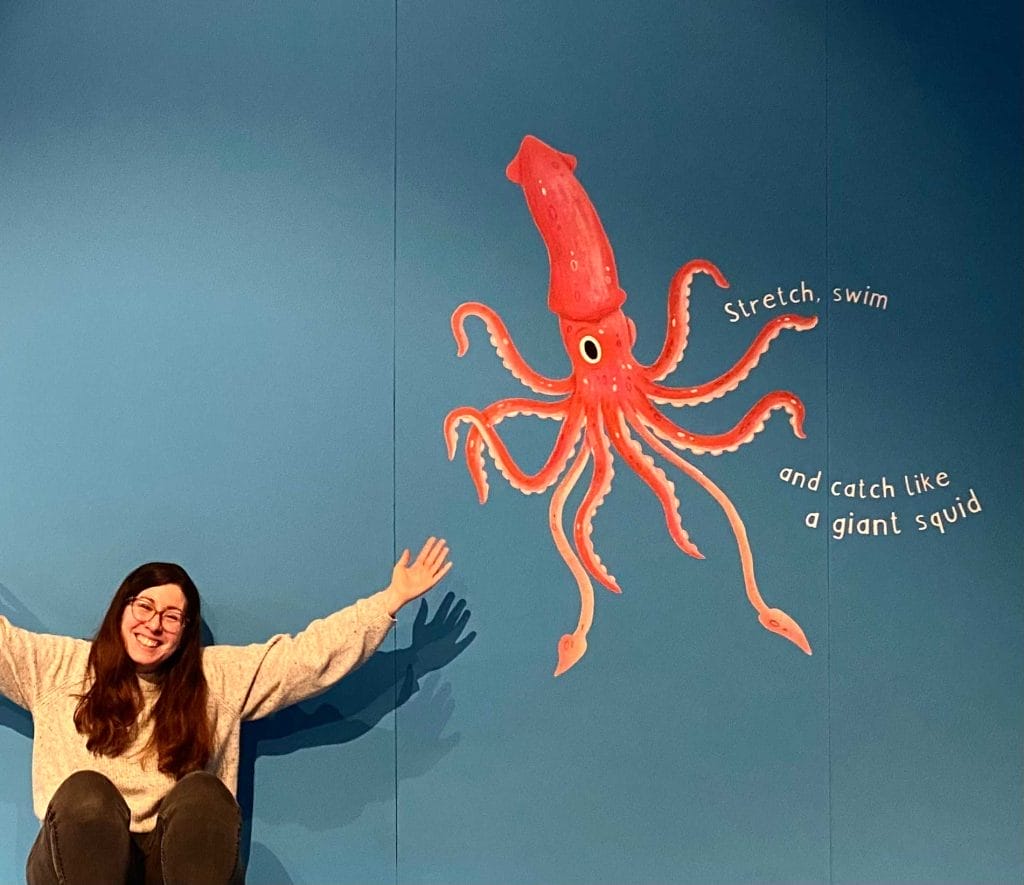
Giulia with her illustration in Creative Creatures Play