Read this blog in Egyptian Arabic
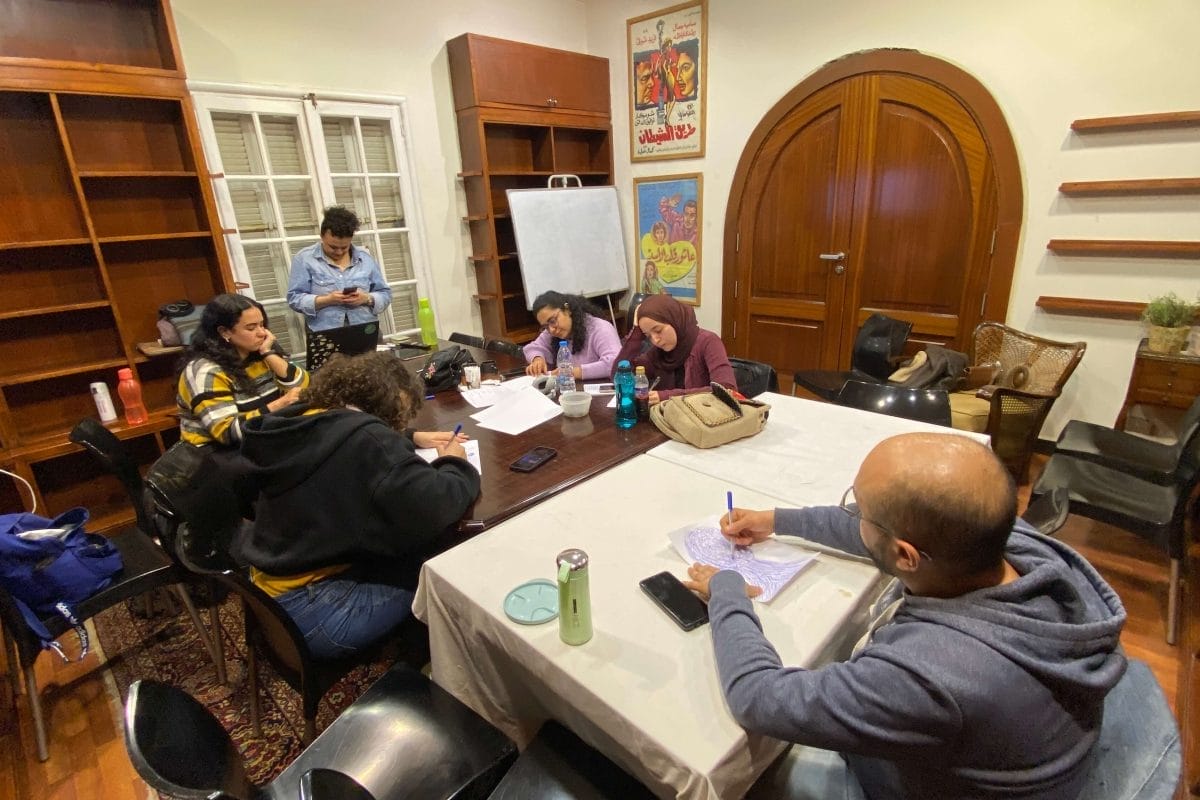
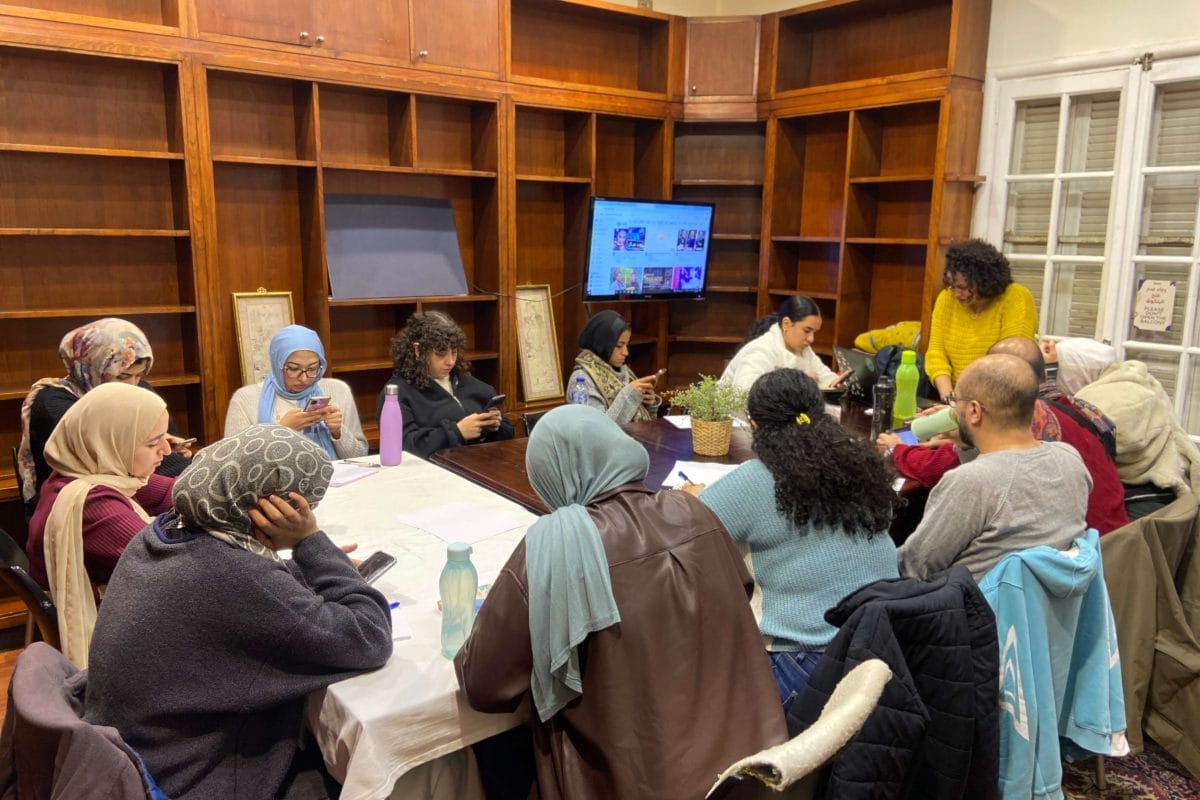
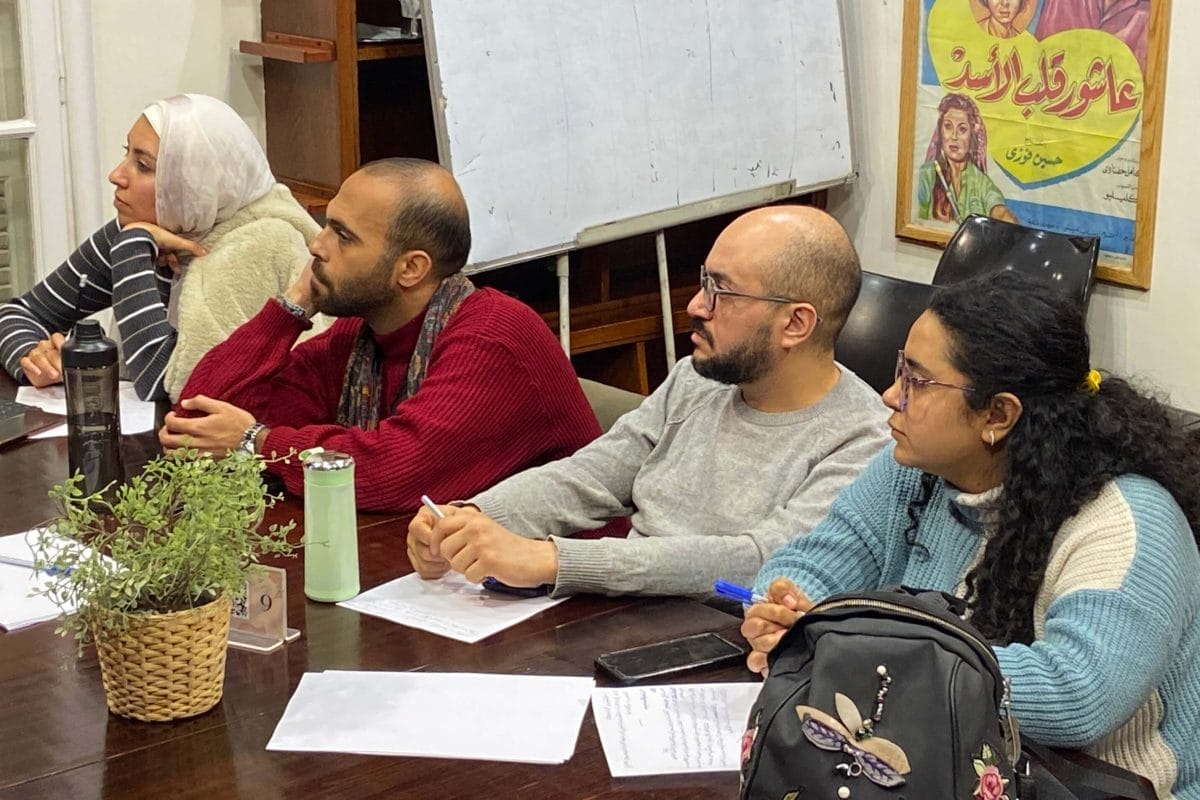
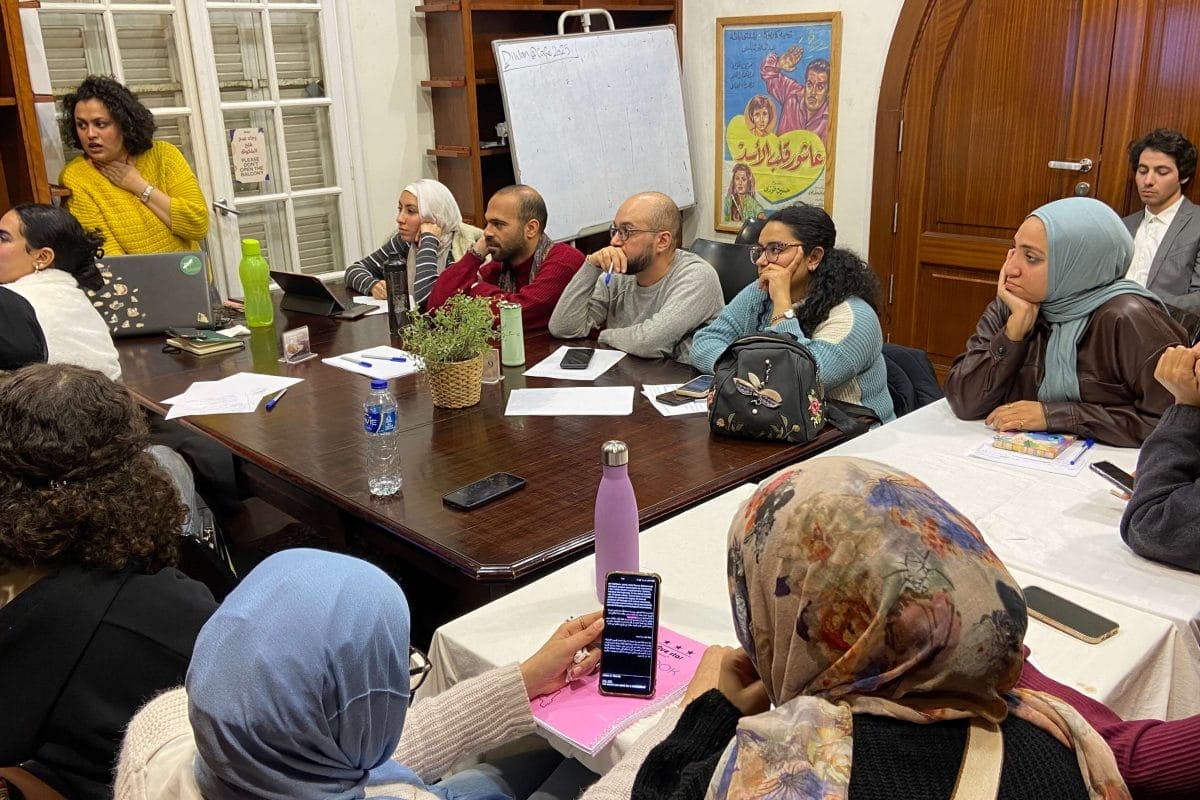
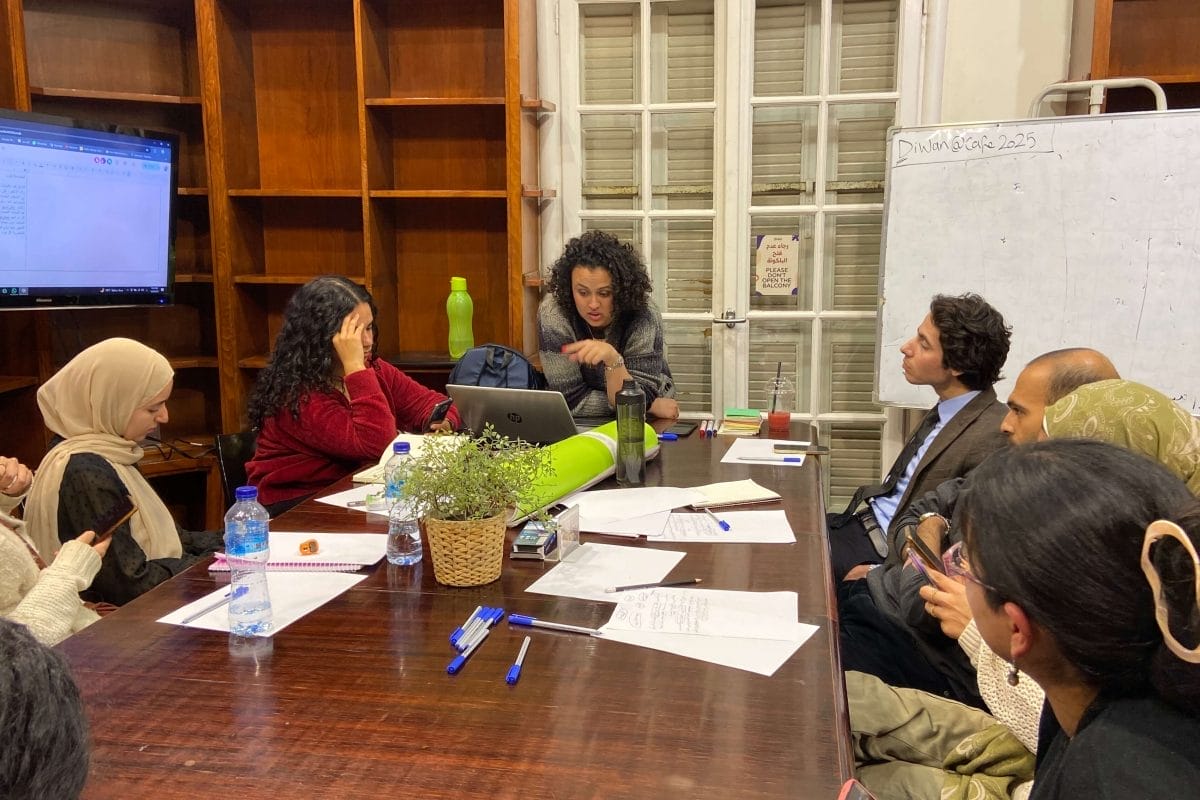
17 Egyptians joined the three day workshop, where my role was to facilitate and guide the participants through the process of translating from English to colloquial Egyptian Arabic. I also supervised their work and edited the texts before publication at the exhibition’s opening. These translations, along with images of some of the featured heritage and women, are currently published in a zine and distributed in both Cairo and London.
The participants translated the labels and interpretation texts of the display, and every part of this experience was unique and meaningful.
From the very beginning, working with Heba Abd El Gawad was smooth, delightful, and fruitful. While preparing for the workshop, we often joked that what we were doing was ‘national duty’, and I kept saying we were just like Nadia El-Gendy in one of her action movies, a joke to ease the weight of a truth that was, in fact, a national duty. Even though the phrase ‘national duty’ has started to feel cringey or hollow at times, we laughed about being Nadia El-Gendy and Raafat El-Haggan. That’s Egypt, ya Abla!
This same joking spirit continued throughout the workshop, becoming an inside joke and shared code between us from the start of the project until now.
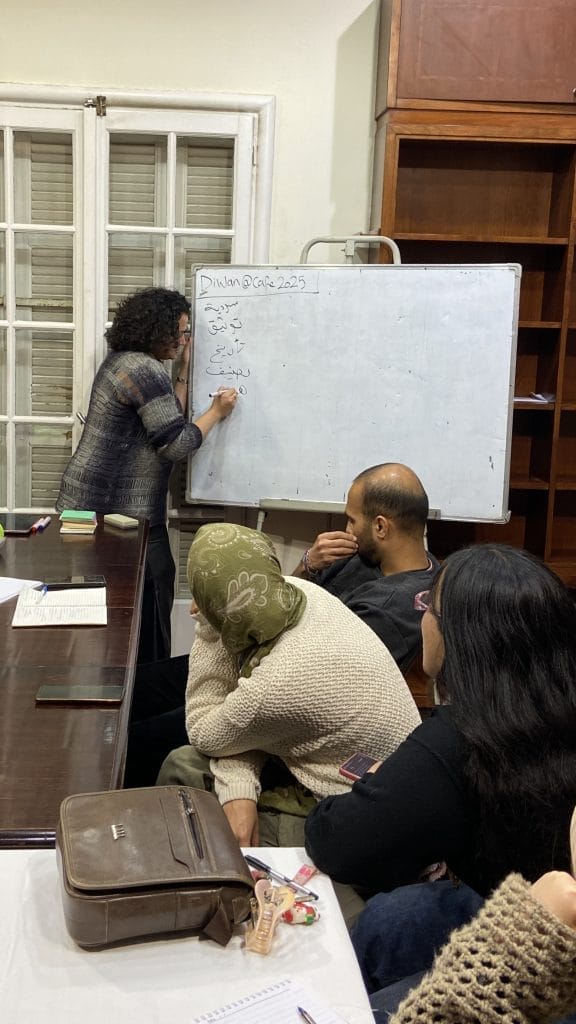
Fatma in the All Eyes on Her! Egyptian Arabic translation workshop
During the workshop, I didn’t hear any of the usual clichés about Egypt and Egyptians. Quite the opposite; I saw kindness, wit, resilience, sharp humour, and deep humanity. Even though we face harsh realities every day, this workshop restored my faith in the character of ‘the great Egyptian’, a character that, because of everything we’ve endured, had started to feel like a mythical cartoon.
I witnessed, for example, a genuine sense of ‘national unity’, not just a phrase repeated in speeches. In one of the texts we translated, the word ‘Islamophobia’ appeared. Since this was a highly collaborative workshop, we discussed every single word together. A long discussion unfolded between two participants about how to translate the term, whether to keep it as is, since it’s already familiar in Arabic, or translate it literally. Was it about fear of Islam? Or fear shaped by portraying Muslims as terrorists? The two participants having this debate were named Monica and Bishoy!
I watched this exchange, deeply moved and in awe. There is still hope, even if it’s just in these 17 souls.
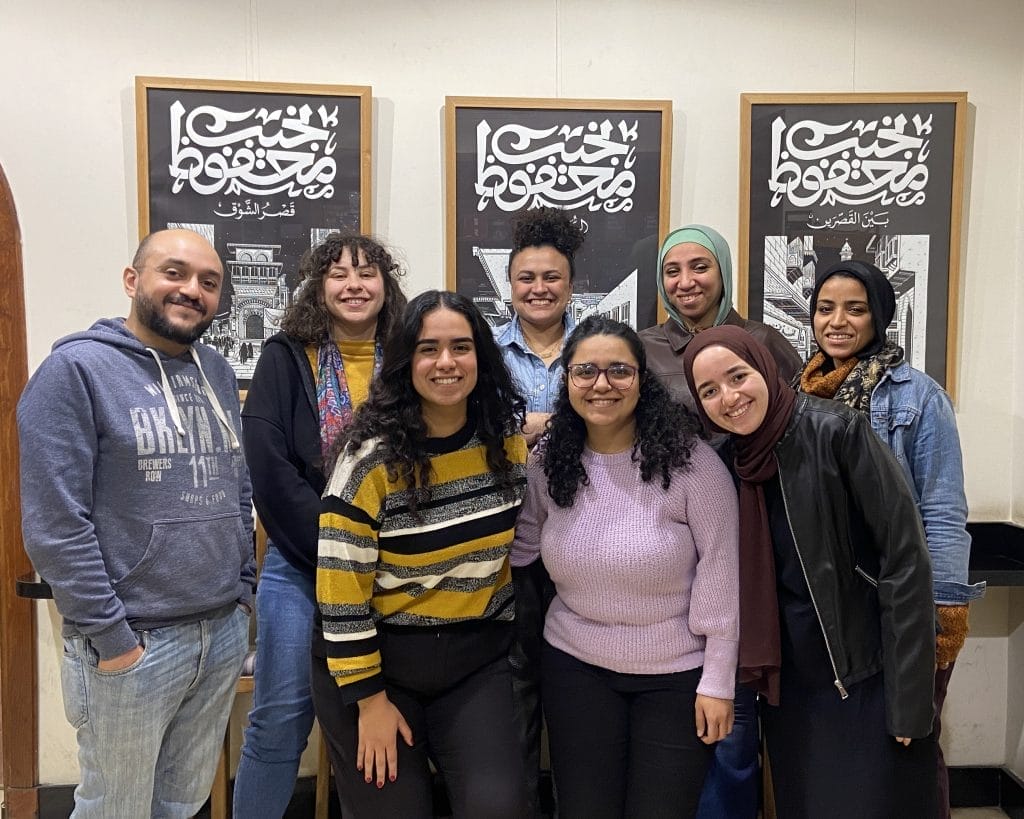
I also noticed some amusing linguistic differences. We all clearly sounded like we were from ‘Egypt’ not ‘Masr.’ We call dresses dresses, shoes shoes, and undershirts undershirts. But in one of the translations, Hagar insisted on using sonetyana (Egyptian slang for bra) instead of bra. It caught me off guard, in the best way, and I smiled and encouraged her.
That moment, along with the ‘Islamophobia’ discussion and many others, reminded me of the pride I used to feel in Arabic as a language, a pride I had forgotten, living in a very different linguistic reality. Even though we were translating into Egyptian colloquial rather than formal Arabic, and it was totally fine to use English or French words if they’re commonly used, many participants genuinely wanted to find the closest possible Arabic equivalents in everyday speech.
It’s often said that this current generation has no cause, no real interest in anything, but the workshop showed me the opposite. I saw passion, frustration, deep thought about our cultural heritage, our displaced and looted heritage, unfortunately. So many questions about context and audience, so many discussions about who we are, what we’re trying to say, and who we’re addressing, all of it mixed with a sweet, childlike enthusiasm for taking jabs at the colonizer whenever the opportunity arose. Like we did during our translation of the text about the 1919 revolution with Mahmoud Gomaa.
I’ve been leading workshops for years across various artistic fields, and I always love learning from the participants and their different perspectives. But what I learned, and uncovered, about our society through this experience was immense. This wasn’t just a class. It was a social experiment full of hope.
Thank you to every single participant. And a special thanks to Heba Abd El Gawad for giving us this opportunity, for turning all eyes on us, and this time, their eyes filled with pride and wonder.
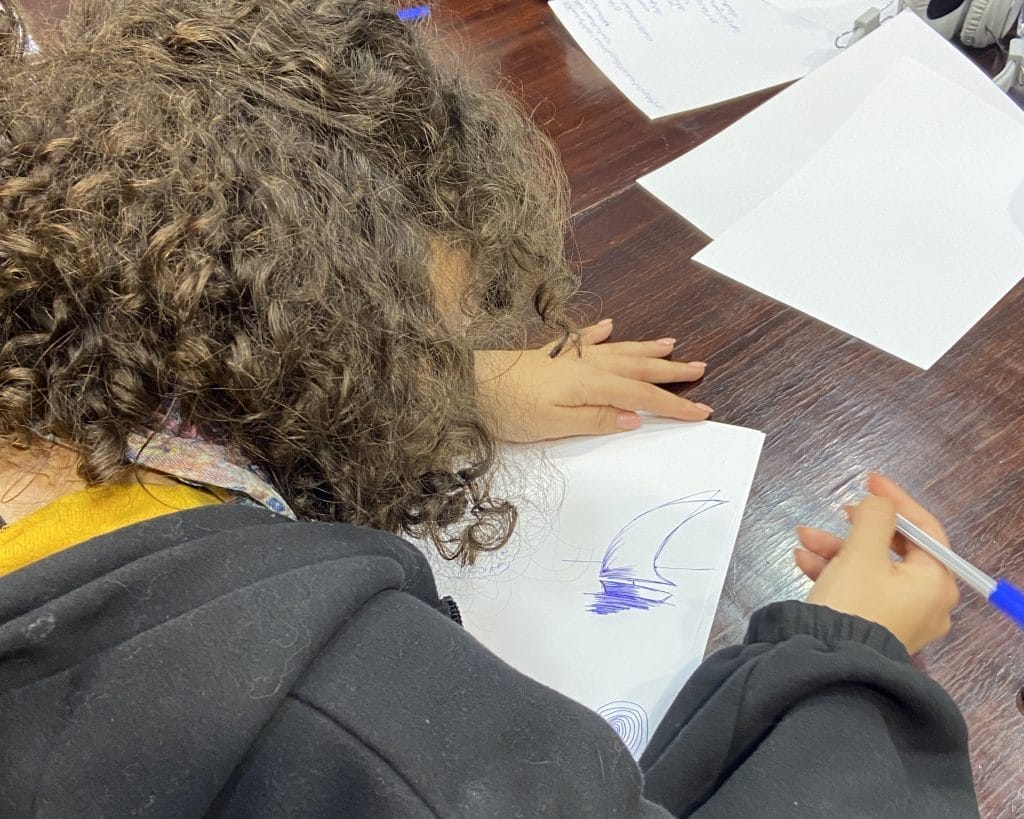
Fatma Elzahraa
Fatma Elzahraa is a multidisciplinary contemporary artist, writer, translator, and art curator. She studied philosophy and is based in Cairo.
Her artistic practice centres on performance, which she approaches as both a method and an outcome of her research, producing narratives through text and movement. Fatma has directed several theatre performances, including The Madman, Soap Chess, Mannequin, and Dear dear dear, among others.
In 2021, she founded Millennial 3al A5er, an online platform that explores millennial issues with a bold, humorous tone, publishing diverse forms of content such as texts, illustrations, and podcasts. In 2022, she established Moving Texts Lab, a laboratory dedicated to producing research, workshops, and performance based works grounded in text and movement.