


Can you tell us the story behind your photo in this exhibition?
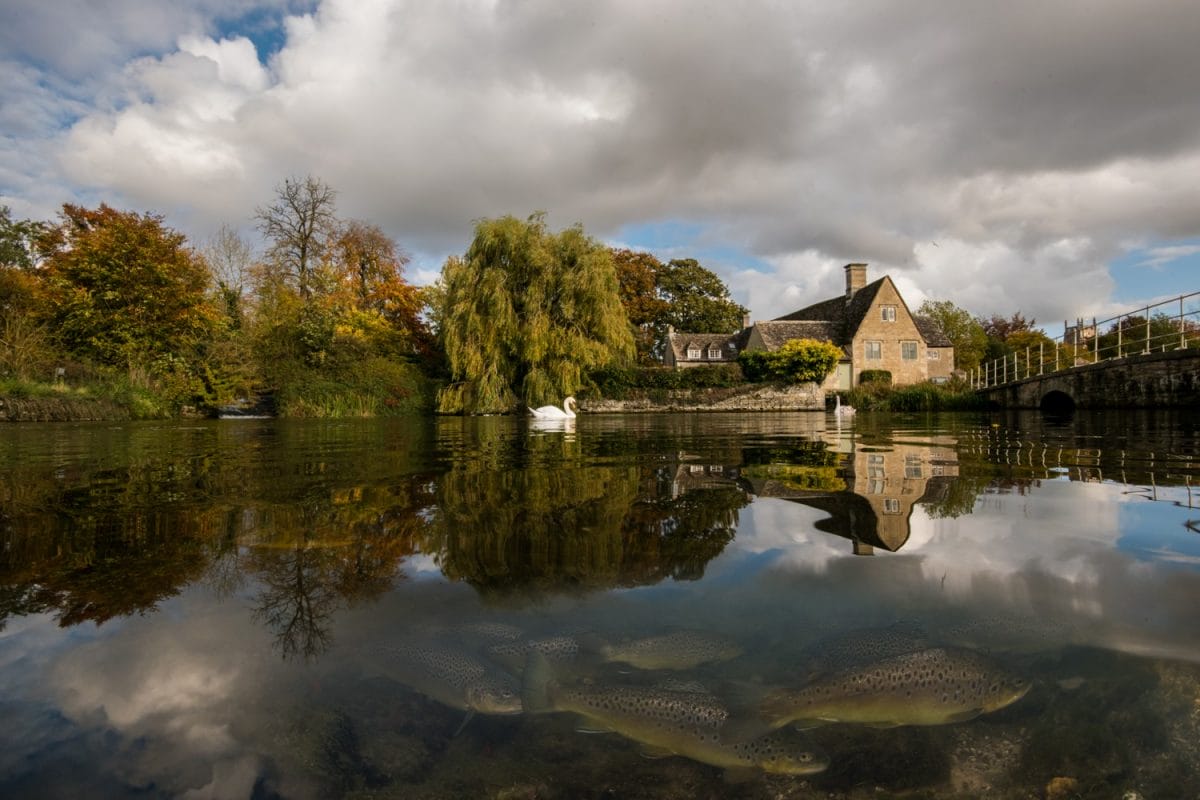
Keen to document the beautiful fish that live in British chalk streams, I set up a two year project to
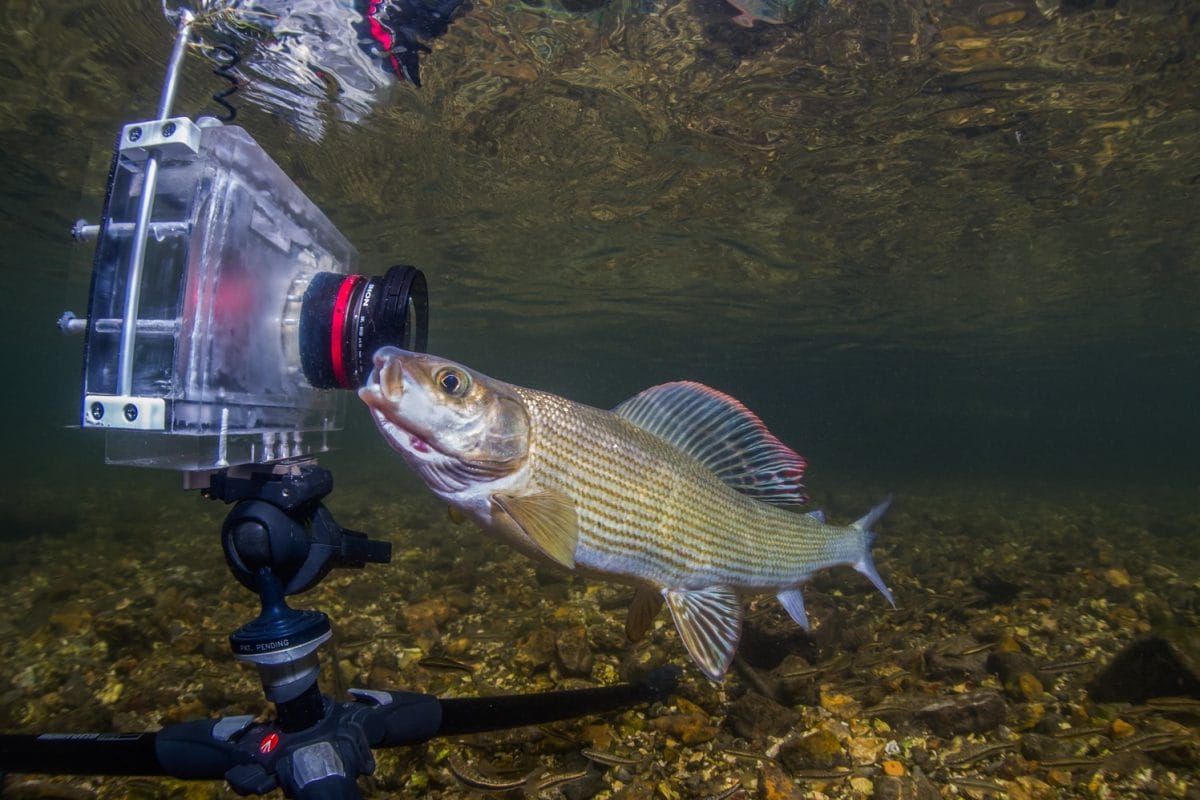
photograph different species, particularly trout and grayling. I think that the grayling is a much underappreciated subject but, like most freshwater fish, it is very shy and difficult to approach with traditional underwater cameras, which are hand held by the diver/photographer. So I developed some remote control underwater cameras that I could control from a distance without disturbing the fish.
In this image, the grayling was chasing insect larvae, but the small minnows often fall prey to trout living in the same habitat, so they take no chances. When a bigger fish moves quickly towards them, they assume the worst and dive for cover. So it looks as though they are fleeing from the grayling, but its chase is phoney.
How did you go about getting that shot?
This is a subject that needs endless patience to capture the right moment. With underwater
photography, you have to be very close to your subject to achieve useful contrast, colour and detail. So I used a very wide angle fisheye lens and waited until the fish made a pass only inches from the camera before taking the shot. I was hidden from view on the river bank, but could see the action through my laptop, to which I had engineered a live video feed and an ability to change camera settings without getting into the water.
How long did you have to wait for this shot?
In total it took nearly two years to complete camera development work and get this quality of image. It then took a few weeks of dedicated effort to get the shot and on the day it took about four hours waiting for the right moment.
Did you use any particular equipment or software?
The camera was housed in a special underwater housing that I had designed just for this project. The key function was an ability to feed a live picture to a remote laptop and to fully control the camera using hard and soft keys, which I did with Nikon’s commercial camera control software. The housing had other functions that allowed me to control remote Nikon speedlights; essential to bring back the light that is so often lost at even a few inches below the water surface.
What are your favourite scenes, species or motivations behind your photographs?
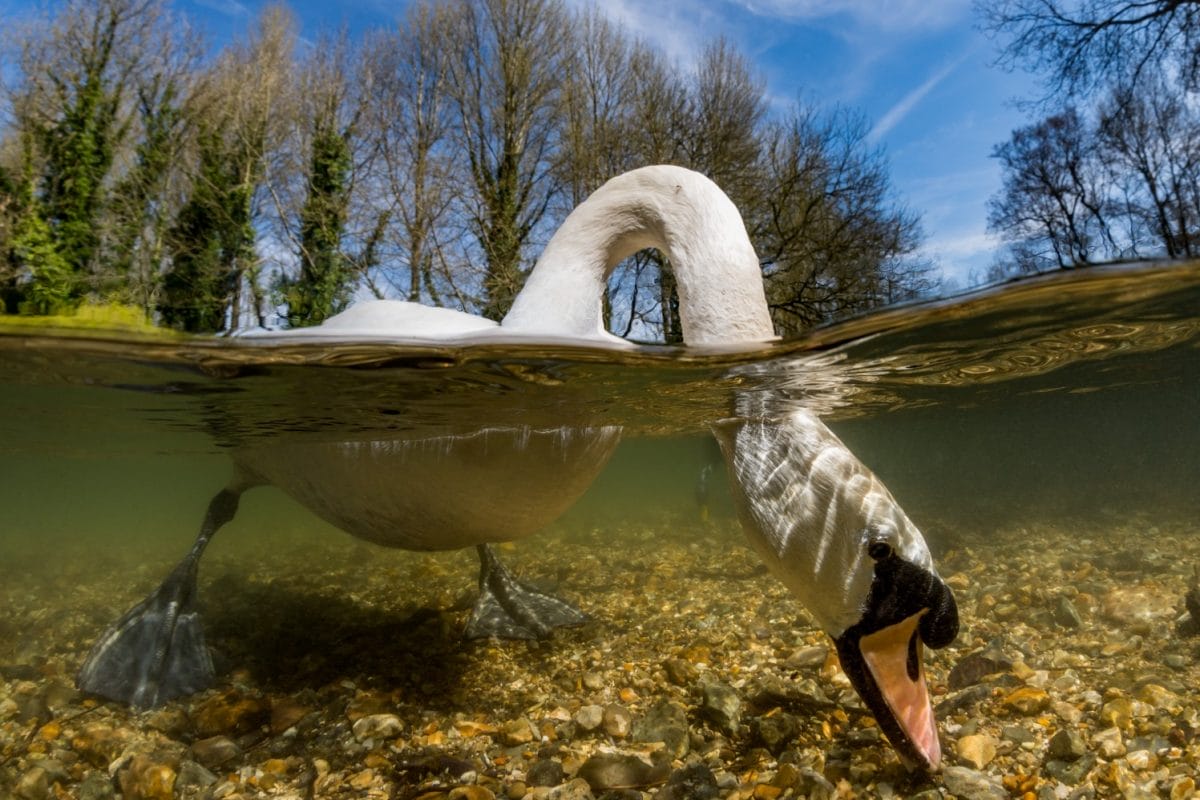
Although I’m an underwater photography specialist who dives world wide, mainly to help ocean conservation agencies, I’m increasingly interested in British wildlife and have started a number of projects to capture images of difficult subjects, which I want to be very different from traditional approaches. I love wide angle photography in my ocean work and I’m very interested in sharks because of the huge threats that they are now under. Conservation of our rivers, lakes and oceans I’d certainly a big motivator for me and I try to make my images count by working with high achieving organisations like the Blue Marine Foundation, Fauna and Flora International and The Wild Trout Trust.
What are the difficulties of wildlife and nature photography that you face?
The most interesting subjects are often the most difficult to photograph so it needs a disciplined and imaginative technical approach to achieve your artistic vision. I can spend up to a year developing a new approach and in that time there may be no good images taken. It’s very frustrating. But sticking to your vision and toughing it out, including many long hours spent in the field, usually yields success.
What would you like people to think about when they see your work?
I would like people to appreciate the extraordinary diversity and beauty of wildlife and to be motivated to help sustain the environments that are under threat, but which these creatures depend upon. How long have you been a photographer and how did you get started? My professional history goes back nearly thirty years, when I used a wet film SLR as part of my previous career. But I’ve only been doing serious wildlife photography as a business for the last few years.
What would you advise someone wanting to start taking photos of wildlife or nature in their
local environment?
Before you even think about cameras and all the technical requirements, study your subject’s behaviour and study it until you understand it intimately. You can and should take opportunity shots, but the photographer who knows their subject will be in the right place at the right time ten times more often than the photographer who just looks for opportunities without real study or planning. It makes such a difference.
What projects are you working on now or have coming up?
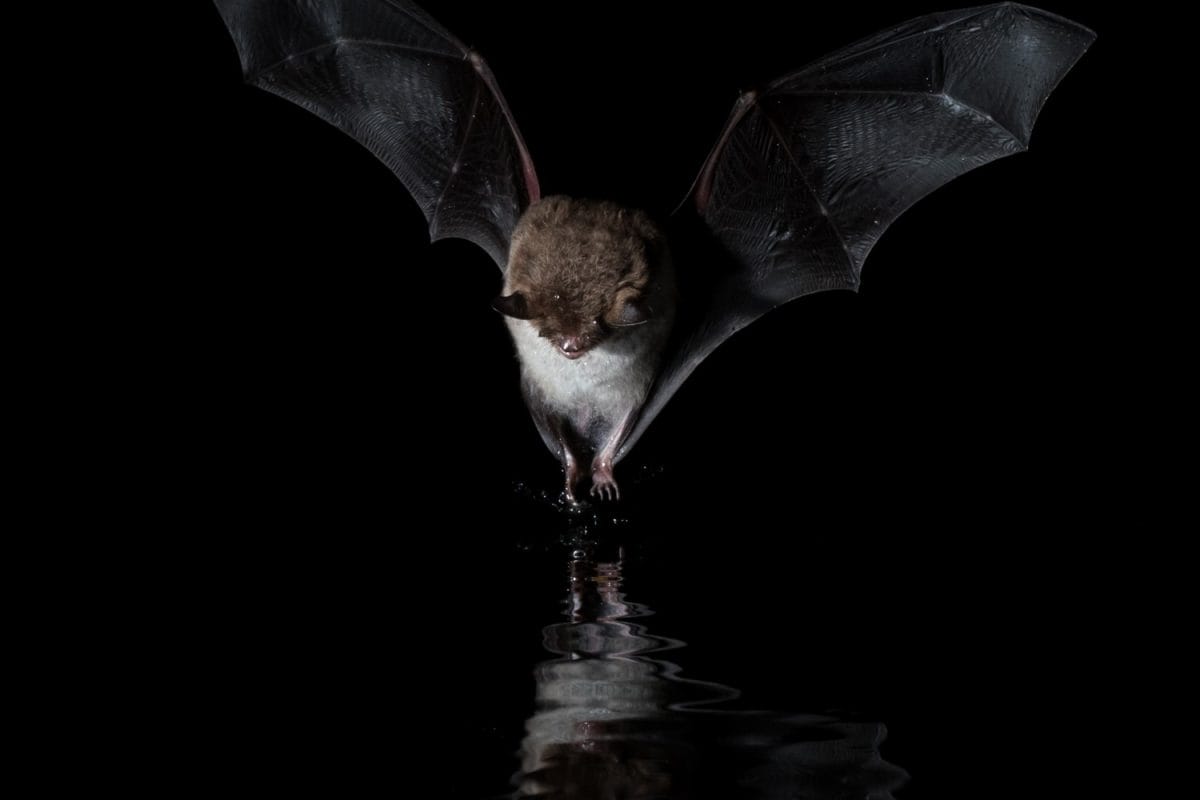
My current project is bat photography in a way that nobody else has done it. Bats are protected
species, so I’ve taken advice from the Bat Conservation Trust and Natural England, from which I’ve designed and built specialist new low light camera systems, including a camera and infrared light system that is invisible to the bats. So I’m currently trying to create some unique new images of British bats. The project is ten months old and, although I will need some more work next year when the bats come back out of their winter torpor, I’m well advanced with this work and soon hope to show the world some exciting new pictures.
Twitter – @paul_colley
Facebook – Paul Colley Underwater Photography
Instagram – @paul_colley