What are octopuses?
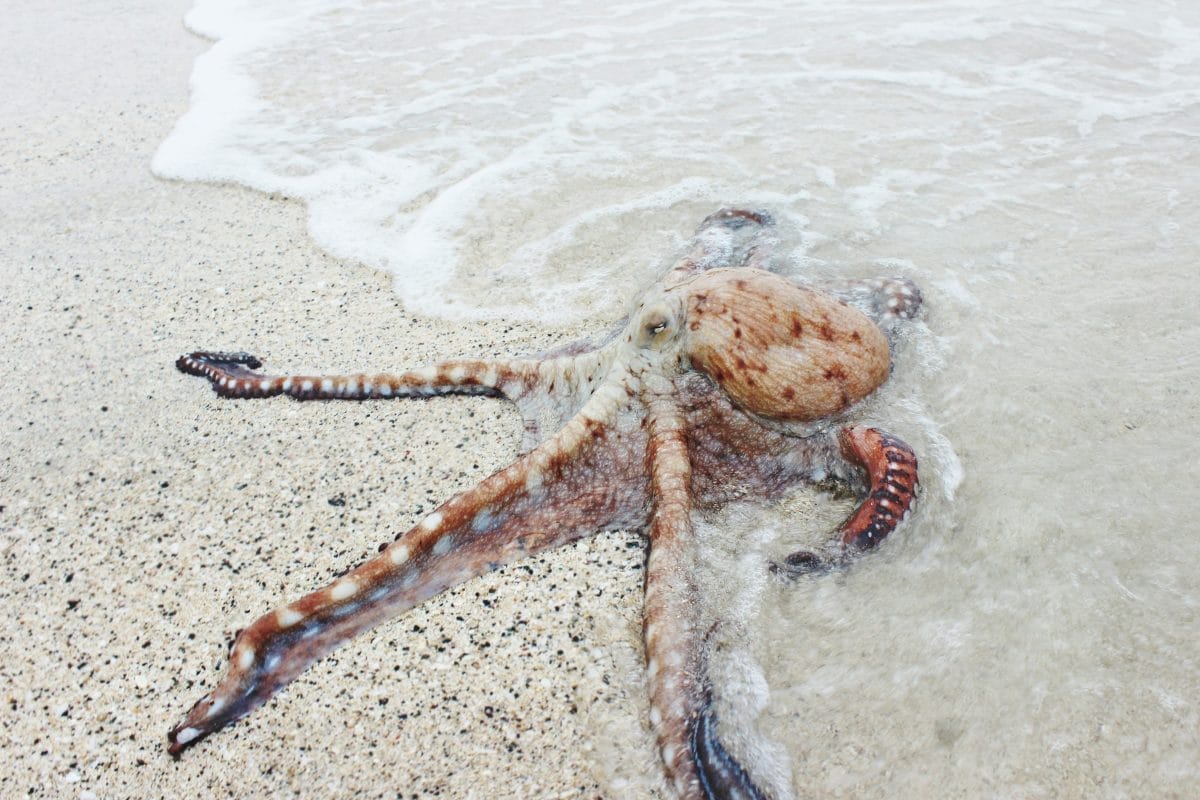
Octopuses are marine molluscs with eight arms, three hearts and blue blood. They are unique creature that are brilliant at camouflage and extremely intelligent.
The name octopus comes from the ancient Greek word ‘okto’, meaning eight, and ‘pous’, meaning foot, of course referring to the creatures eight arms. Octopuses have arms, and not tentacles. Arms have suckers along them, while tentacles only have suckers at the end.
The fossil record suggest that octopuses have inhabited the planet for over 330 million years, predating humans and dinosaurs. The oldest known octopus relative was a 10-legged creature, discovered in a 330-million-year-old fossil in modern day North America.
Why do octopuses have three hearts?
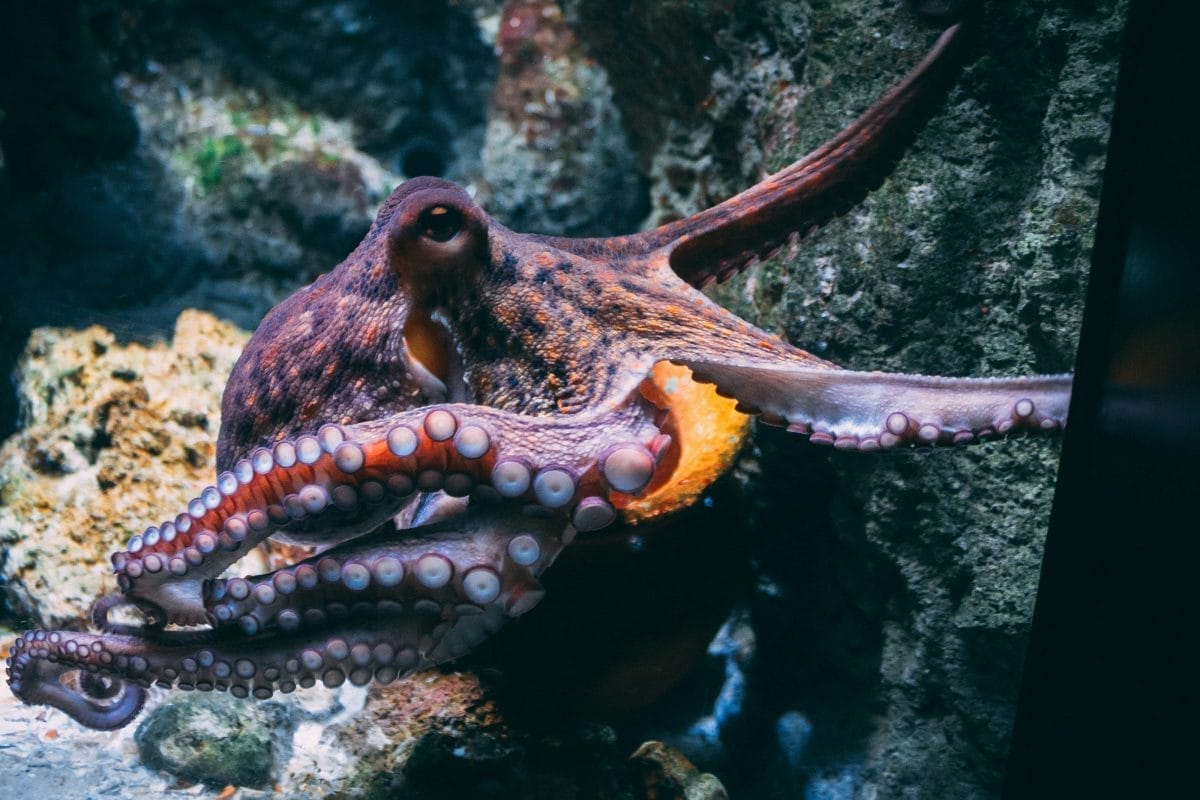
Curiously, octopuses have three hearts that function in tandem to keep the octopus moving and its blood pumping.
The octopus has two branchial hearts that pump blood through the gills, collecting oxygen. It also has a central systemic heart that pumps this oxygenated blood from the gills into the rest of the body.
Because an octopus stiffens its muscles when it swims, the systemic heart stops functioning when it is swimming. This is because the contracted muscles reduce blood flow. This means that the act of swimming greatly exhausts an octopus, and they prefer to crawl along the seabed.
Why do octopuses produce ink?
Octopuses also produce ink, made up of a dark pigment called melanin and the compound tyrosinase. It is sometimes released with a jet of water. The ink is stored in an ink sac and ejected through the rectum.
The primary function of the ink is to repel predators, as it obscures the predators’ sense of vision, smell and taste. The ink also takes up mysterious shapes that can sometimes resemble the octopus itself, distracting the predator and causing it to veer off course.
Is octopus ink poisonous?
No, octopus ink is not considered poisonous, which is why it is often used to flavour and colour rice or pasta when served with seafood.
However, the ink of the blue-ringed octopus species does contain tetrodotoxin, a toxin that is deadly to humans. Octopus ink also contains some toxins that can irritate the eyes of predators in the sea.
Are octopus fish?
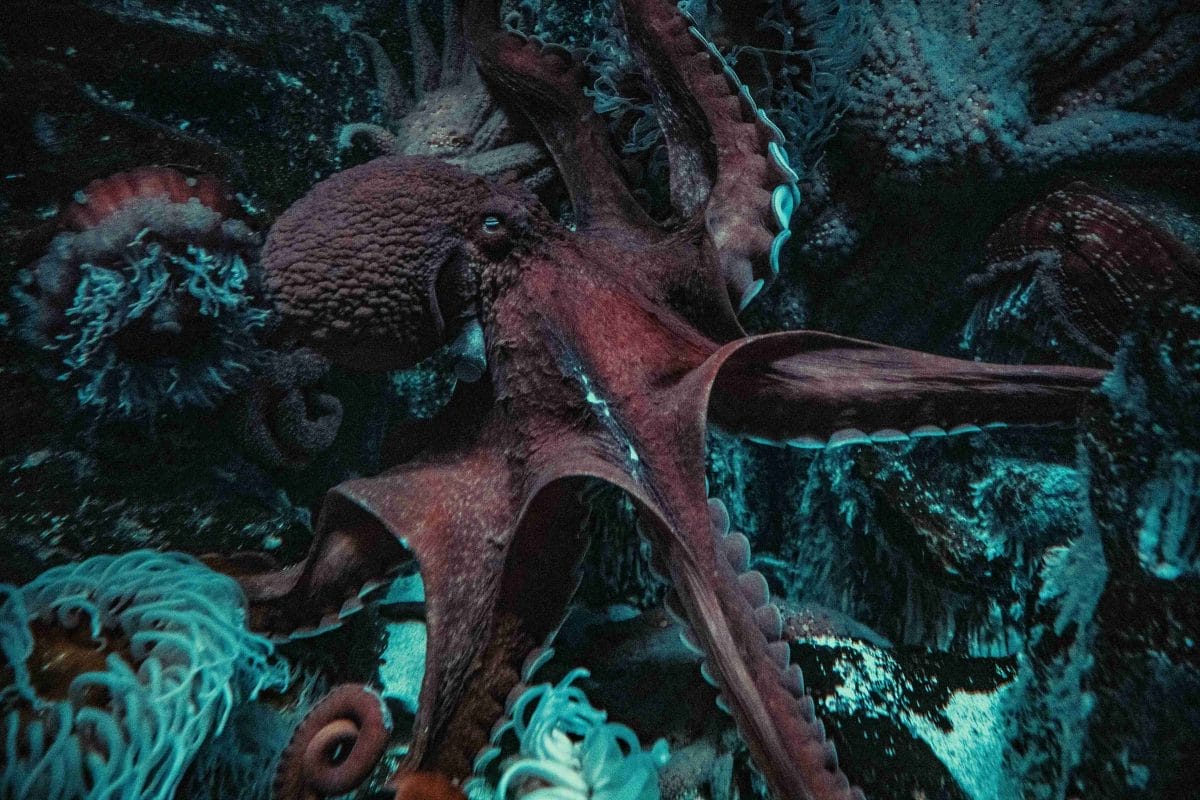
While the octopus are considered sea life, they are not fish. Instead, it is a marine mollusc, a group which includes other sea creatures such as squid and cuttlefish.
They are categorised as such because of their soft body and lack of bones, fins and vertebrate, which are all defining features of fish.
Are octopuses intelligent?
Octopuses are extremely intelligent creatures, which explains their resilience in evolutionary terms, and their long existence on earth.
They demonstrate highly intelligent behaviour such as tool-use, problem-solving and recognition. In 2009 for example, veined octopus were discovered gathering coconut shells in Indonesia. They carried these shells, hosed them down with jets of water, and assembled them into a shelter.
Individual cases have also shown blanket octopuses carrying jellyfish tentacles as weapons, using the threat of their venom as defence.
Their soft bodies also mean they can effectively hide from predators in small gaps, navigate complex mazes and even escape from aquariums in some examples.
The octopus also has a large optic lobe, the part of the brain linked to vision, which means it can recognise objects and individual animals and even humans.
Scientific American reported a story from the University of Otago where a captive octopus took exception to one of the staff members and would squirt a jet of water at her when she passed!
Where do octopuses live?
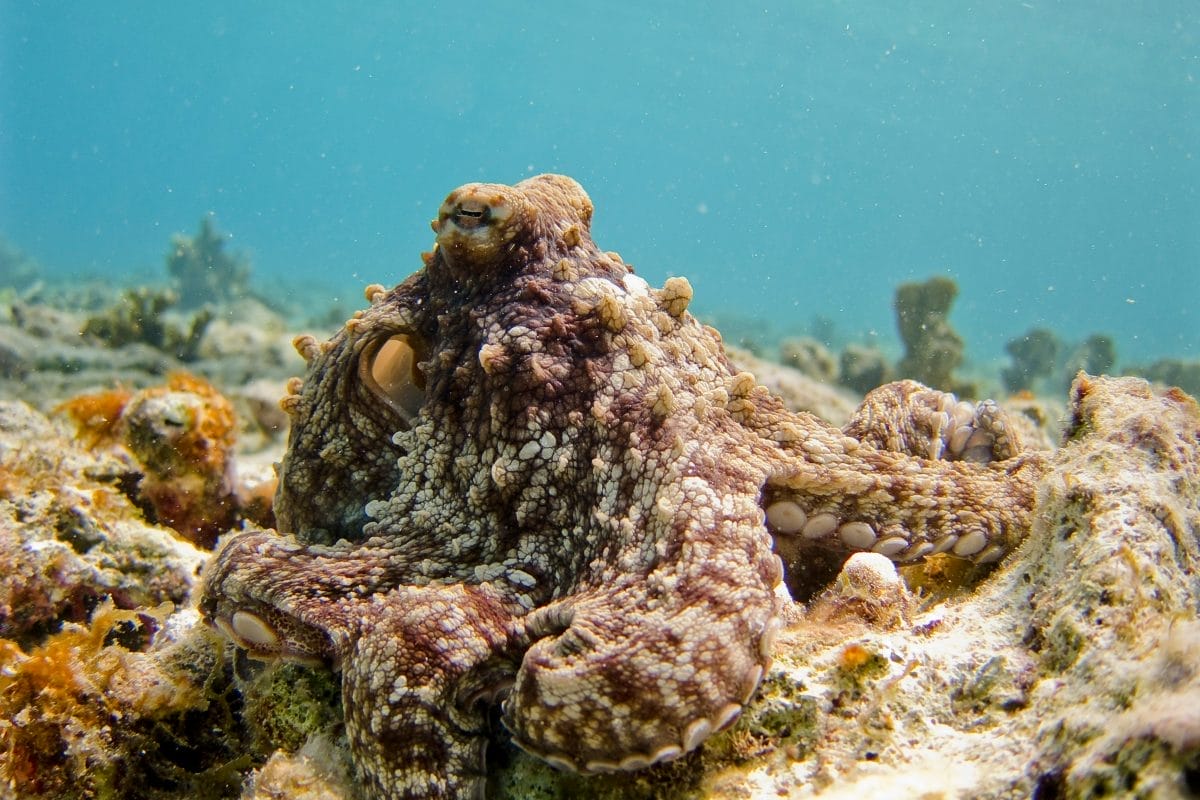
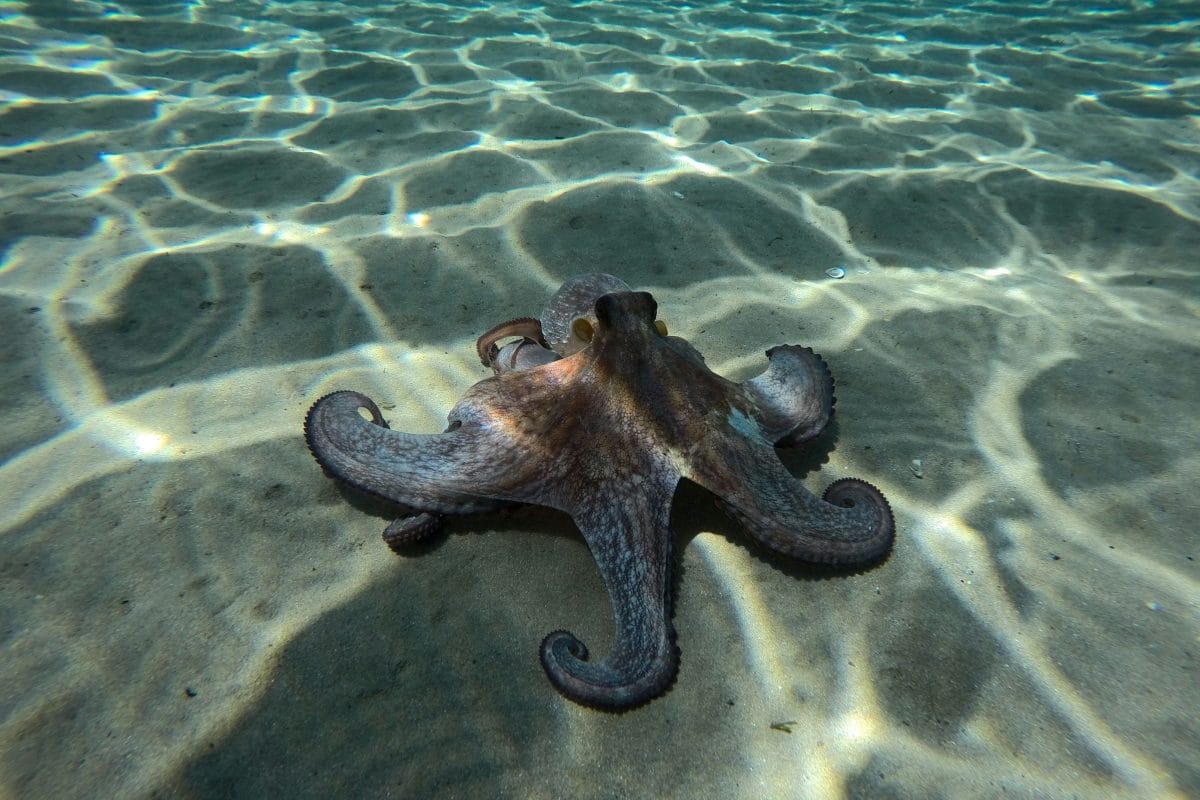
Octopuses live in oceans, in both warm shallow environments and deep waters. The octopus can be found all over the world, but they are most prevalent in warm regions, living in coral reefs and seafloors.
What do octopuses eat?
Octopuses are carnivores, and eat crustations and molluscs, such as clams, crabs and even some smaller fish.
They utilise the same stealth that helps them evade predators when hunting their own prey, using camouflage and squeezing through small gaps. Their strong muscular arms with suction cups help them keep their prey captive, with a sharp bite and rough tongue to finish the job.
Some species of octopus also demonstrate interesting and intelligent behaviour with their discarded food remains, like shells from their crab and seasnail victims. Octopuses will gather and pile up this debris, known as midden, and display it outside their dens. Some scientific theories suggest that these midden formations are designed to warn off prey and enclose access to their dens, further fortifying their habitat.
Do octopuses make noises?
Broadly no – octopuses are silent hunters. They might make some incidental sounds from jets of water, but octopuses are stealthy creatures who do not have any cries or calls.
In fact, octopuses don’t have ears, and their hearing is one of their weaker senses. However, they are not deaf and can detect sounds and vibrations using their fluid-filled organs containing sensory follicles.
Are octopuses under threat?
Yes, some species of octopus are under threat because of pollution, overfishing and the aquarium trade.
Octopuses are sensitive to poor water quality and they struggle to reproduce in polluted waters. The degradation of coral reefs and seagrass also affects their potential habitats.
The octopus is a delicacy in many food cultures, and they are targeted by industrial scale fishing across the globe. They are also caught in collateral through unsustainable fishing practices that target other sea creatures for food. A recent proposal for a high-density octopus farm near Gran Canaria has also raised concerns amongst animal rights advocates, as it could drastically upset marine ecosystems.
Some species are also targeted for the aquarium trade, with rarer species suffering from decline because of this.