


What are sharks?
Sharks are a type of fish, with a skeleton mainly made up of cartilage.
The origins of sharks can be traced back around 450 million years. This makes them older than dinosaurs, insects, mammals, trees and Saturn’s rings!
What makes them so successful, in evolutionary terms?
Sharks have survived all of the major mass extinctions. They are a success story of evolution and their ability to adapt to different marine environments mark them as resilient creatures.
Sharks are highly sensitive to low frequency sounds, and with a famous sense of smell, they can detect one part of blood in a millionth’s parts of water.
Sharks also have touch receptors all over their body, and taste buds in their mouths that help them determine if something is good to eat. On top of this, some sharks also possess electroreception, jelly-filled pores on their heads that detect electrical fields, and a lateral line system, a series of canals that run along the shark’s body that can detect vibrations and water pressure changes.
Bad reputation or misunderstood?
While films like Jaws and The Shallows depict sharks actively hunting humans, this reputation is undeserved. Sharks rarely attack humans, and when one does happen it is due to a shark thinking a human is a prey it would usually feed on, like a seal.
Although many of the largest species of sharks actively hunt their prey, many of the largest species, like the whale shark, mainly feed on plankton.
Why do we need sharks?
Healthy shark populations are an indicator of healthy ocean life. If shark populations fall, it can be an early indicator of problems in a marine ecosystem.
This is because they sit at the top of the food chain, particularly species like great white and tiger sharks.
While orcas and some whales may take on a shark, the biggest threat that sharks face is from humans through fishing.
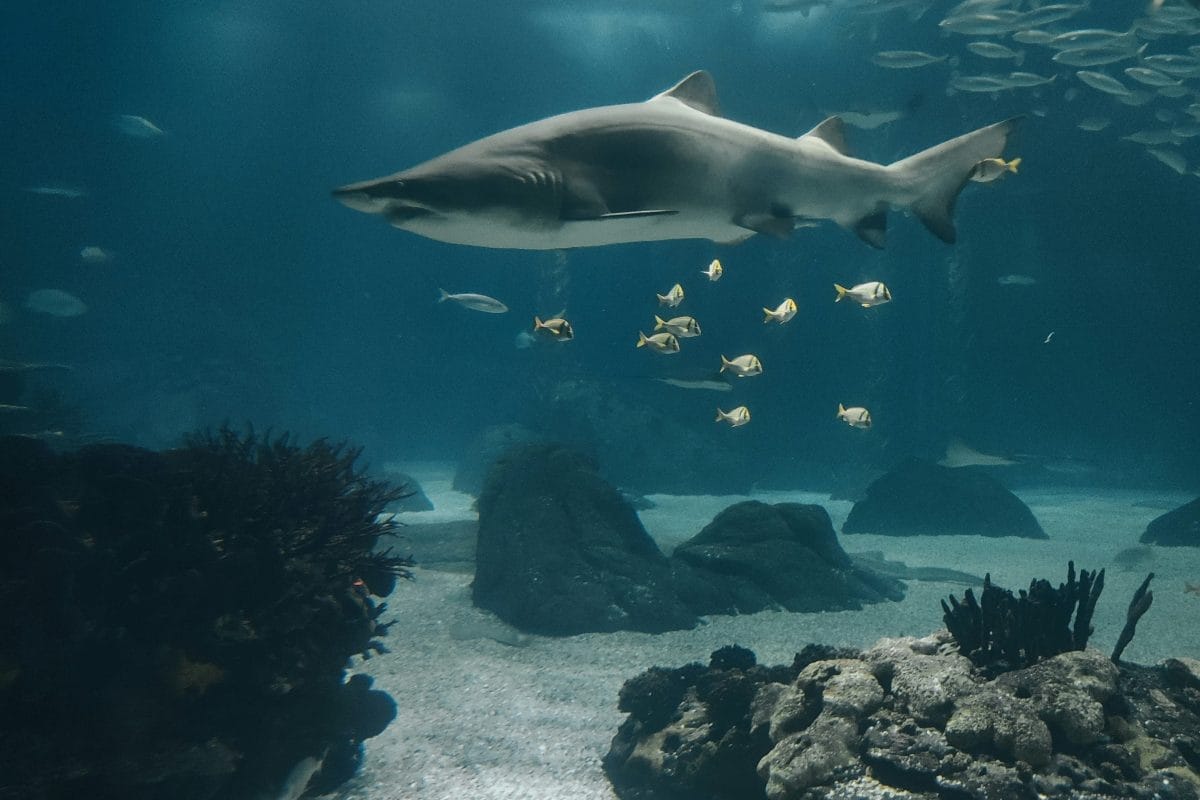
Are sharks mammals and do they lay eggs?
Around 60% of shark species are viviparous – meaning they give birth to their young.
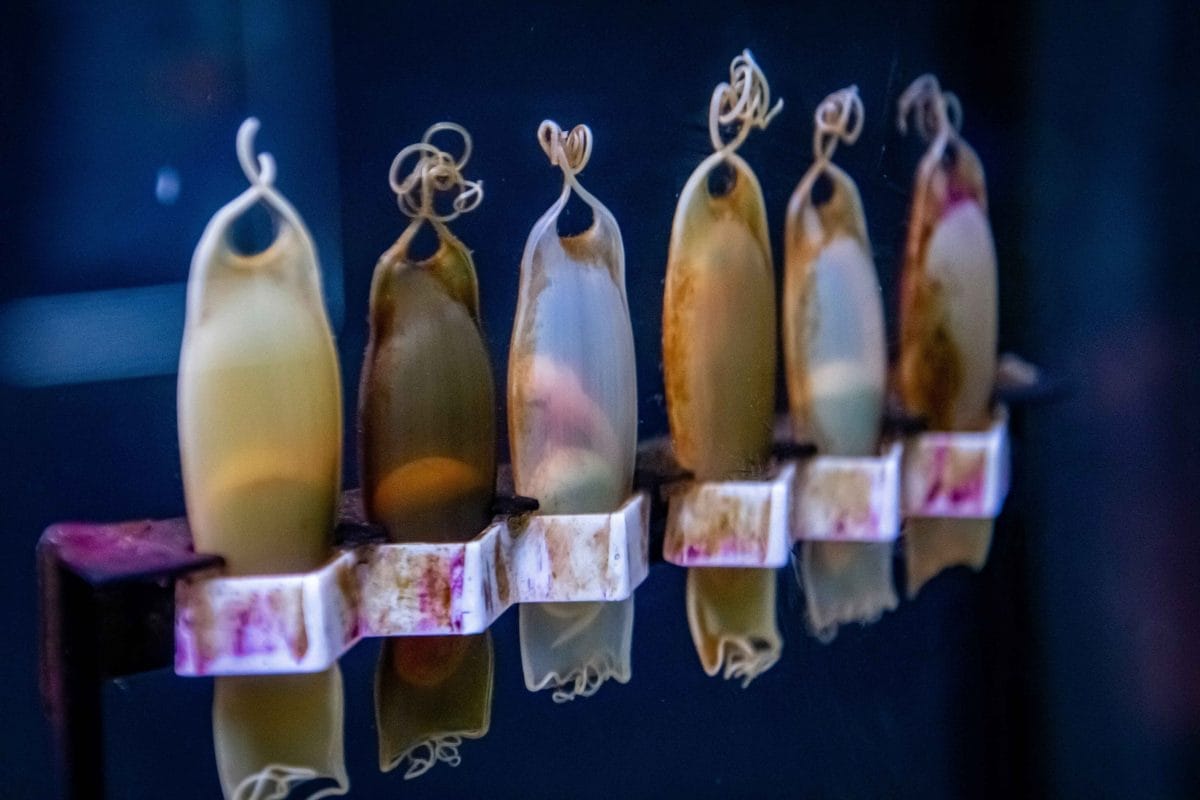
The other 40% of shark species are oviparous, meaning they lay eggs. These eggs are large leathery capsules that are often fondly referred to as ‘Mermaids Purses’ – you might have found them washed up on the beach in the UK.
Sharks that lay eggs like this are often smaller, although not exclusively, and include species such as cat sharks, horn sharks and some variants of carpet sharks.
There are also a small number of shark species that are a combination of both – known as oviviparous – such as the whale shark. This means the eggs hatch inside the mother’s body.
Do sharks have tongues?
When you think of a shark you might first think of its teeth – but what about its tongue?
Although they have a structure in their mouth – a bashiyal – that can be considered very similar to a tongue, it is not as muscular, flexible, and doesn’t even have taste buds.
Instead, the bashiyal is a piece of cartilage that rests on the bottom of their jaw. It has more limited function than a tongue, but some species, like the cookiecutter shark, uses the bashiyal to help tear flesh from their prey.
What do sharks eat?
Sharks are primarily carnivorous and survive by consuming other marine animals such as fish and mammals including seals and sea lions.
Some sharks are planktivorous, meaning they feed through filter feeding plankton including tiny crustaceans, algae, and other small organisms.
Filter feeding is when a shark will use their gill rakers as a suction filter, allowing them to catch and eat shrimp, fish and plankton.
Can sharks drown?
All sharks extract oxygen using their gills. How they get that water to their gills, differs from species to species.
Some species, like the great white and whale shark, swim with their mouth open. This is called obligate ram ventilation, and it forces water over their gills.
If they stop swimming, they stop receiving oxygen, and they die.
Other sharks, like the nurse shark, have developed muscles in their jaws that allow them to pump water over their gills while resting. This is called buccal pumping.
The majority of sharks, including ragged tooth and tiger sharks, deploy a hybrid breathing method, flitting between ram ventilation and buccal pumping.
How hard is a shark bite?
Shark bites are notoriously powerful, particularly that of the great white shark. It’s estimated bite force can exceed 4,000 pounds per inch – quite a bit stronger than that of a human which is around 150 pounds per inch.
Why do some sharks have so many teeth?
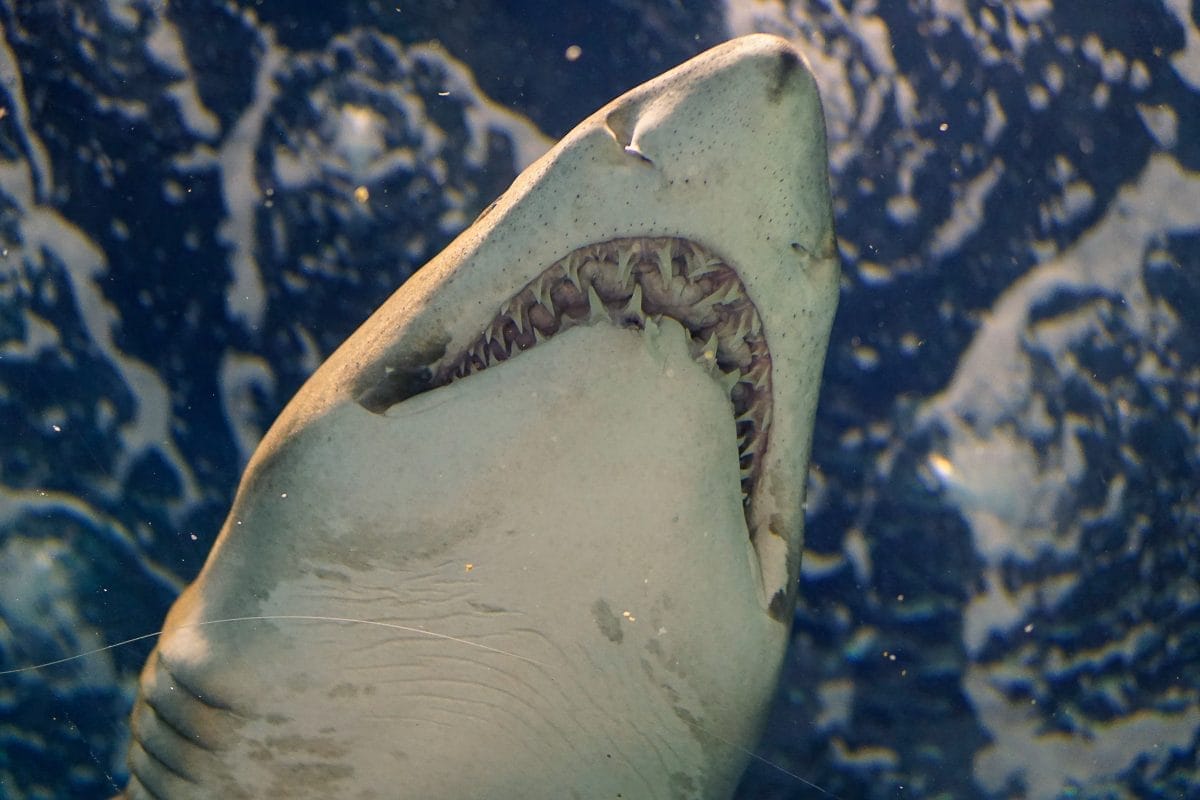
Unlike humans who only have two sets of teeth throughout their life, sharks have a “conveyor belt” of new teeth to replace those that are lost or damaged. This is a crucial part of shark physiology, as they rely on their teeth for hunting and survival.
Do sharks make noises?
While the songs of whales and the squeals of orcas are well known, sharks are not associated with making a sound.
In 2021 scientists in New Zealand discovered that the rig shark makes a clicking sound when being held still. It’s thought that this is the sound of the shark snapping its teeth together, possibly as a stress response.
Where do sharks live?
Sharks can be found in oceans across the world, and there are even some breeds of shark in the UK.
They live in many different marine environments, from tropical to polar oceans, fresh water to seas.
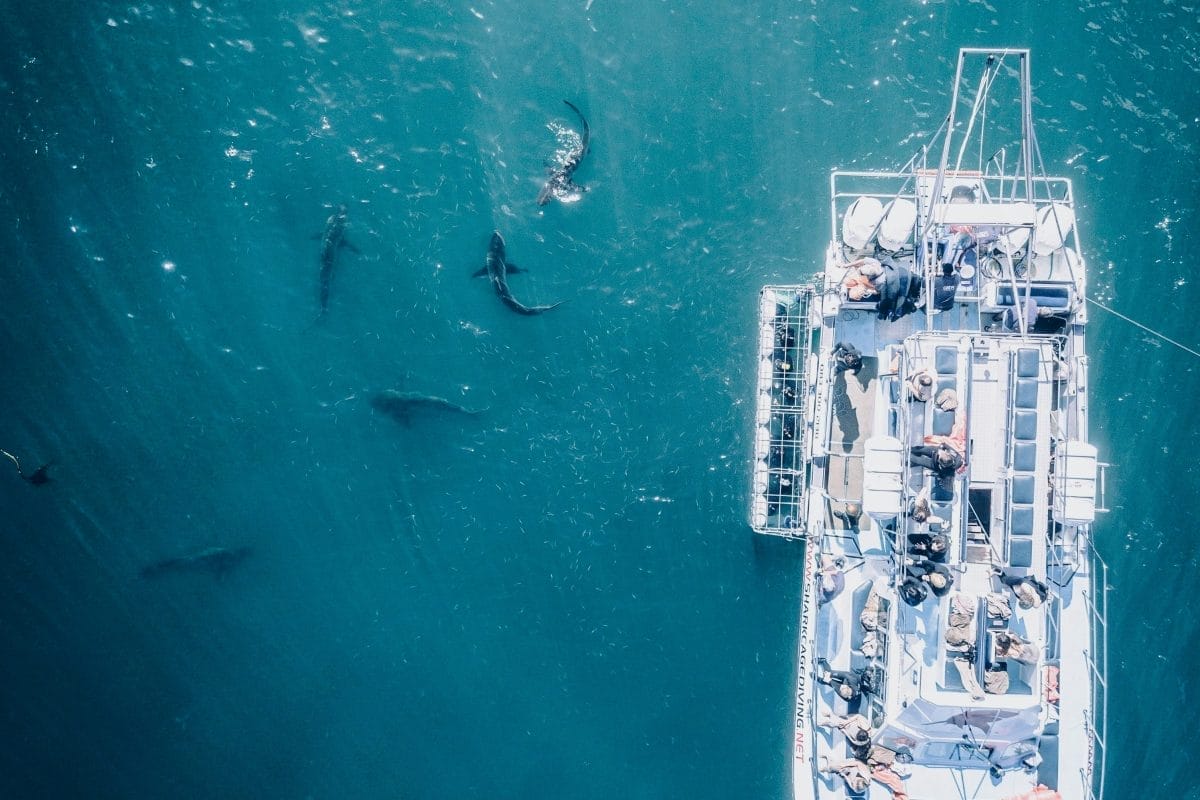
Great white sharks live in subtropic and temperate waters, primarily in coastal areas near the shore, perhaps why they are often associated with danger given their proximity to humans.
There are around 40 different species of shark that inhabit or visit UK waters, such as blue sharks and basking sharks.
What’s the rarest shark?
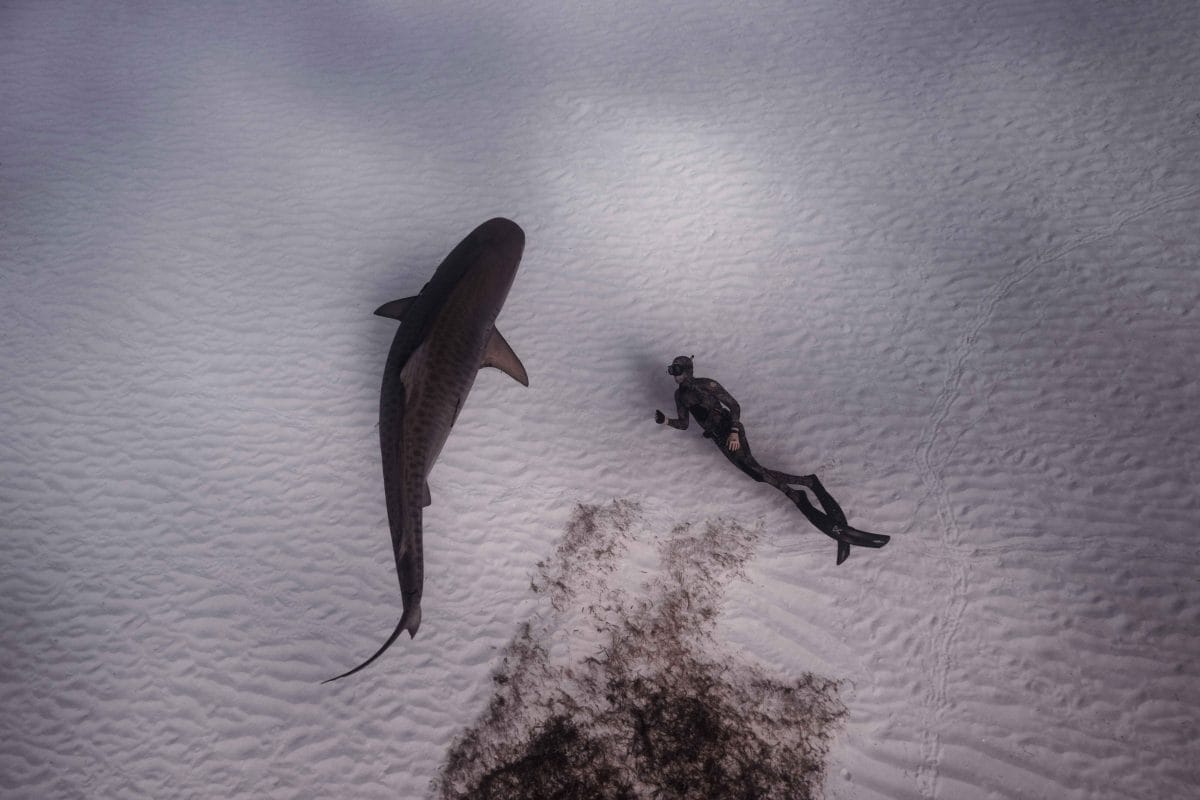
Angel sharks are one of the rarest groups of sharks. There are a number of species of angel shark, with some – Angelshark, Smoothback Angelshark and Sawback Angelshark – critically endangered.
This population decline is due to the angel shark being caught in fishing nets, as well as habitat degradation.
Another rare species is the megamouth shark, which lives in deep water. They are seen so rarely that each individual sighting is recorded. Only around 300 have ever been seen.
How many sharks are critically endangered or under threat? Why?
Approximately 37% of the worlds’ shark, rays and chimeras population is considered under threat of extinction. Specifically, 14% of sharks are listed as vulnerable, 11% as endangered, and 12% as critically endangered, according to the Union for Conservation of Nature red list. These species are vulnerable to disappearing from the oceans completely.
This is largely attributed to overfishing, In some places, sharks are targeted directly for their meat, oil and fins. Sharks are also caught as collateral in industrial fishing practices, using large trawler nets. In some instances, because of their dangerous reputation, they are also persecuted.
Climate and habitat changers are also having a negative impact on shark populations. Warming ocean temperatures, ocean acidification and toxic pollution have a holistically negative impact on marine life. Infrastructure development in coastal areas can disrupt habitats such as mangroves and reefs which are traditionally where sharks thrive and grow.
What are the most common sharks in the UK?
One of the most common sharks in the UK is the spiny dogfish (a type of spurdog), which is frequently encountered in southern and western coastal areas. Though they are not considered dangerous to humans (the largest one you’d see is around 60cm), they do have spiny dorsal fins that can be dangerous if handled incorrectly.
The spiny dogfish is known as an unfussy eater, and will consume a variety of fish, crustaceans and plankton. Having a variety of food sources goes some way to explaining their commonality.
What is the biggest shark in the UK
The largest shark found in UK waters is the basking shark. It can reach up to 12 metres in length and are sometimes spotted off the coast of Cornwall and the Inner Hebrides during the summer.
Other large sharks spotted in UK waters include the blue shark, shortfin mako shark, common thresher shark and Greenland shark.
Are there any sharks in the River Thames?
Sort of. There are around five species of shark that can be found in the Thames Estuary. They are not typically found in the freshwater areas of the Thames, although some reports claim to have However some sharks such as the tope and spurdogs use the Estuary as birthing areas for their young.