


Similarly, an older culture from Oaxaca – known today as the Zapotecs but who called themselves Ben’Zaa, meaning “people from the clouds” – developed their own funerary traditions and spiritual worldview.
For centuries, their main city and political capital was Monte Albán, perched high above the valleys. Many families buried their loved ones directly beneath their homes, keeping them close in both memory and daily life.
Archaeologists have found ancient family tombs beneath living spaces, where the room above acted as an altar to honour the deceased. Objects such as incense burners and other ritual items suggest that offerings were made regularly, reflecting a deep ongoing relationship with ancestors.
Later, their sacred sites came to be known as Lyobaa, meaning “place of rest”. Around 1495 this was renamed Mitla after the Zapotec became subject to the Mexica (Aztec) empire.
While Monte Albán remained the political centre, Mitla became the most important religious site. Its tombs were remarkable structures, often built from stone and adobe with cement floors and large carved beams, usually topped with a mound of earth, or mogote.
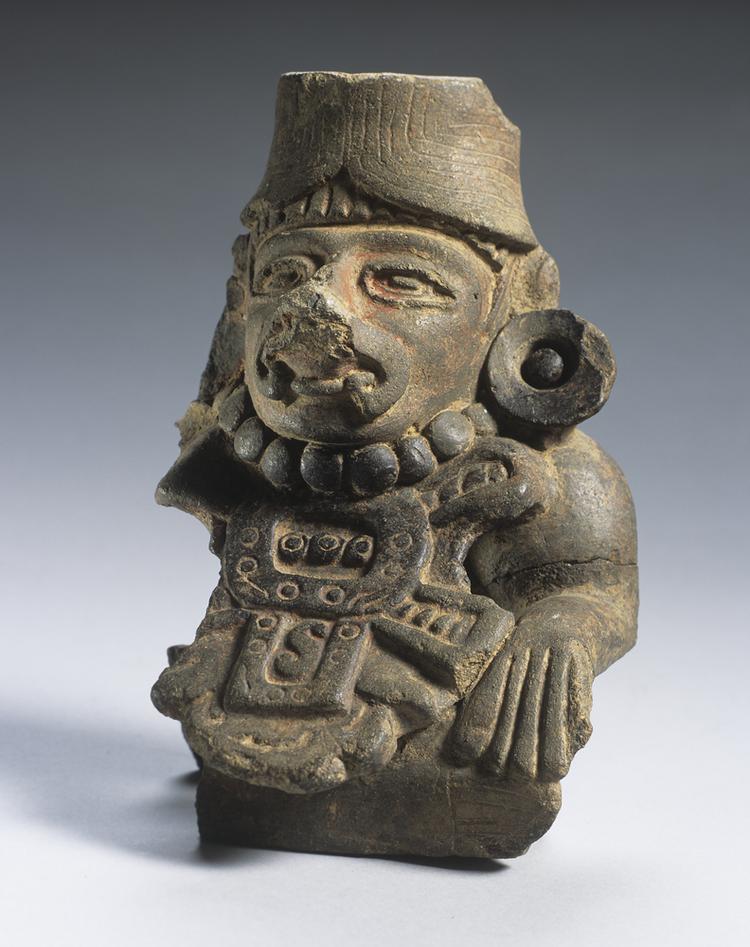
Among the most typical and striking Zapotec objects found in these tombs are ceramic funerary urns, often depicting gods such as Pitao Cocijo (rain and lightning) or Pitao Cozobi (corn and agriculture).
funerary vases
Anthropology
The urns
Interestingly, these urns were rarely placed inside the tomb chamber itself. Instead, they were positioned above beams, on roofs, in niches, or at the base of tombs, generally in groups of five. Most contain a cylindrical cavity, though they are usually found empty. They may once have held water or other offerings, but their precise purpose remains unknown.
The urns are unmistakable in form and decoration. Made from dark, heavy, and thick pottery, they are generally unpainted except for occasional colour washes and a thin stucco slip.
Many depict human figures, usually seated with elaborate headdresses, breast ornaments, and ear discs. Some figures combine human and animal features, while fully animal-shaped urns are rare. Faces and low-relief details were often produced using moulds, highlighting the technical skill and artistry of Zapotec craftsmen.
The Horniman Collection
The Horniman has three such urns in its collection, one of which is currently on display in the World Gallery. Their extraordinary craftsmanship and rich symbolism made these urns highly sought after by collectors and museums worldwide in the late 19th and early 20th centuries—so much so that many institutions unknowingly acquired expertly made replicas.
The meaning
For the Ben’Zaa, these urns were more than objects of ritual. They were guardians, mediators, and symbols of enduring connections between the living and the dead. Even today, many Zapotec communities continue to honour their ancestors through offerings, ritual, and the Day of the Dead celebrations, maintaining a living bridge between past and present.