


This delicate yet dazzling art form features intricate designs cut into paper, often strung across streets or altars, where its fluttering presence evokes both joy and the fleeting nature of life.
Where does papel picado come from?
The roots of papel picado stretch back to pre-Hispanic times.
Indigenous communities like the Otomí of San Pablito, Puebla, crafted ceremonial paper art using amate, a bark-based paper made by boiling and pounding tree fibres into flexible sheets.
These were often used in sacred rituals, adorned with spiritual iconography. Following the Spanish colonization, European paper-making and cutting techniques merged with indigenous traditions.
A pivotal moment came in the 16th century, when papel de China (tissue paper) arrived in Mexico via the Manila–Acapulco galleon trade. Originally used for wrapping goods, this brightly coloured paper was soon transformed by artisans into decorative pieces—marking the birth of the modern papel picado tradition.
Papel picado in celebrations
By the 19th and early 20th centuries, papel picado had become a staple of Mexican festivities, especially in central and southern regions.
In towns like San Salvador Huixcolotla, Puebla, artisans perfected the craft by stacking tissue paper and carving symmetrical designs using chisels and small hammers.
Common motifs include flowers, birds, crosses, skulls (calaveras), and religious symbols—each tailored to the occasion.
Día de Muertos gave papel picado its most profound cultural role. Hung above ofrendas in homes and cemeteries, it helps guide spirits back to the realm of the living. Colours carry deep meaning: purple and black signify death, while orange and yellow echo the marigolds (cempasúchil) believed to light the spirits’ path. For Independence Day, red, white, and green reflect the national flag, showcasing papel picado’s versatility across celebrations.
Contemporary papel picado
Though deeply rooted in heritage, papel picado has embraced innovation. While traditional methods demand time and skill, modern tools like digital design and laser cutting now allow for more intricate and personalised creations.
These advances have helped spread papel picado beyond Mexico, connecting global communities with its festive spirit. Yet even with mechanised production, the artistry and symbolism remain central to its identity.
papercut (art)
Anthropology
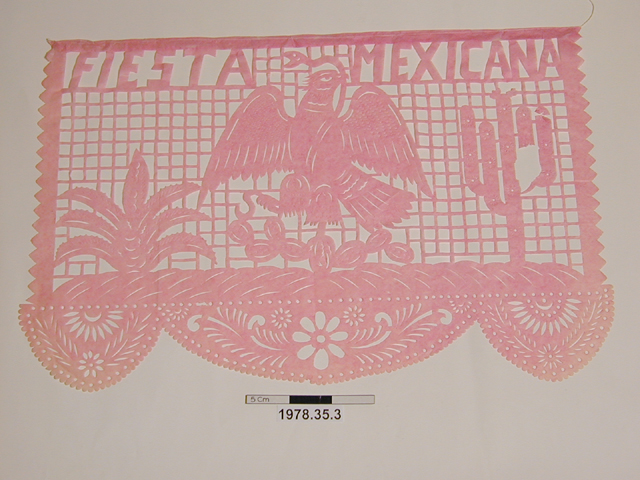
The Horniman shares a special connection with this tradition. In 1977, it hosted Fiesta Mexicana: Popular Arts in Mexico, an exhibition celebrating Mexican craftsmanship.
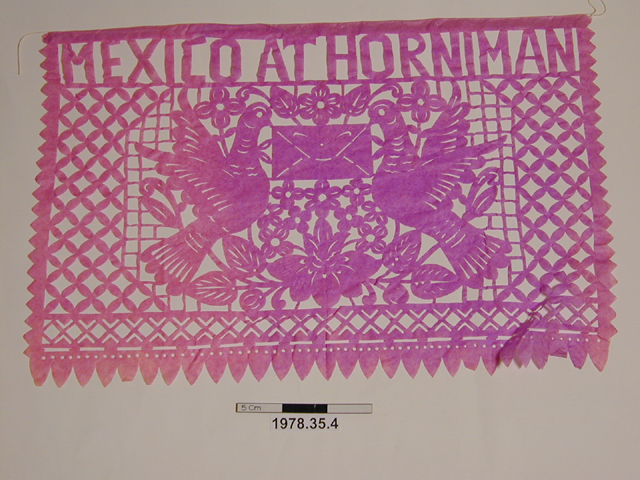
As part of the event, artisans created bespoke papel picado for the museum. Other pieces in the Horniman’s collection were donated or gifted over the past fifty years.
What makes these works remarkable is their preservation. Though papel picado is meant to be ephemeral—fragile sheets that dissolve in wind and rain—these examples have endured. In a museum setting, their survival contrasts with their intended transience, allowing us to reflect on the beauty of life’s fleeting moments.