


There is nothing more enjoyable than being in nature, rolling down hills, playing hide and seek, chasing each other and generally having fun. Or maybe you are more into exploring, trying to find the many different plants or animals that call our Gardens and Nature Trail their home.
We all know the health benefits of being in and around nature, how it can improve our physical and mental health. And it’s not just us humans that enjoy these open spaces, many of us have dogs that we bring to the Gardens so that they can run around too.
What we don’t like however, is when we end up coming into close contact with dog waste.
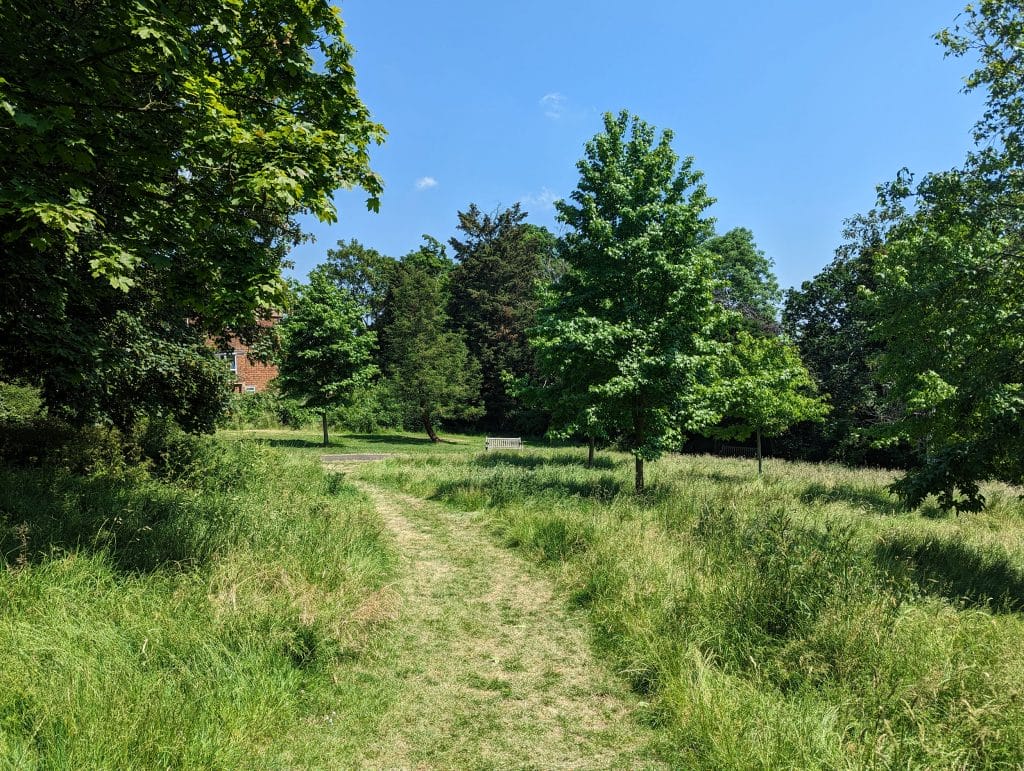
Longer grass at the Horniman
Dog poo and humans
Dog poo poses many health risks to humans. It harbours harmful microorganisms such as bacteria, twice as much as human poo in fact. It also harbours parasites. These little wrigglers cause illness and infections which are dangerous to children, who are particularly vulnerable to them. We can also come into contact with parasites through contact with contaminated water, soil, and other surfaces.
One parasitic infection that can be caused by coming into contact with dog poo is Toxocariasis. This condition is caused by roundworm larvae, found in dog poo. It can lead to inflammation of the eye and potentially cause vision loss.
Whilst not common, it is a particular concern for young children, who might freely put things in their mouths or wash their hands less often.
Dog poo and the environment
So, dog poo is bad for us, but isn’t it natural and therefore okay for the environment? Well, no.
Dog poo is very high in nitrogen and phosphorus. This causes an imbalance in the environment, causing knock-on effects within the ecosystem.
Many of us may think dog poo is a natural source of fertiliser, but it isn’t. When left, it causes broadleaf species such as bramble and dock to become dominant, smothering out smaller species and creating a less diverse range of flora and fauna. This, in turn, has a negative impact on all the biodiversity that relies on the habitat.
The Environmental Protection Agency classifies dog poo as an environmental pollutant and places it in the same category as oil spills, insecticides, and herbicides. The last two are chemicals that we specifically use to kill unwanted garden weeds or pests.
If dog poo gets into waterways such as ponds it can introduce bacteria like E. coli, or parasites that create dangerous algal blooms. These suffocate the animals and plants living in the water. All it takes is a bit of rain to wash it into our waterways.
Many dog medications, such as flea and worming treatments, will pass out through their poo. These treatments can still be active when they come out the other side, potentially killing the very insects we are trying to save.
And it’s not just insects. Birds, small mammals, and aquatic life such as fish and amphibians will all be affected by the chemicals, bacteria, parasites, and other pathogens contained in dog poo, once they eat the insects.
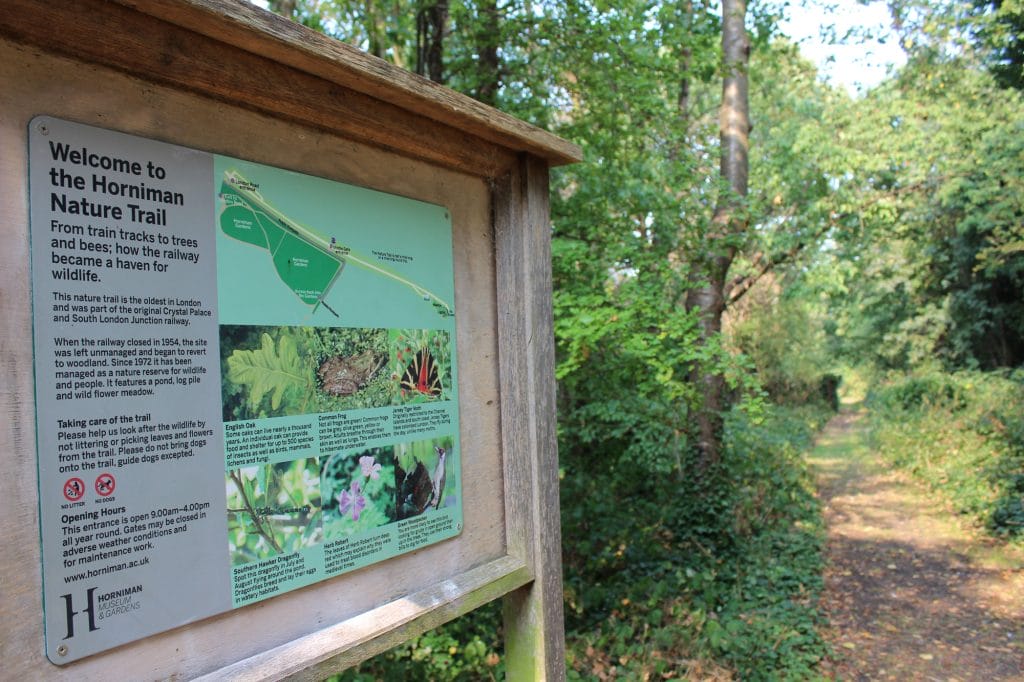
The Horniman Nature Trail is home to a huge variety of flora and fauna
Dog wee and the Nature Trail
Whilst dogs are allowed on a lead in the Gardens (and off the lead in the Meadow Field), they are not allowed at all on the Nature Trail. Their presence and their waste harm wildlife.
Dog poo poses risks to ecosystems but can be picked up and put in the bin. However, dog wee obviously cannot, and it poses many of the same risks.
Dog wee is also high in nitrogen and phosphorus, and its presence also causes broadleaf weeds, which smother smaller, more delicate species.
The Nature Trail is managed carefully to encourage a wide variety of plants, birds, insects and other animals that depend on each other for survival. This is the only area across the 16.5 acres of Gardens that is protected in this way, to safeguard wildlife.
You can read about some of the wildlife we are protecting in the stories by Nature Trail regular, Daniel Harwood.
What we can do
Picking up dog poo and putting it in the bins provided helps protect the biodiversity of our local area. Plus, it makes a nicer environment for humans and other animals.
Please help us to ensure that our Gardens are free of dog poo by always carrying (ideally compostable) doggy bags and picking up after our dogs, and not taking dogs on the Nature Trail.
We want everyone to be able to enjoy our Gardens, be it rolling down the hill or exploring along the Nature Trail.
Coming across unwanted dog poo shouldn’t get in the way.