


As a child Wheatstone was apprenticed to his uncle, a maker and seller of instruments, eventually taking over the business after his uncle died.
He experimented with many instrument enhancements and inventions, even winning a prize medal at the Great Exhibition for the portable harmonium.
Before inventing the English concertina, he was best known for his work in the field of physics and was a Professor of Experimental Philosophy (Physics) at Kings College London.
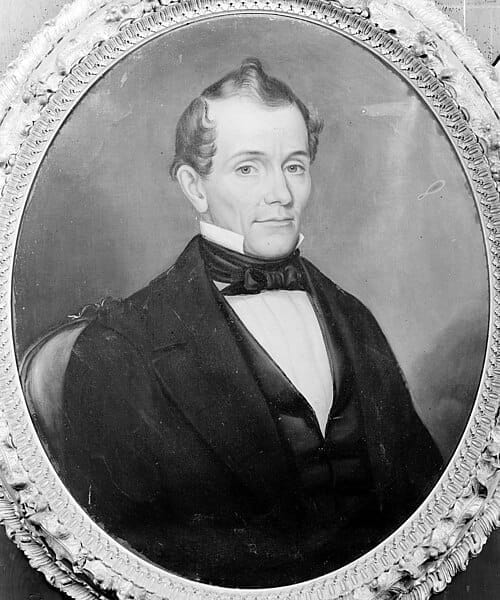
Portrait of Sir Charles Wheatstone CC BY 4.0 Wellcome Collection
The history of the concertina
The concertina uses a set of free reeds to produce its distinctive sound. The story of the concertina begins in Asia, where free reed mouth organs, with reeds set into bamboo tubes, have been played for centuries.
In the 19th century, experiments with free reeds led to many new instruments being created in Europe and America.
In 1844 Wheatstone patented his ‘English’ concertina also known as the Wheatstone concertina. It had white ivory buttons for natural notes and black buttons for accidentals. The notes were distributed alternately between each hand so that scales could be played rapidly.
Rival manufacturers patented their own arrangement of notes and buttons.
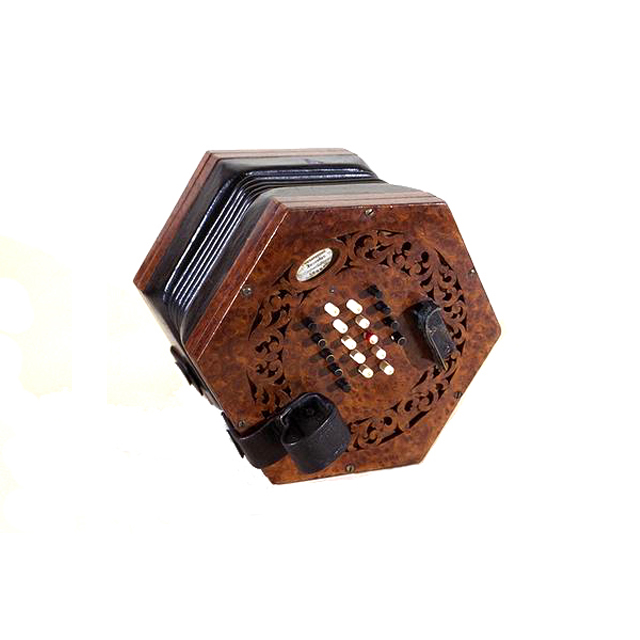
412.132-62 Sets of free reeds with flexible air reservoir
Musical Instruments
Wheatstone’s legacy
Many apprentices from the Wheatstone factory went on to establish their own instrument making businesses.
The concertina became popular throughout the 19th century, and was used throughout the English-speaking world. Although popularity declined at the beginning of the 20th century, the folk revival in the 1960s saw a resurgence.
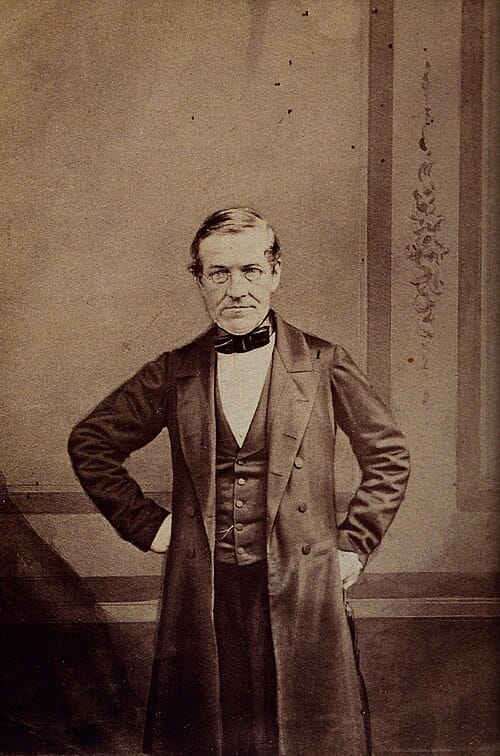
Sir Charles Wheatstone. Photograph by Hill & Saunders CC BY 4.0 Wellcome Collection
Other inventions
Wheatstone is also known for his work developing the Wheatstone bridge, which is used to measure unknown electrical resistance. He also worked on the development of telegraphy, alongside Sir William Fothergill Cooke.
He was knighted in 1868.
Lead image: Sir Charles Wheatstone. Stipple engraving by C. H. Jeens CC BY 4.0 via the Wellcome Collection