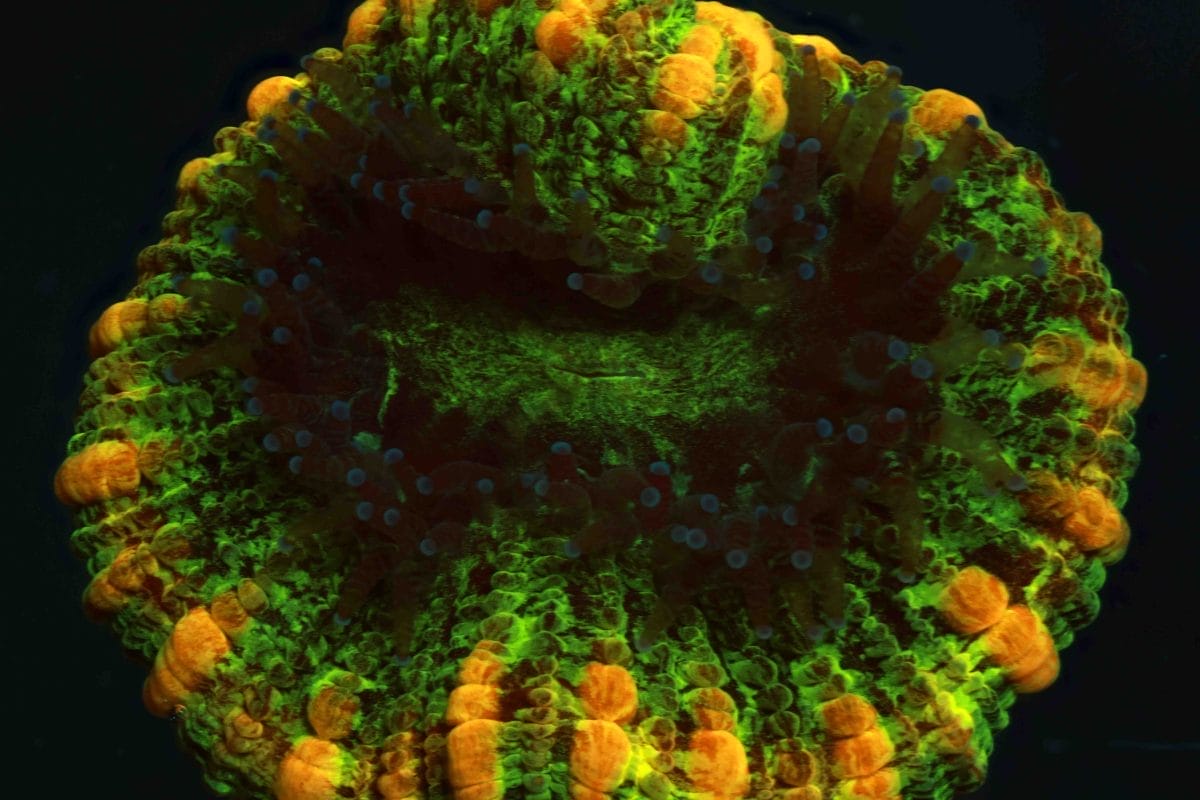
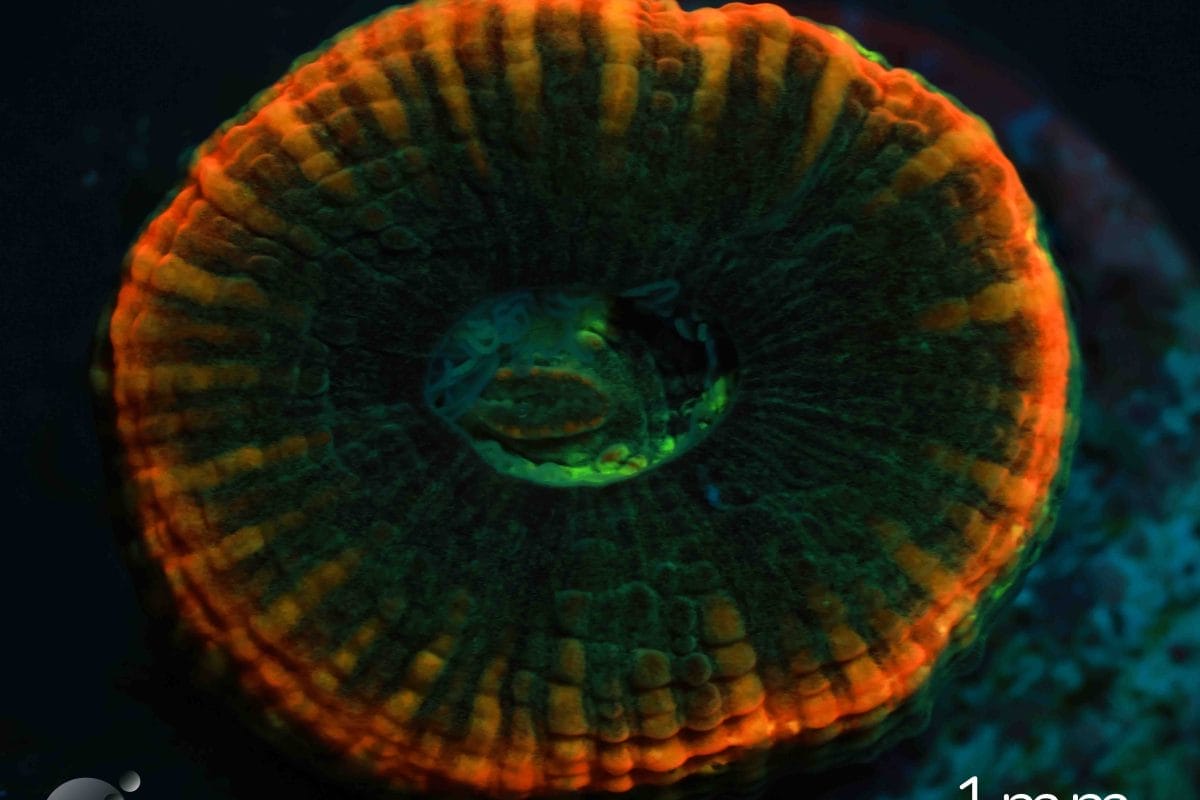
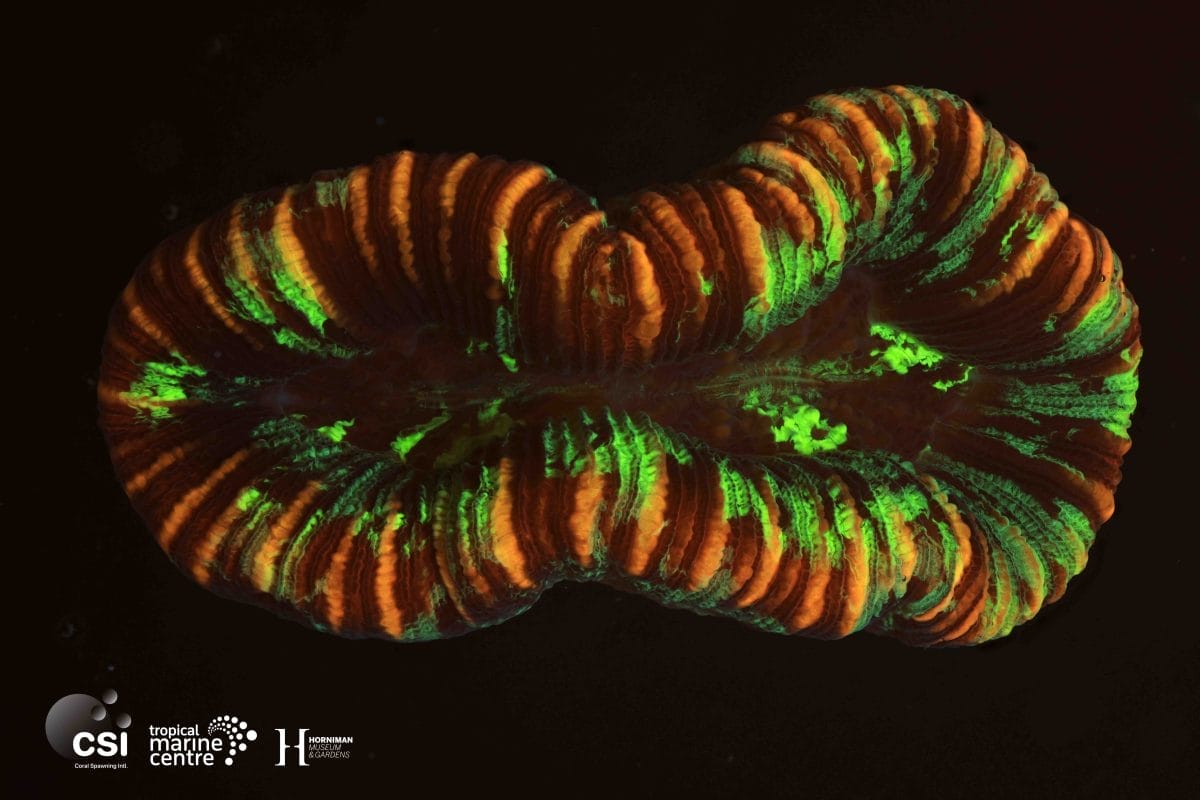
Trachyphyllia geoffroyi is a long-time favourite among marine aquarium enthusiasts, admired for its large fleshy polyps and dazzling colour variations. Despite its popularity, little has been known about its reproductive biology, until now. After four years of focused research, the team has achieved a major breakthrough, paving the way for sustainable aquaculture of this highly sought-after species.
'Trachyphyllia geoffroyi is a species that we’ve always wanted to work with due to its limited geographical range but high demand within the aquarium industry. The challenge has been the complete lack of scientific data on when or how it reproduces, so we had to take a systematic approach to unlock this iconic species’ secrets'
The collaboration builds on over a decade of coral reproductive expertise in the Horniman’s Project Coral research programme, CSI’s high quality imaging capabilities and TMC’s global knowledge of coral species distributions.
Using corals loaned by TMC, the research team at the Horniman and CSI used specially designed aquariums to induce spawning, and collected gametes (eggs and sperm) for fertilisation.
After a brief developmental phase, coral larvae were successfully settled, and juvenile corals are now growing out within both the facilities. With more juvenile corals than are needed for the research programme, the excess are being added into the supply chain for TMC customers. This success adds another species to the expanding list of corals bred ex situ, helping reduce pressure on wild populations.
'As a company dedicated to sustainability in the marine ornamental trade, we are delighted to partner in this pioneering work. Focusing on sexual coral reproduction provides another long-term, sustainable pathway to supply corals for the aquarium trade, working alongside principals of short supply chains, inland asexual farming and mariculture. What is genuinely unique in sexual reproduction is the ability to scale and realistic collaboration with conservation and restoration of reefs at source.'
The successful breeding of T. geoffroyi not only reduces the need for wild collection but also creates new opportunities for reef restoration. According to Dr Craggs, some Large Polyp Stony (LPS) coral species may be particularly vulnerable to overharvesting, making this milestone all the more significant in creating a road map for the future.
'If managed carefully, these ex-situ spawning events have the potential to produce surplus corals for use in ecosystem restoration, providing a circular economic model where aquaculture helps to fund restoration. This vision has been a passion for many years and continues to drive my research.'
Looking ahead, the collaboration will continue expanding its research to other coral species while developing techniques to improve breeding efficiency. The partners’ goal: to advance both reef restoration and sustainable coral aquaculture for the global aquarium industry.