


Have you spotted any of the wildlife that has made the Sunken Garden its home? From newts, damselflies, and hummingbird hawk-moths to numerous bird species it’s a haven for wildlife. And, of course, our ever-present squirrels!
This growing biodiversity is a testament to the fantastic work of our Gardens team. In recent years they have transformed the Sunken Garden from a traditional seasonal bedding display into a haven for wildlife and a beautiful, restorative place for people.
The new style includes a huge range of plants from small trees and shrubs, herbaceous perennials, bulbs and annual flowers. The various plants will come into bloom at different times of the year, providing food and forage for wildlife through the seasons as well as a beautiful changing display for our visiting public. In addition, the overall abundance of plants creates shelter for birds and mammals and habitat for invertebrates.
So how did this transformation come about, and what inspired it?
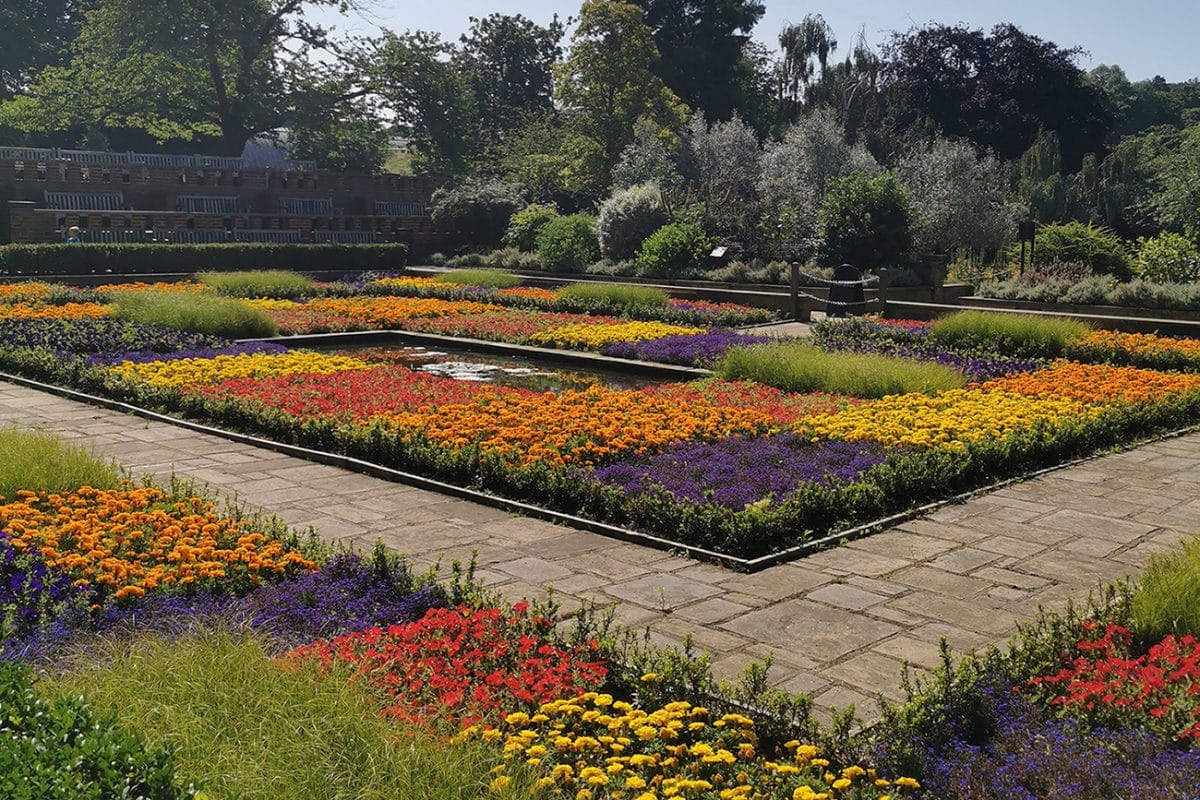
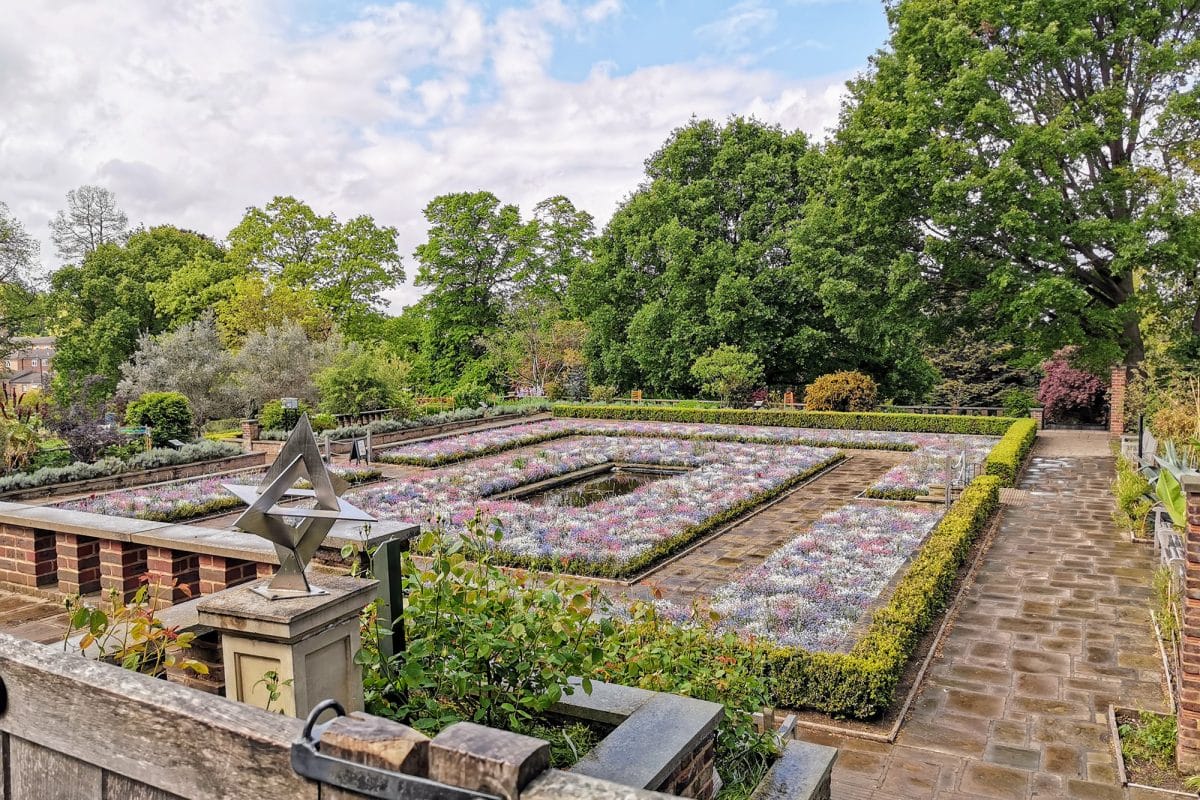
History of the Sunken Garden
Although they were visually striking, the garden’s seasonal bedding displays were highly resource intensive. They carried a high carbon footprint and didn’t offer many benefits to local biodiversity. This was due to their monoculture planting and the fact that many annual bedding plants have been bred to have such large petal filled blooms that insects cannot access the nectar or pollen within them.
Years of overcultivation had also left the soil in poor condition, and the central pond was too shallow to support aquatic life. Overall, the space no longer aligned with our Climate and Ecology Manifesto.
The challenge, however, was transitioning away from this model. Creating a new display that is visually appealing and genuinely beneficial for wildlife requires time to grow, establish and flourish.
Major changes commence
In 2023 we deepened the pond to sustain a greater diversity of plants and wildlife. Previously, at just 20cm deep, the water would get far too hot in the summer for wildlife to survive.
We also planted perennials that were specifically chosen to sustain local bird and invertebrate populations.
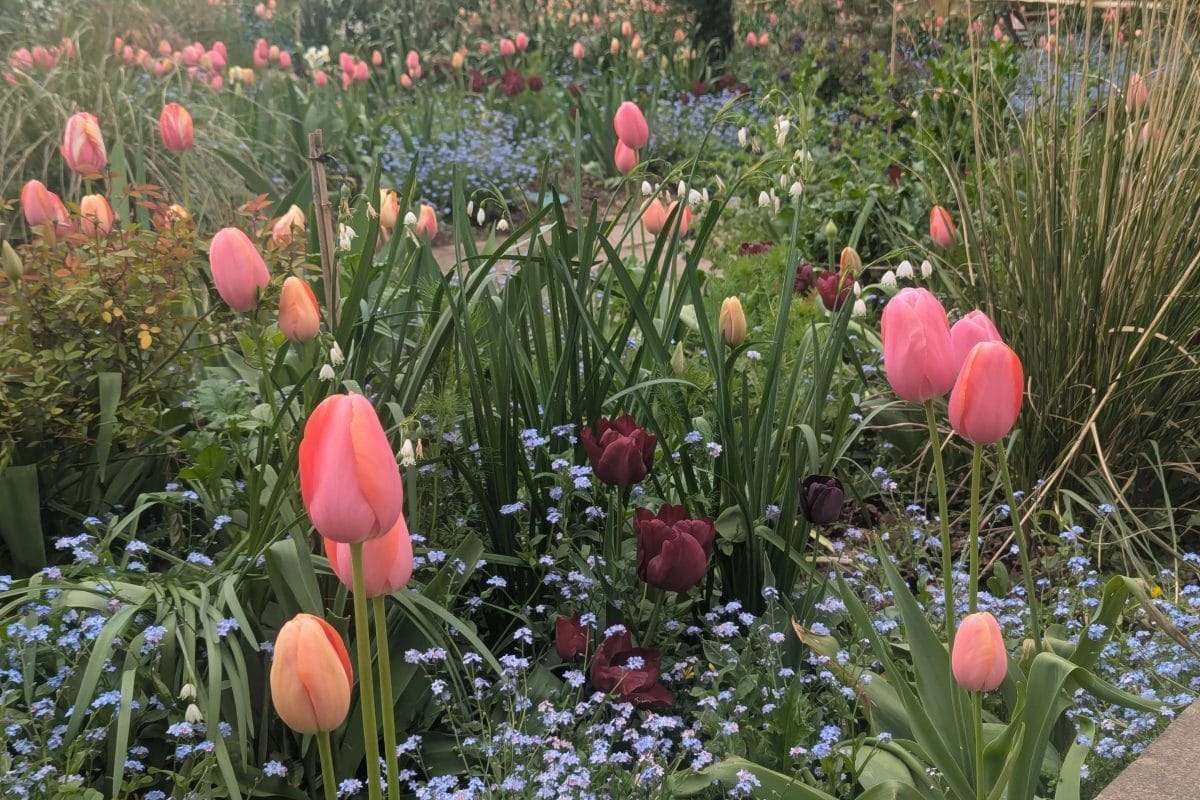
Rather than removing and composting bulbs each year, we planted species such as tulips much more deeply in the soil, meaning that they will repeat flower for up to five years.
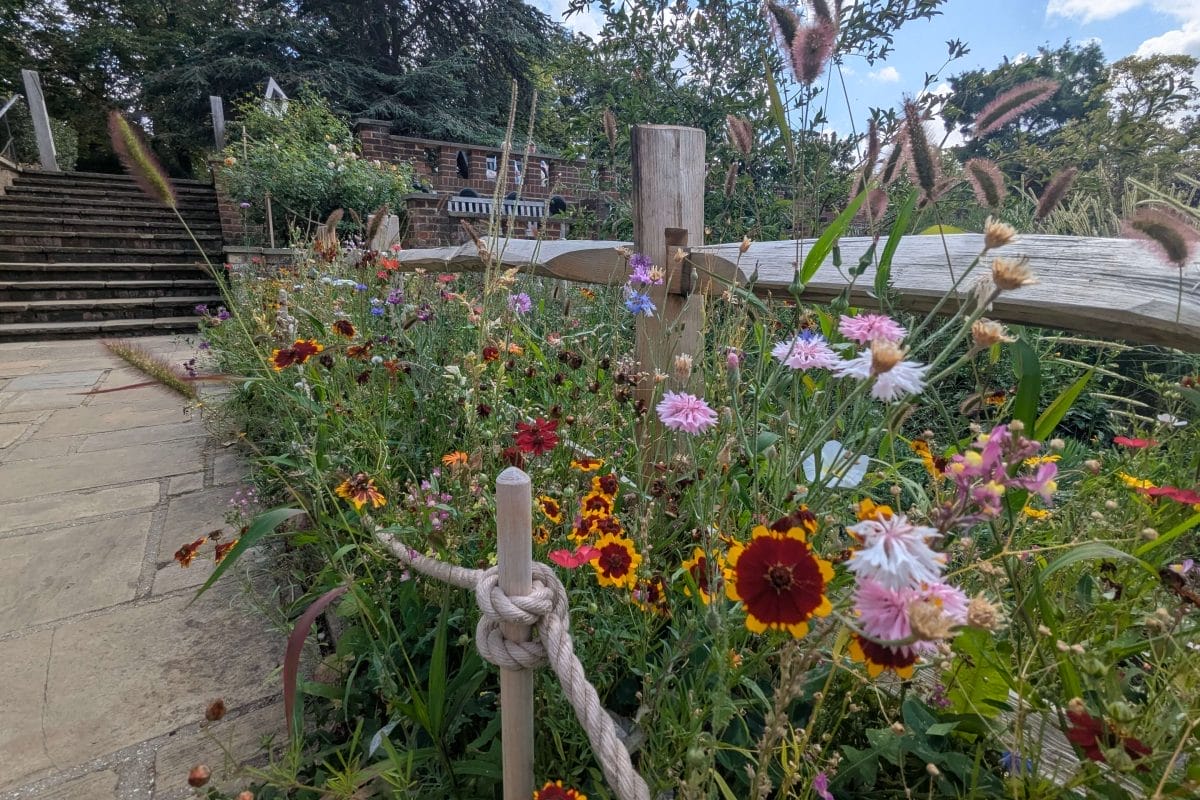
Wildlife friendly annuals were sown to produce natural displays in a way that minimally disturbs the soil. We’re using a new mixed planting approach, with different plant varieties interwoven throughout the beds.
If you visited this past summer, you may have spotted damselflies darting across the pond as well as bees and beetles of all kinds enjoying the wildflower border.
Looking ahead
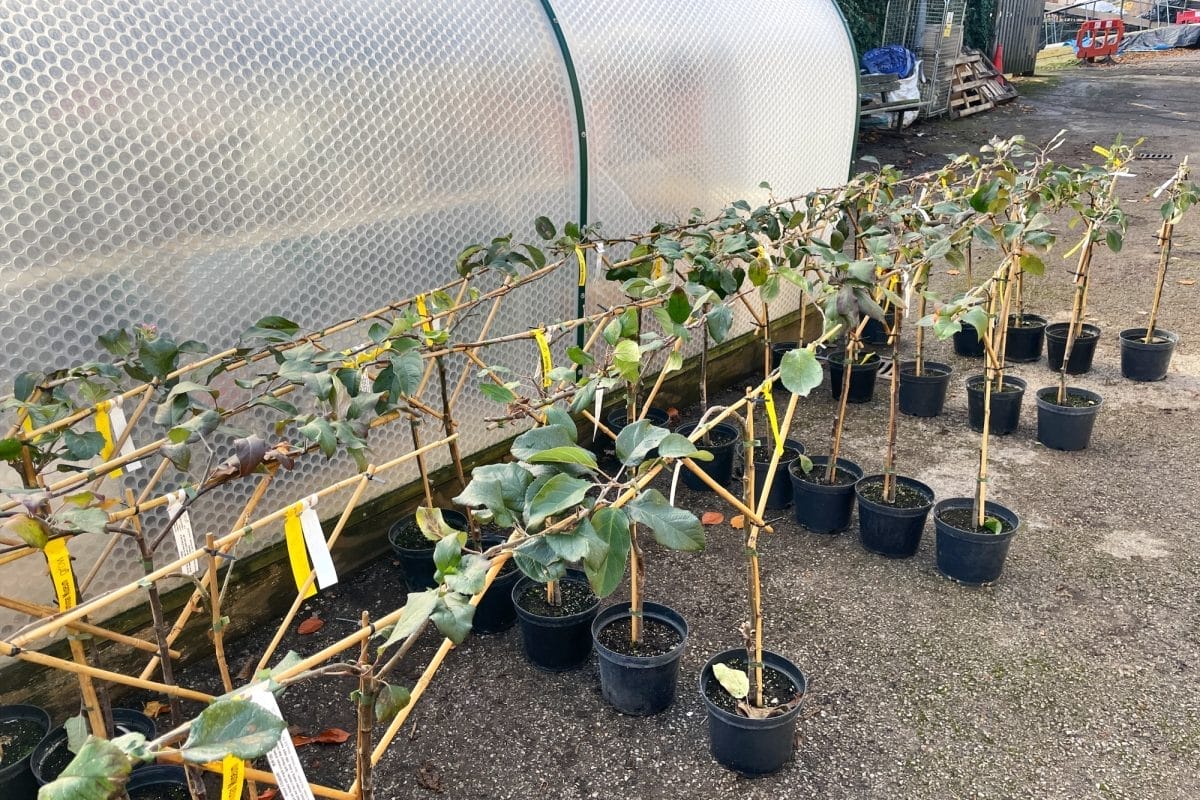
The next step for the Sunken Garden is to complete the replacement of the buxus hedge surrounding the beds. Previously this was having to be sprayed fortnightly through the summer to prevent box caterpillar.
There will be at least five different varieties of apple trees grown to a special ‘step-over’ height. These will have a variety of blossoms and will provide structure but also informality.
We hope that once established, we will have a robust and adaptable sunken garden that can thrive in tandem with people and nature.
Update: April 2026
The apple blossom tree border is in and blooming lovely – come and have a look!
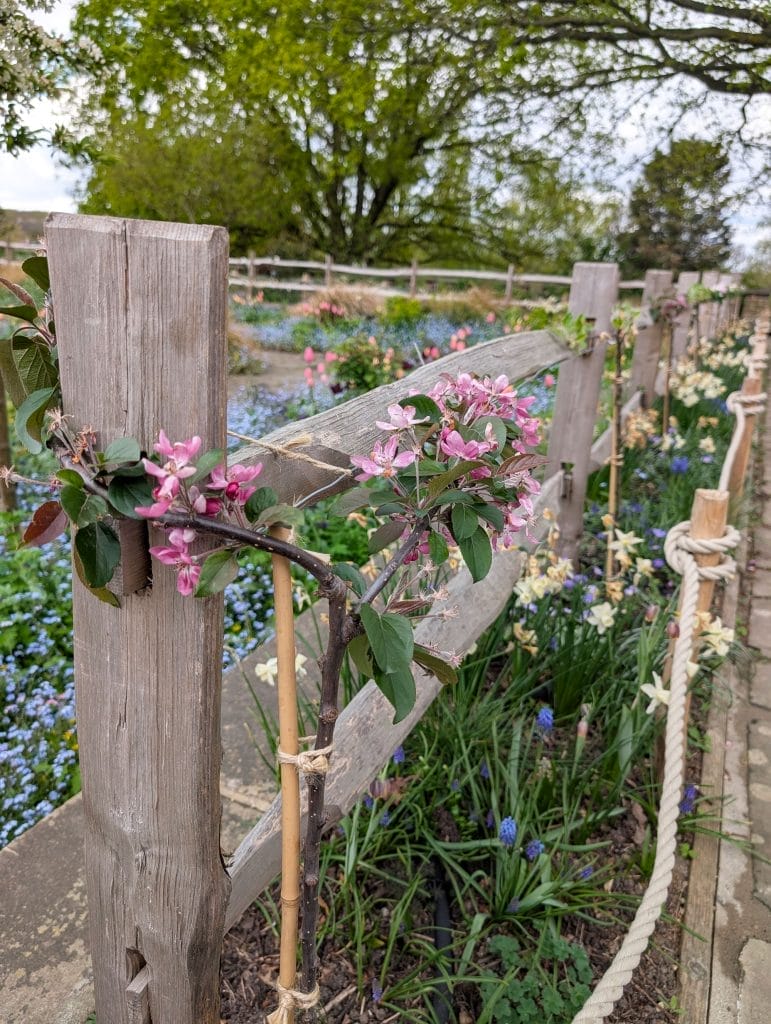
Apple tree border in bloom