


What is deep sea exploration?
Deep sea exploration is defined as exploration of the sea that looks beyond the continental shelf.
This is the point at which the landmass from the nearest continent drops away.
When did deep sea exploration begin?
In the 19th century people thought that there was nothing in the deep sea – they believed that nothing could survive.
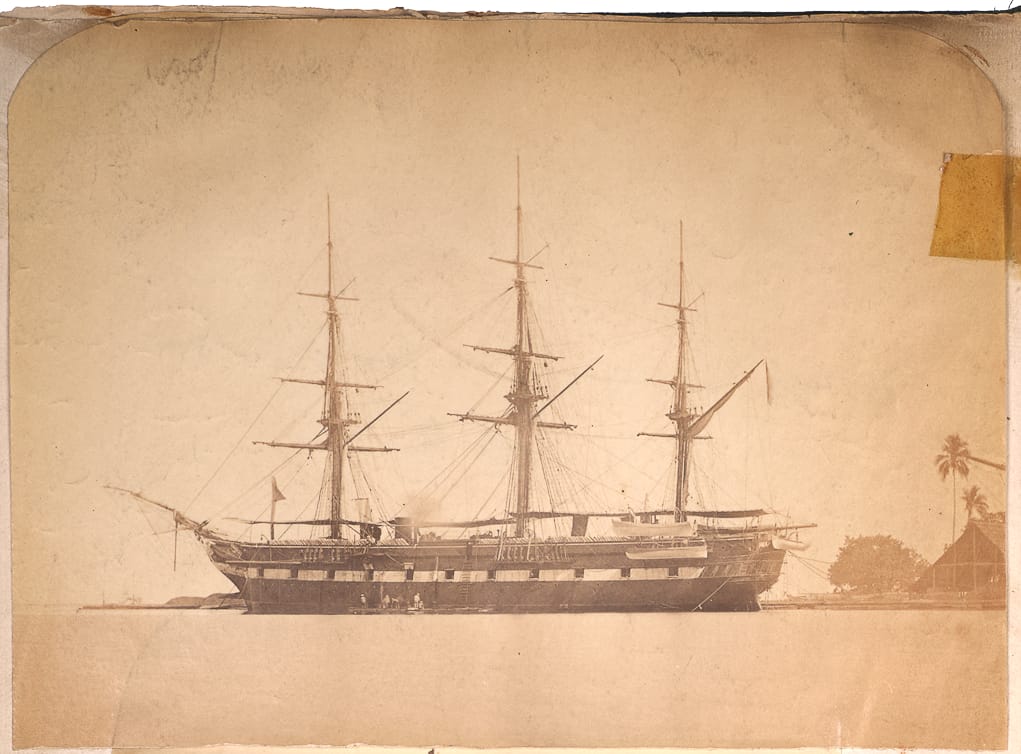
However in 1875 the HMS Challenger discovered the Mariana Trench, the deepest point on Earth at the time. The expedition originally aimed to explore the physical conditions of the deep sea. During it’s voyage it made scientific discoveries which remain important to this day.
In the 1930s William Beebe and Otis Barton completed the first deep-sea exploration mission in a human-occupied vehicle. This vehicle was called a bathysphere. They descended to 923 metres, a record at the time.
After the Second World War there were many technological advancements that could further this exploration, largely due to the advancement of sonar. This meant that the sea floor could be mapped much better.
In 1960 Jacques Picard and Donald Walsh descended into the Mariana Trench in a bathyscaphe called Trieste. This not only proved the durability of Trieste, but the possibility of manned crafts reaching the depths of the sea.
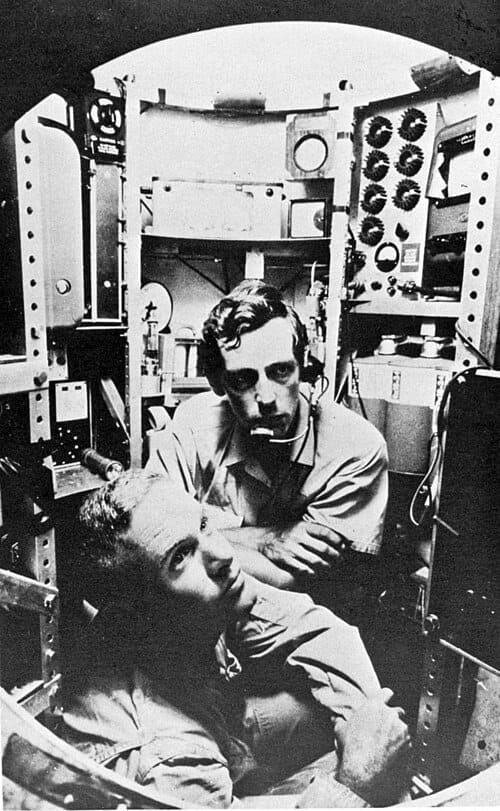
Don Walsh and Jacques Piccard in the bathyscaphe Trieste – public domain
One of the challenges of deep-sea exploration is the extremely high pressure experienced the deeper you go. From the 1960s more unmanned submersibles and remote operated vehicles were used.
Despite this in 2020 Dr Kathryn Sullivan and Vanessa O’Brien became the first women to reach the bottom of Challenger Deep.
What is the deepest sea exploration?
On average the sea is 3.7km deep. However the Mariana Trench is the deepest point of the ocean that is known to us, and is 11km deep. That is 98 times the height of St Paul’s Cathedral.
For even more context – the Mariana Trench is deeper than Mount Everest is tall!
The deepest point of the Mariana Trench is the Challenger Deep, located at the southern end.
Only three people have been to Challenger Deep. In fact, we have explored less than 10% of the deep ocean.
In 2012 film director James Cameron descended into the Mariana Trench in the submersible Deep Sea Challenger. He filmed and sampled the bottom.
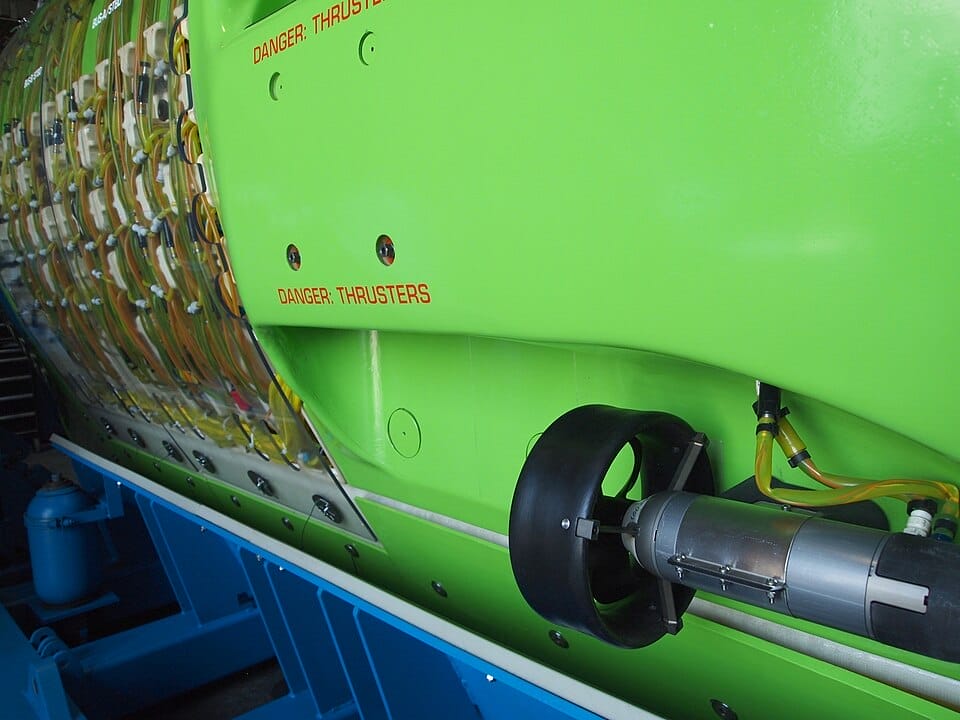
Side view of Deep Sea Challenger Creative Commons SA-BY 4.0
What is at the bottom of the ocean?
Darkness
The main thing about deep sea is that it’s very dark! Light from the surface can’t reach it, and so the only light is what is produced by organisms. No light also means no photosynthesis. So while there are some things at the bottom of the ocean, plant life isn’t one of them.
Plastic
A study in 2014 found plastic contamination in deep-sea sediments. The study found that around four billion microscopic plastic fibres were littering each square kilometre of deep-sea sediment.
A plastic bag is the deepest known piece of plastic rubbish, found in the Mariana Trench.
Life
Although we might not think it, there is actually life found in the deep sea. Beyond 8km there continues to be hoppers, anthropods, coral, anemones and even jellyfish. These creatures have adapted and evolved to survive the great pressures of these deep points of the ocean.
In 2023 a journey to the ocean depths found a snailfish below 8km, the deepest fish recorded at the time.
Treasure
Shipwrecks and archaeological sites of interested are protected under UNESCO Convention on the Protection of the Underwater Cultural Heritage.
However, throughout history some ships have sunk and were never recovered. The UN estimates that there are at least 3 million shipwrecks on ocean floors.
The richest vessel ever lost at sea is the Flor de la Mar. This 16th century Portuguese ship had assisted in the Portuguese conquest of Malaysia (then Malacca). Despite being laden with riches equivalent to 2 billion dollars it was old and leaky and sank in a storm. The ship and its treasures were never seen again.
Similarly, the Merchant Royal was an English 700-ton galleon, which was on its way back from trading with Spanish colonies in the West Indies when it stopped in Spain for repairs. Here it was loaded with 100,000 pounds worth of gold and the same in jewels. On the next leg of its journey it leaked, sank, and has never been found.
Lead image: Jeremy Bishop on Unsplash