


Something special happened at the Horniman Museum on 4 September 2025. More than 1,200 people came through the doors and filled the galleries, conservatory, and gardens for All Eyes on Her! Late: a night celebrating South-West Asian and North African (SWANA) women through art, music, film, and storytelling.
Zeina Dowidar from Hekayyatna curated the whole thing, taking inspiration from our exhibition All Eyes on Her!, which celebrates the everyday activism of Egyptian women through three themes: resist, revolt, and reclaim. For one unforgettable evening, Hekayyatna turned the Museum into something different: a vibrant, creative space led by community voices, filled with laughter, rhythm, and real connection.
Credit: Adham el Khaodary
Why ‘takeover’ matters
Museums have a history of talking about SWANA communities instead of actually listening to them. Hekayyatna wanted to flip that script and show what happens when those same communities take over the space and tell their own stories; in their own voices, on their own terms.
A recent Egyptian Streets article put it well, saying the event “confronted colonial legacies” by putting SWANA women and cultures front and centre. Instead of being looked at through someone else’s lens, they got to shape the narrative themselves and turning the Museum into a space where they actually belonged.
This is what happens when you let communities take the lead. Museums become something completely different, something better. They stop being just places where you look at history and become places where you actually make it… together.
All Eyes on Her! Late — a night of creativity and connection
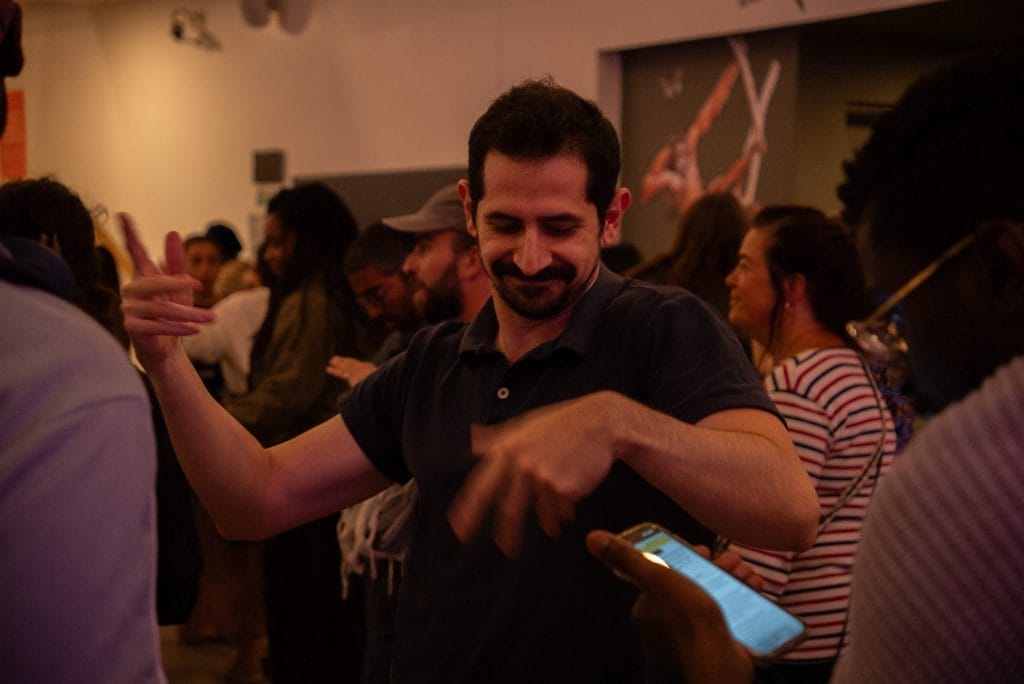
The energy was incredible from the moment people walked in. Visitors moved through spaces alive with sound and colour, getting stuck into creative workshops, music performances, films, and markets that celebrated SWANA women’s creativity and heritage.
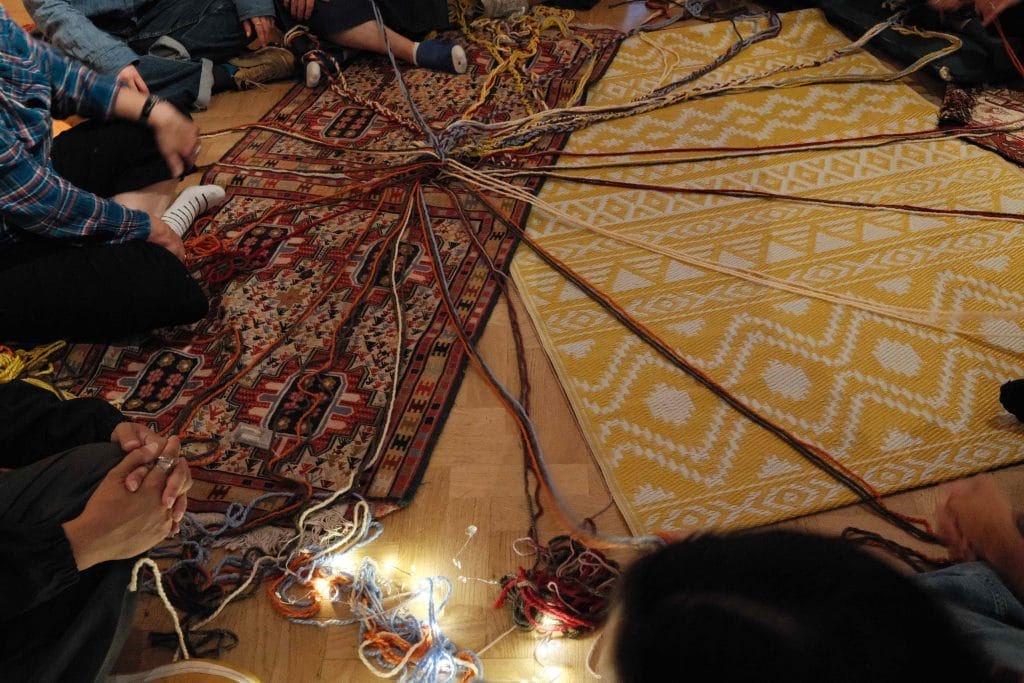
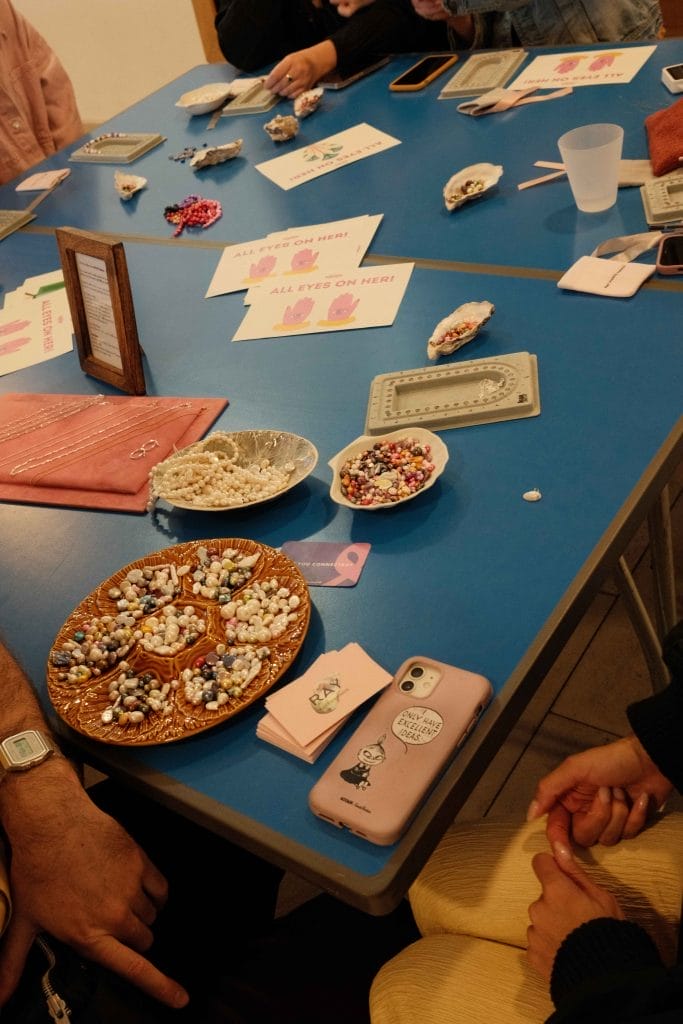
The workshops were properly hands-on. People were designing jewellery with Asherah Jewellery, weaving collective stories with Culture Mocktail, exploring identity through writing with Scribbles by Mel Sevinc, creating art with Ray Makes Things, and taking time for guided reflection with Your Rouh by Suzan Shedid.
Credit: Nadia Barakat
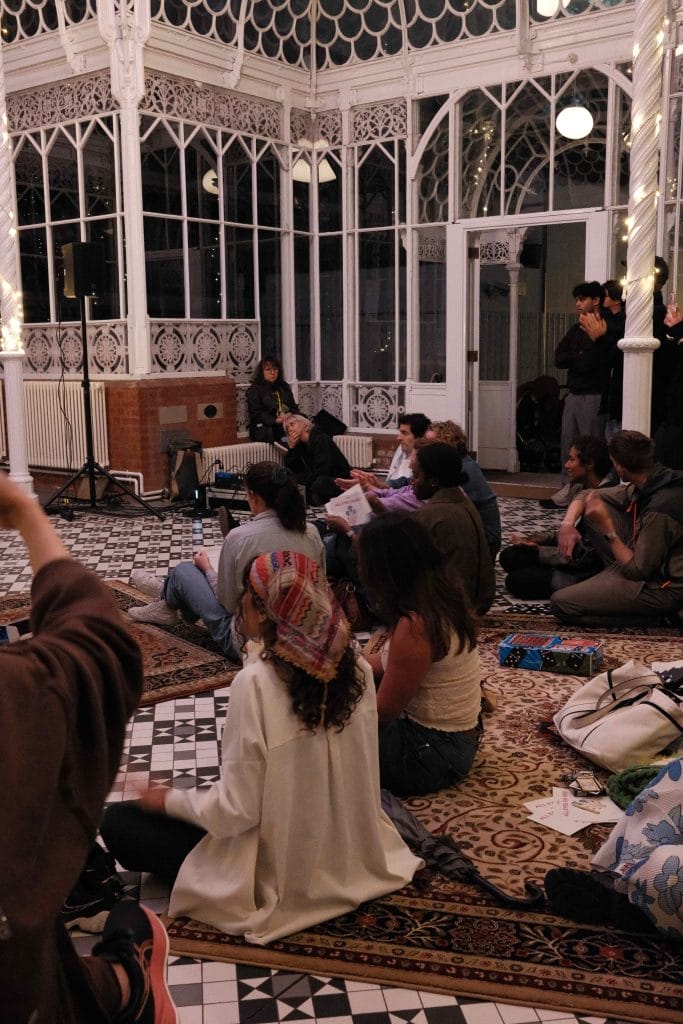
In Gallery Square, Iraqi-Czech DJ Rára had the crowd moving with a brilliant mix of Arabic, African, and Caribbean sounds. Over in the Conservatory, British-Palestinian musician YAZ performed a gorgeous live set that blended Arabic melodies with jazz and soul.
Meanwhile, the film programme E7kili ya Khti, curated by Kalam Aflam, shared powerful stories of women across North Africa reclaiming their voices and pushing back against outdated narratives. It fit perfectly with what the exhibition was all about.
People also gathered in the female-owned market, supporting some incredible small businesses: hand-embroidered keffiyehs made by women refugees from SEP Jordan, fair-trade Palestinian olive oil and produce from Zaytoun, beautiful watercolour artworks from Neem Creates, and fun Arabic children’s books from Liblib Publishing.
Everywhere you looked, something amazing was happening. It was one of those nights where you could just feel the magic: creativity, community, and heritage all coming together.
A shift in energy and audience
By the middle of the evening, the museum had been completely transformed, not just in how it looked and sounded, but in who filled the space. As Egyptian Streets observed, ‘within a few hours, the crowd shifted completely into a far more diverse audience, mainly young Arab and SWANA communities.’
For many visitors, this was the first time they had seen their cultures, languages, and experiences represented and celebrated inside a London museum. It was emotional, affirming, and deeply joyful.
One guest described it perfectly: ‘It felt like the Museum was ours. For once, we were not just visitors but part of the story.’
Credit: Nadia Barakat
What museums can learn
All Eyes on Her! Late showed what’s possible when communities lead the way. Here’s why it worked: we trusted the community to lead, and they showed us what was possible, giving community curators, artists, and organisers the space to shape the programme themselves.
It also proved that ‘success’ isn’t just about the numbers (though we did welcome more than 50% more visitors than a typical Horniman Late). It’s about connection and the conversations that happened, the friendships that started, the pride people felt seeing their heritage celebrated out in the open.
Nights like this remind us that the Horniman can be more than just a museum. It can be a place of belonging, a platform, a home for resistance and reclamation.
Credit: Nadia Barakat
Looking ahead
We’re proud to have curated All Eyes on Her! and grateful to everyone who made it possible… from the artists and curators to the incredible visitors who filled the Museum with life.
Events like this help centre the voices of the communities whose heritage lives in the collections of the Horniman Museum. This night demonstrated the power and importance of SWANA community programming: the response was overwhelming, and we look forward to building on this momentum.
This night was more than a celebration; it was a glimpse of the future we’re building together. A future where communities take the lead, stories are shared in many voices, and the Horniman continues to grow as a place where everyone can see themselves reflected.
Lead image: Amira Farag
Manifesto design and production: Farida Eltigi
Manifesto text: Zeina Dowidar and Al Hassan