


Who are the Fante people and what were the Asafo companies?
The Fante people live primarily across coastal Ghana. Their states, cities and towns have been central to cultivating trade relationships for the nation.
Fante people founded Asafo (meaning war people) companies to act as military units starting in the 15th century. Each town could have several companies made up of local men. Although Asafo companies were primarily created to defend, over time they became central to the local identity, playing an important role in politics as well as social and religious events.
The Asafo companies have their own hierarchy and regalia. Mfrankaa (the company flags) are important signifiers of their identity and history, telling their accomplishments and stories. During ceremonies and gatherings, the mfrankaa by the different Asafo companies are proudly displayed and paraded.
Flags by Baba Issaka
These flags were produced by master flag maker and textile artist, Baba Issaka, to mark the bicentenary of the Abolition of the Transatlantic Slave Trade Act and fifty years of Ghanaian independence from Britain in 2007.
These flags express both the brutal history of the Transatlantic Slave Trade, and the ideas, beliefs and traditions that survived despite the enforced transportation of millions of enslaved Africans.
Company business
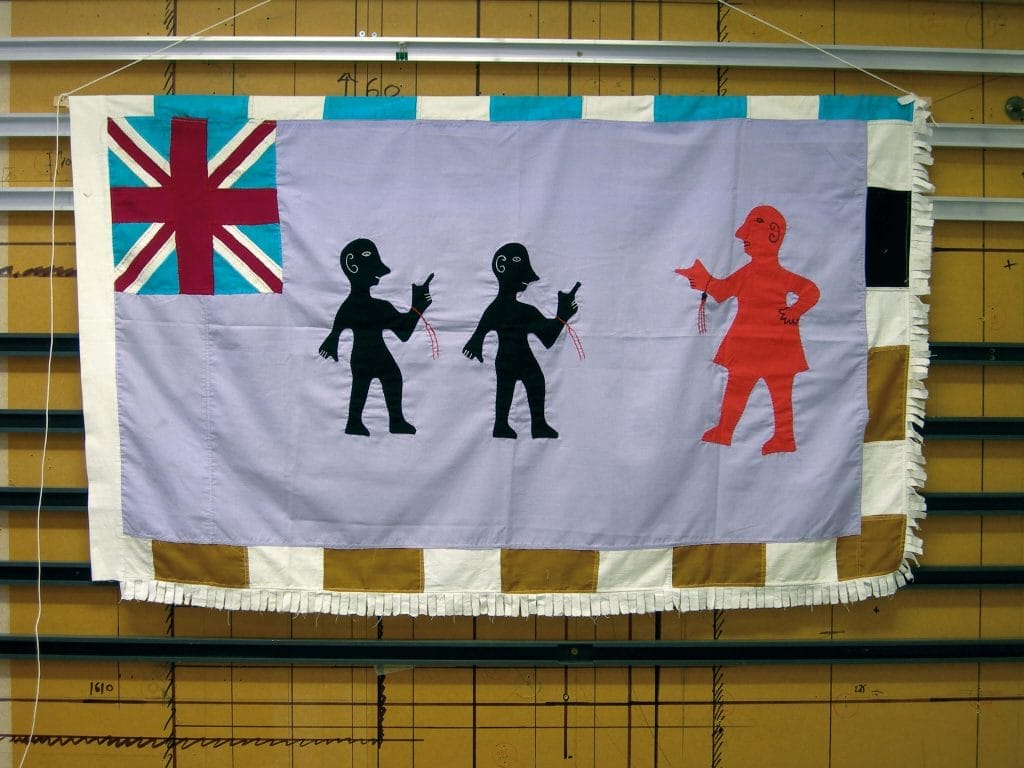
This frankaa (singular flag, mfrankaa is plural) shows an Asafo commander disciplining two members of his company. This flag serves as a warning to unruly members and shows the importance of staying loyal to the company.
The use of red or sometimes white for figures on traditional mfrankaa can symbolise power or represent figures of authority, not necessarily Europeans.
The Union Flag appeared on most mfrankaa prior to Ghanian independence in 1957. Sometimes, when older flags are copied or renewed, they retain this second flag.
Enslavement
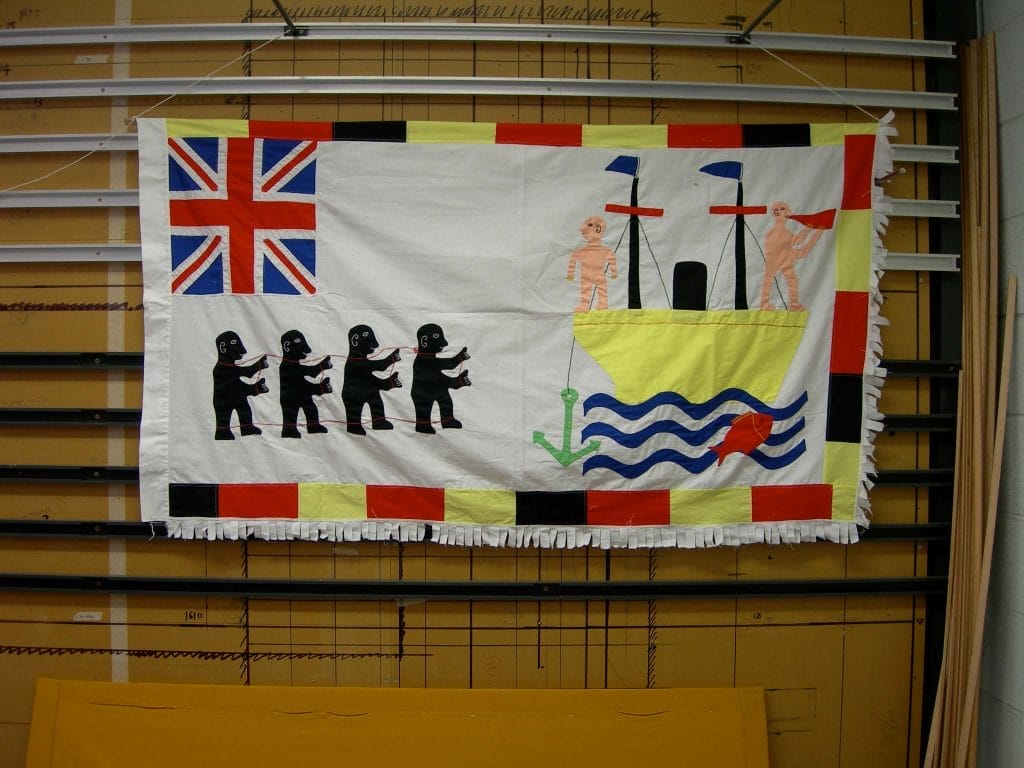
This frankaa depicts captive Africans being led to a ship, captained by European enslavers, about to embark on a journey from West Africa to the Caribbean and America. Many of these journeys would have begun from castles and forts on the coast of Ghana.
It is estimated that at least two million people died on these journeys due to the inhumane conditions that African captives were subjected to.
Brutality
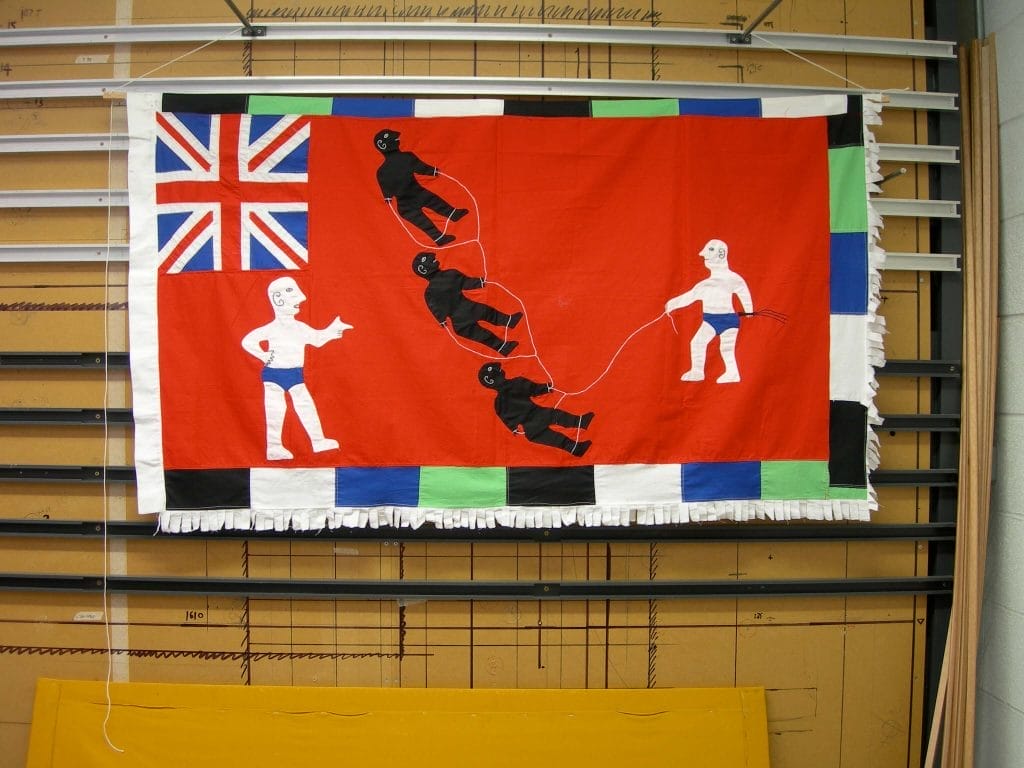
This frankaa depicts the brutal treatment of enslaved Africans by European enslavers.
The red background represents bloodshed and violence. Its usage mirrors the red on the Ghanaian national flag, which symbolises the blood of those who died in the nation’s fight for independence from Britain.
Some Asafo mfrankaa were made to incite resistance against British rule and were banned by local colonial governments. Today they are still used for ceremonial purposes.
Breaking free from captivity
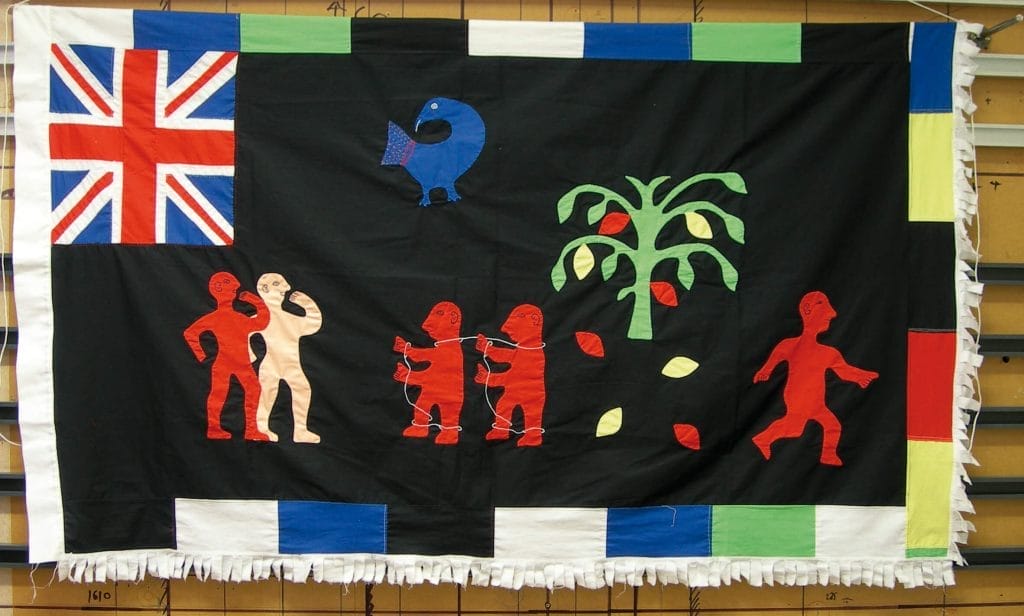
This frankaa depicts European and African enslavers with captive Africans in chains. One person is fleeing, having escaped captivity, symbolic of the ongoing resistance by captive and enslaved Africans.
The tree, shedding leaves suggests change, and new hope. Baba Issaka also features the Adinkra symbol Sankofa, a bird looking back over its shoulder, meaning to ‘return and take it’; a message to not be afraid to look at the past, learn from your mistakes to shape your future.
Abolition
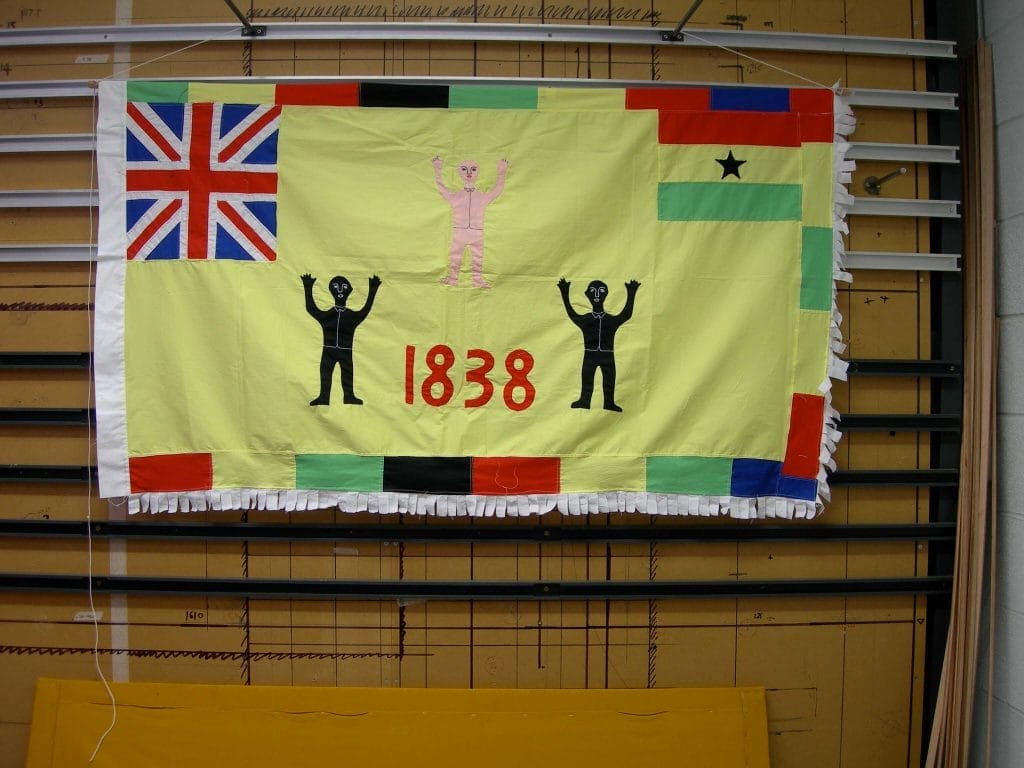
This frankaa depicts Africans and Europeans celebrating the abolition of slavery. In August 1838, slavery was abolished through Britain’s colonies.
Although the trade of enslaved peoples was made illegal in Britain and its colonies in 1807, those people who were enslaved were still legally considered the ‘property’ of enslavers. In 1834 this was replaced with a system of indentured labour which was brutally violent and oppressive.
It was only in 1838 when those who had been enslaved would be able to legally leave their enslavers and oppressors.
Trading Links, Tema and Greenwich
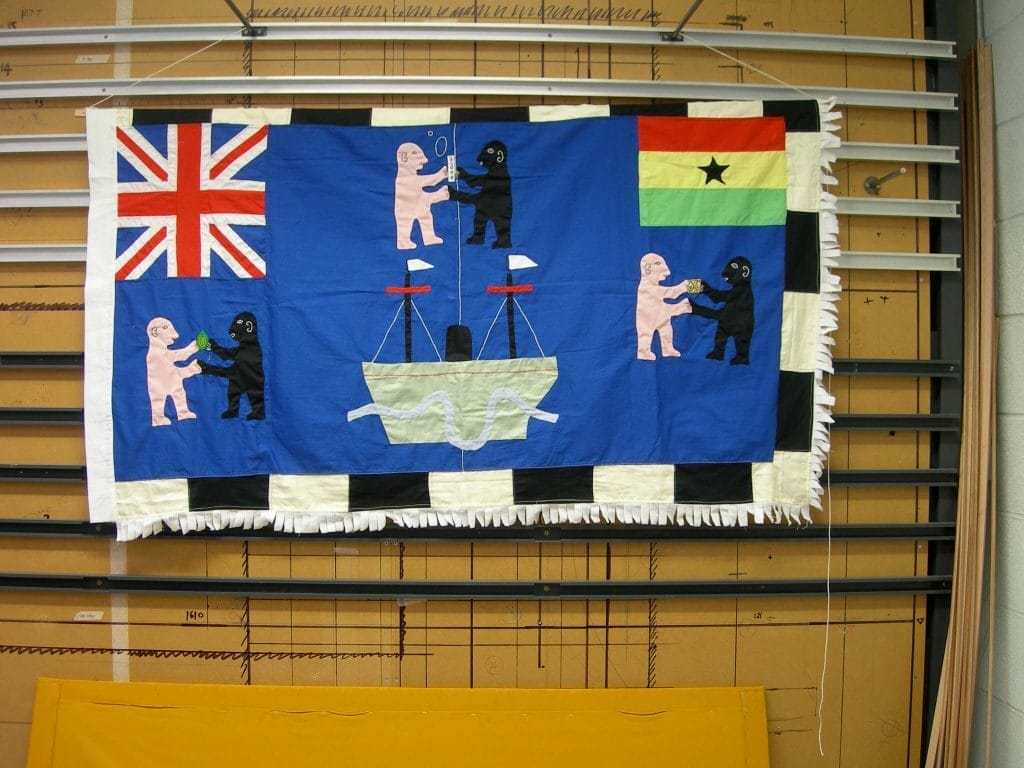
This frankaa celebrates trading links between Ghana and Britain today, showing the exchange of goods such as cocoa. It also celebrates the connection between the London borough of Greenwich and the Ghanaian costal city, Tema. The two were twinned in 2000 for the Millennium, and have enjoyed youth exchange programmes, ICT educational development and sport infrastructure projects.
The Greenwich Meridian Line passed directly through Tema, connecting it to the London borough.