


There is a famous rumour around these parts, that when Frederick Horniman’s house – Surrey House on London Road – became too full of objects from around the world his wife Rebekah said, ‘either the collection goes or we do.’
Whatever was said at the time, this kicked off a move for the family, and the eventual build of the Horniman Museum that you can see today.
But where did the Horniman family go? Not very far, but to a house sat on top of the hill behind the Museum, between London Road and Horniman Drive, called Surrey Mount.
Surrey Mount? Surrey House? Which is which?
At times, people get confused between the two, but this is Surrey House:
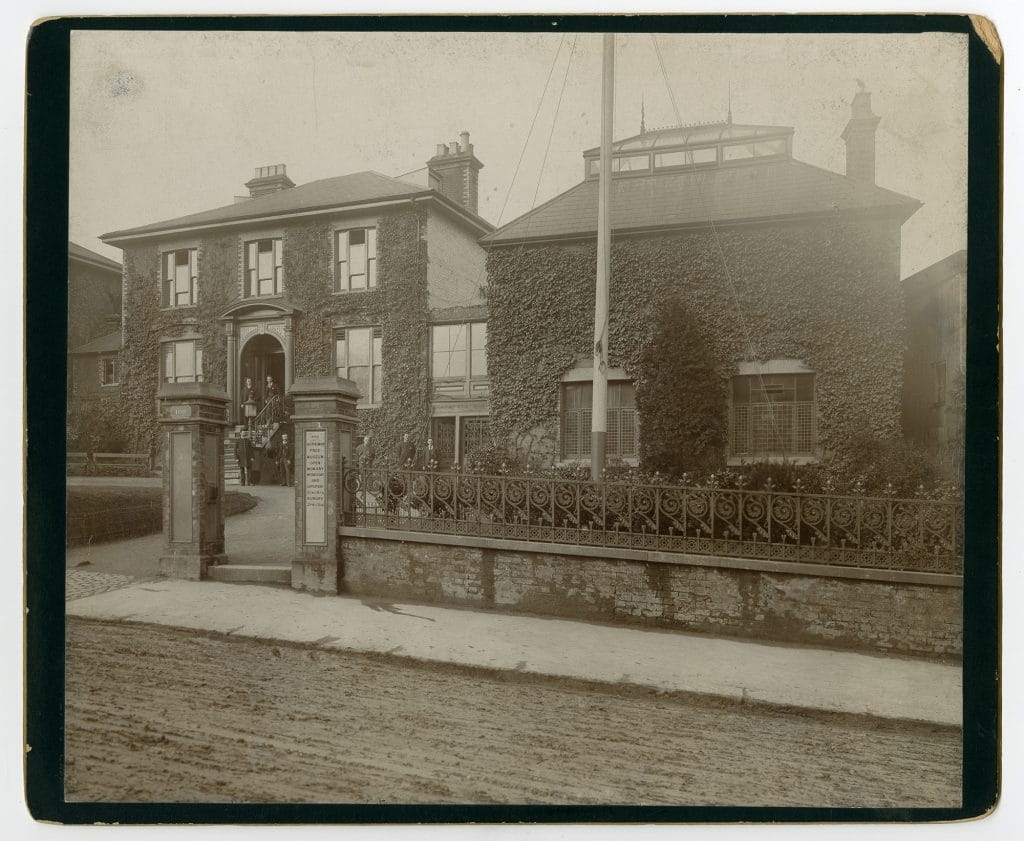
Mounted photographic print showing a general view of the Surrey House Museum frontage, 100 London Road.
Surrey House (above) was the family home for Frederick and Rebekah from 1868, and became what we call the Surrey House Museum. Despite being a large home, the family dwelling wasn’t cut out to handle the number of visitors who walked through the doors, and in 1901 a new custom built Horniman Museum opened on the same site.
This is Surrey Mount:
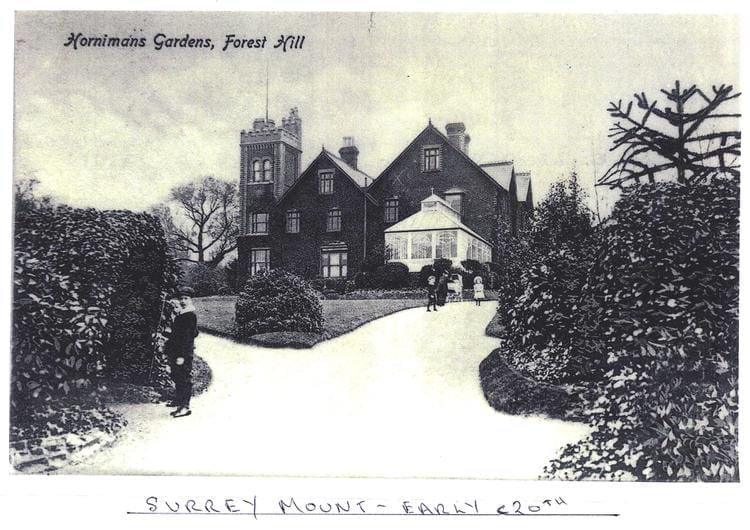
Surrey Mount, recognisable by the tower
Surrey Mount – the new home for the Horniman family after the move – was more hidden, sitting back from the road, and no longer exists. If you have visited the Horniman Gardens, you have likely walked over parts of the building’s footprint.
Frederick Horniman added the castellated, distinctive tower to Surrey Mount, which had views over London, and the second drive, which is now the path to Horniman Drive Gate.
This house also included a conservatory on the side. This wasn’t the Conservatory that sits in our Gardens today. That was transported from Cliffe Combe, Frederick’s parents’ house in Croydon.
The house at Surrey Mount sat roughly under the trees at the very top of the Gardens, near the Butterfly House and the Horniman Gardens Nursery. Frederick Horniman received numerous visitors and delegations at Surrey Mount as well as the Museum – both houses being a part of a tour with performances and refreshments, as this programme suggests:
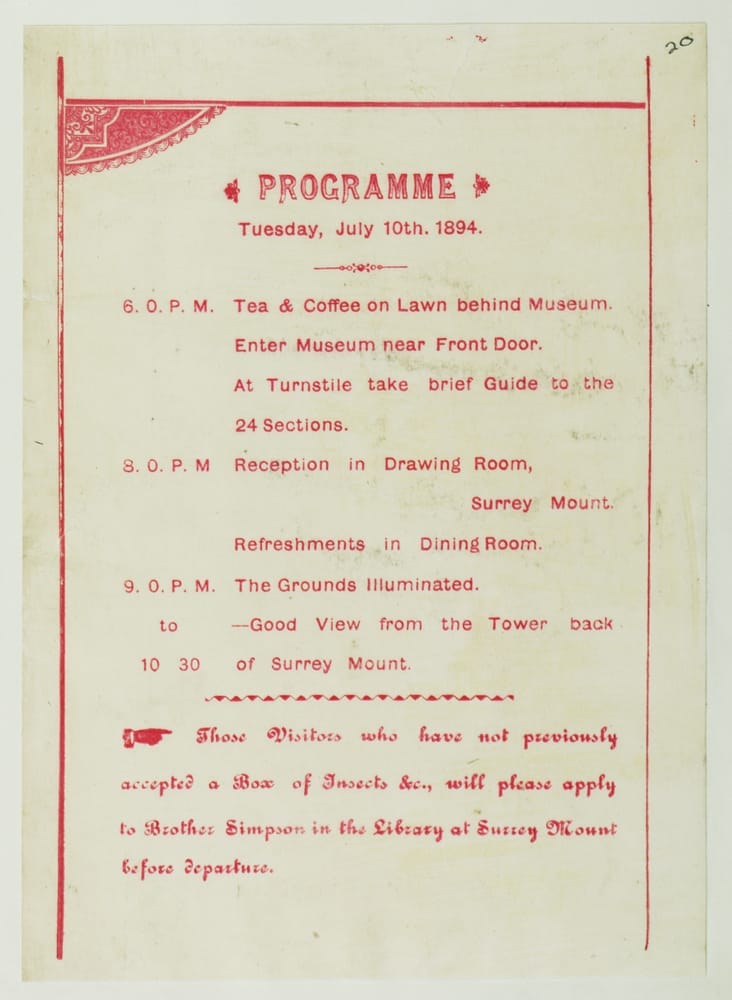
A programme for an event at Surrey Mount
History of the buildings
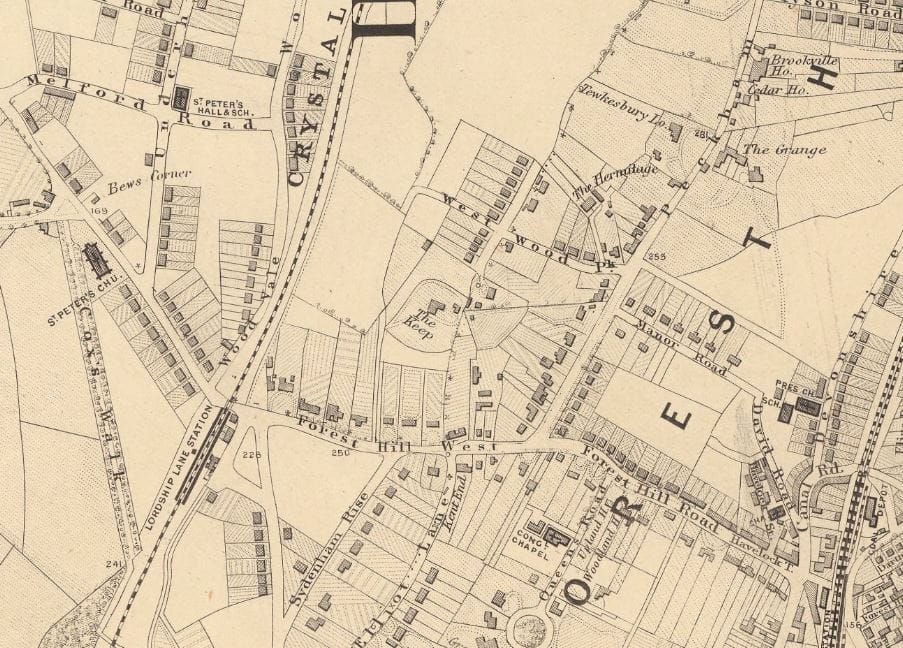
The building was originally called The Keep and built in 1850. The original gardens for it ran down to what is now the Meadow Field, and the backs of the houses and gardens that ran along London Road.
In 1861, the residents at The Keep were considerable. Law student in Lincoln’s Inn William Payne (34) and his wife Ann (23), along with their three children – all under two years old (one a newborn and yet to be named on the census), Ann’s sister Emma Knott (32) and her husband George (25 – occupation, Fundholder) are also included on the census.
Whether they were just visiting to see their new nibling, or were residents, we don’t know. The Paynes had five live-in staff, three of whom were nurses (or nannies), including a monthly nurse, Elizabeth Vaughan. Monthly Nurses would assist during and after the birth, a profession which declined after the role of Midwife was formalised.
1871 at The Keep sees William and Ann Payne still in residence, but now William has graduated to become a Barrister. Their three children (Edith, Ernest and Amelia) are all in school. Ann’s sister and brother-in-law are no longer listed, and the servants are now reduced to three in-house, with a Gardener Thomas Farr (29) and his family living in rooms attached to the stables: wife Rebekah (27), their daughter (also Rebekah – 4) and son Arthur (3).
In the same census – 1871 – we find the Hornimans living in a place called Tarvin (misspelt Tarven) House on London Road.
Tarvin House was the original name of Surrey House, which would later become the Museum. Frederick would have been 36 at this time, 12 years into his marriage with Rebekah, and their children, Anne and Emslie, at 11 and eight years old, respectively.
We know from older maps that in 1877, Surrey Mount was still called The Keep. We also know from our archives that Frederick Horniman bought The Keep in 1877 from George, Frederick, and Francis Hazeldine. From what we can find, the Hazeldine family were potentially contractors connected to the railway and owned a business called ‘Coach, Cart, and Van’.
The Hazeldines also owned the lease for Tarvin House, and in 1856 the lease passed from George Hazeldine to Henry Hughes. Henry Hughes passed the lease to Frederick in 1868 (although there are some confusing records around this).
In the 1881 census, Surrey House appears for the first time instead of Tarvin House. In this listing, we can see only the staff living at Surrey House, with the Horniman family nowhere to be found – not at Surrey Mount or Surrey House. During the 1880s, and with their children off at the Slade School of Fine Art, Frederick and Rebekah travelled quite a bit in the UK and abroad. In September 1881, for example, we can find Frederick at a meeting in York of the British Association for the Advancement of Science, and his address is given as Surrey Mount.
What we know of the rest of the household at the time is that it consisted of five servants. The head of the household is Hannah Bright (71), listed as Servant Head. Her daughter, niece or granddaughter, Louise Bright (26), is listed as a Domestic, followed by the Gardener, John Garraway (27), Cook Mary Tyler (25) and Housemaid, Agnes Green (17).
Also listed in this census is James Sparkes, the Head Gardener (38), recorded as living in Surrey Mount Gardens.
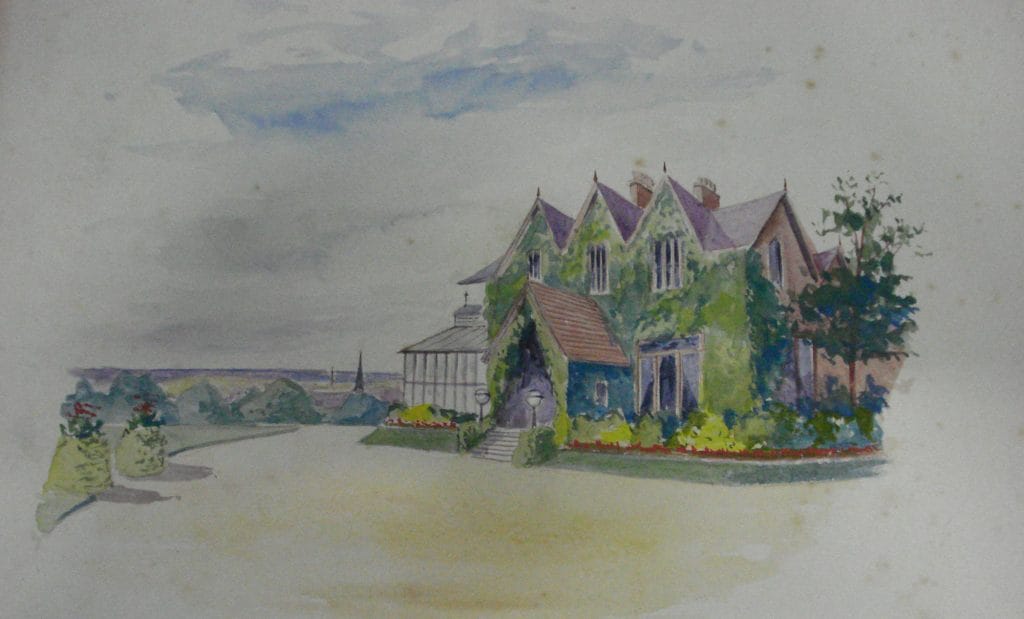
A watercolour of Surrey Mount
Frederick Horniman likely changed the name of The Keep to Surrey Mount, as well as Tarven House to Surrey House, following his purchase. Both name changes happened around the times that the Horniman family took ownership. Surrey Mount is recorded as being named for the county boundary nearby. However, it could also be for the view – you could see quite far into Surrey clearly from where the house stood – and the fact that he had lived with his parents in Croydon, then a part of Surrey.
According to the Museum archives, the family moved to Surrey Mount full-time in 1889, and the Surrey House Museum opened officially in 1890. However, Frederick was giving Surrey Mount as his address as early as 1881.
However, this house was used by the Horniman family before then. The reception for Frederick Horniman’s son, Emslie, who married Laura Plomer, took place at Surrey Mount in 1886. There is a sketch of the house and tower in the wedding programme.
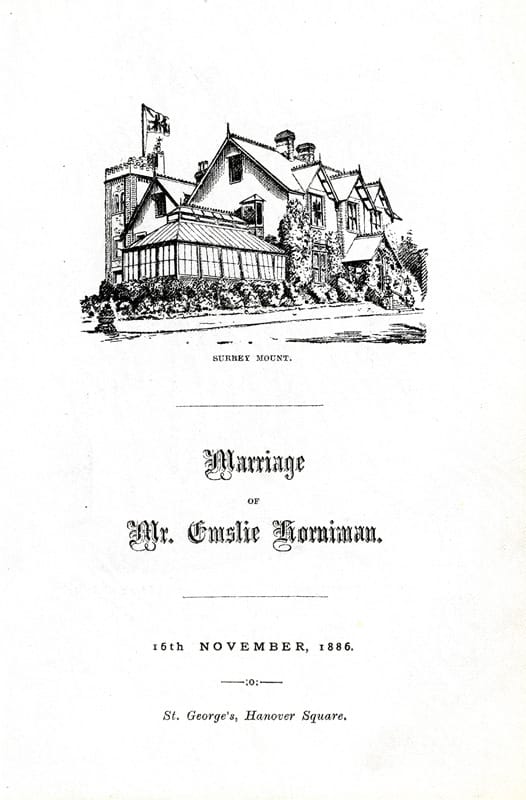
A sketch of Surrey Mount from the wedding programme of Emslie Horniman and Laura Plomer. Surrey Mount was the home of the Horniman family after Surrey House
In the 1891 census for Surrey Mount: Horniman Family is listed as being in residence, and among their six domestic staff is only one of the staff from ten years prior: Agnes Green, now 27. Her birthplace is listed as Lewisham, so staying local may have been convenient for her.
Frederick is listed as Head of the Household (age 56) with his wife Rebekah (60 – her age changes in every census). The household staff includes Margaret Hughes, 24, a Domestic Parlourmaid from Denbigh in Wales. Her job would have been a senior upstairs role, looking after reception rooms, serving tea and would have been visible to guests through actions like answering the door.
Alongside Agnes Green, the other Domestic housemaids are Mary Butcher (20) from Ashford in Kent, and Lizzie Etheridge (21) from Southampton. Housemaids would have been more focused on back-of-house functions, like sweeping, dusting, lighting fires and making beds. Margaret would likely have managed them.
Mary Anne Boyle (48) from Rushton in Northamptonshire was the Cook, and Frank Fenn (29) was the Coachman, who originally hailed from Kingston.
Domestic work was the second largest form of employment at the time, and often very intensive with long hours.
The Horniman through the years
See how the land the Horniman is on has changed through the years, from 1862 to the late 1990s.
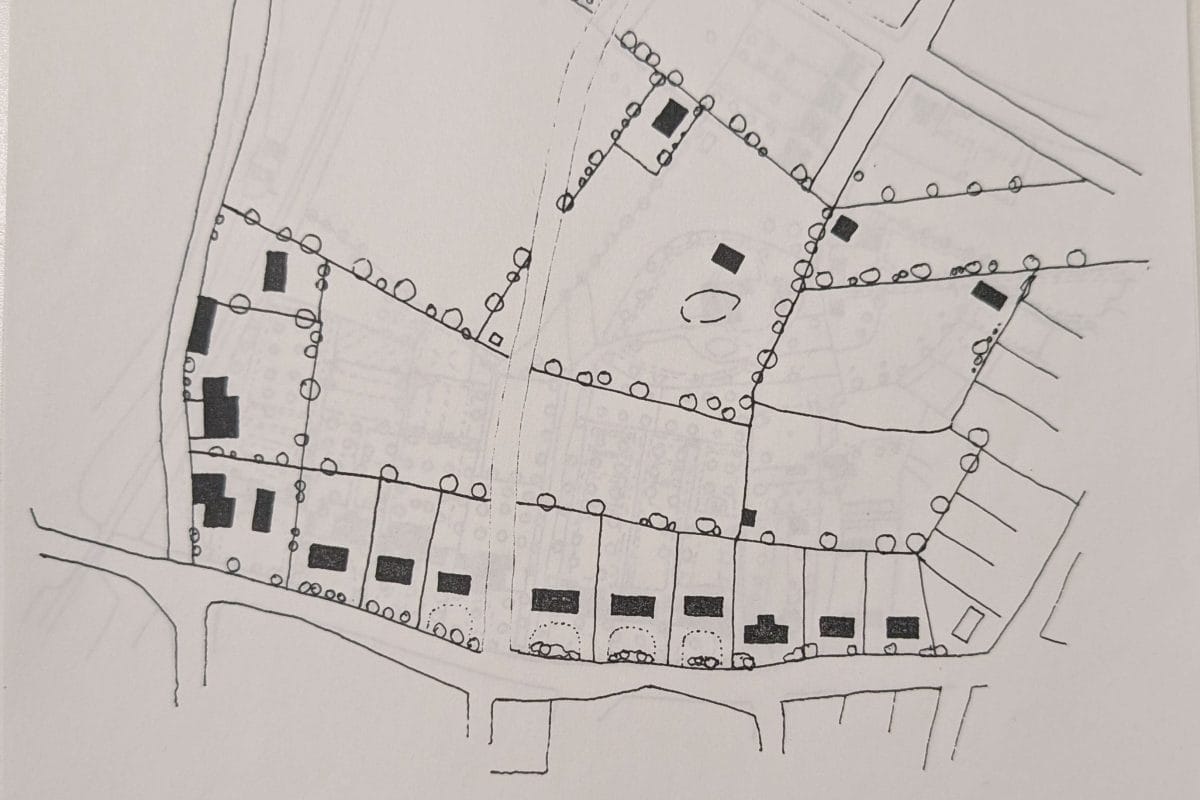
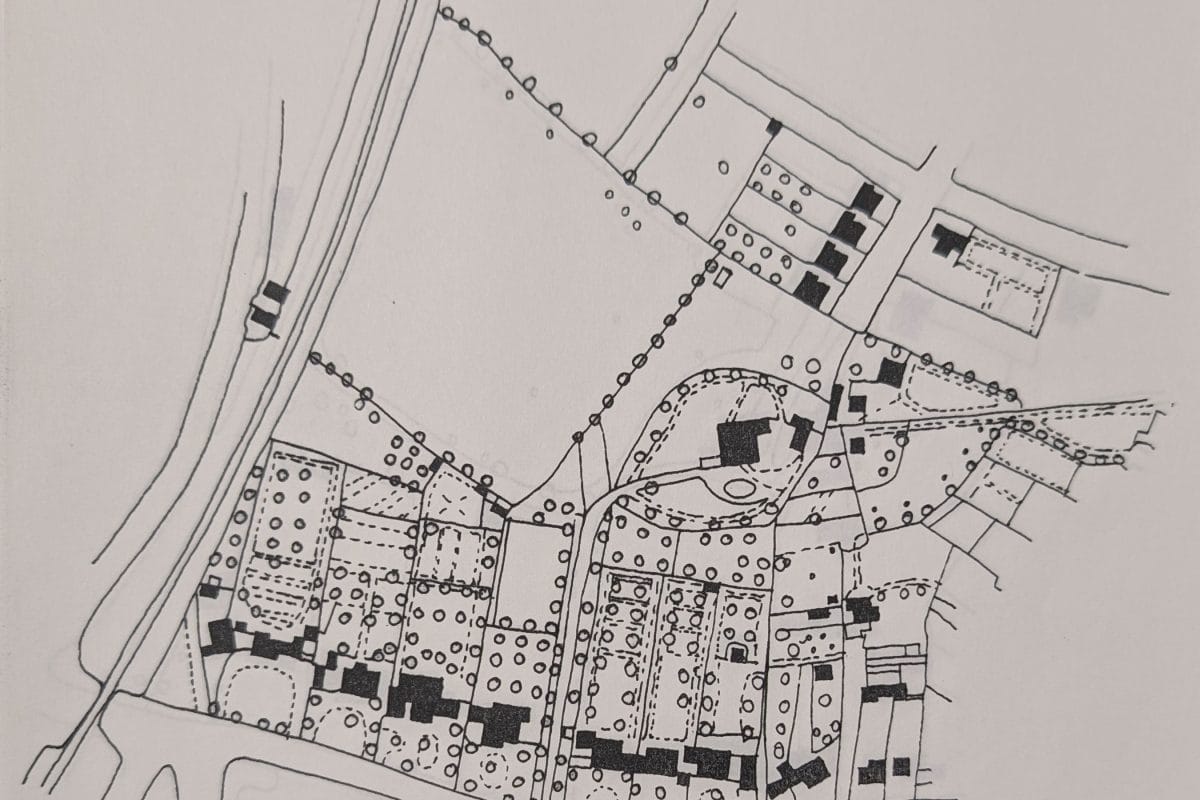
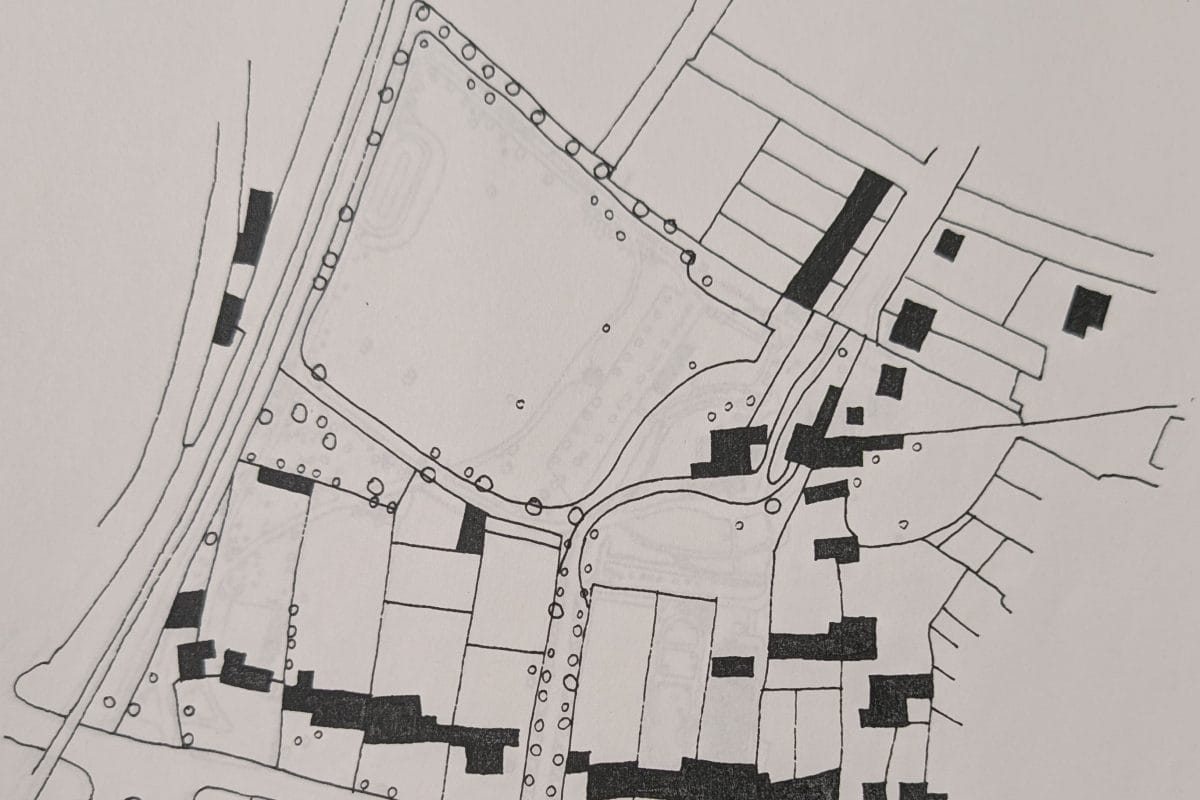
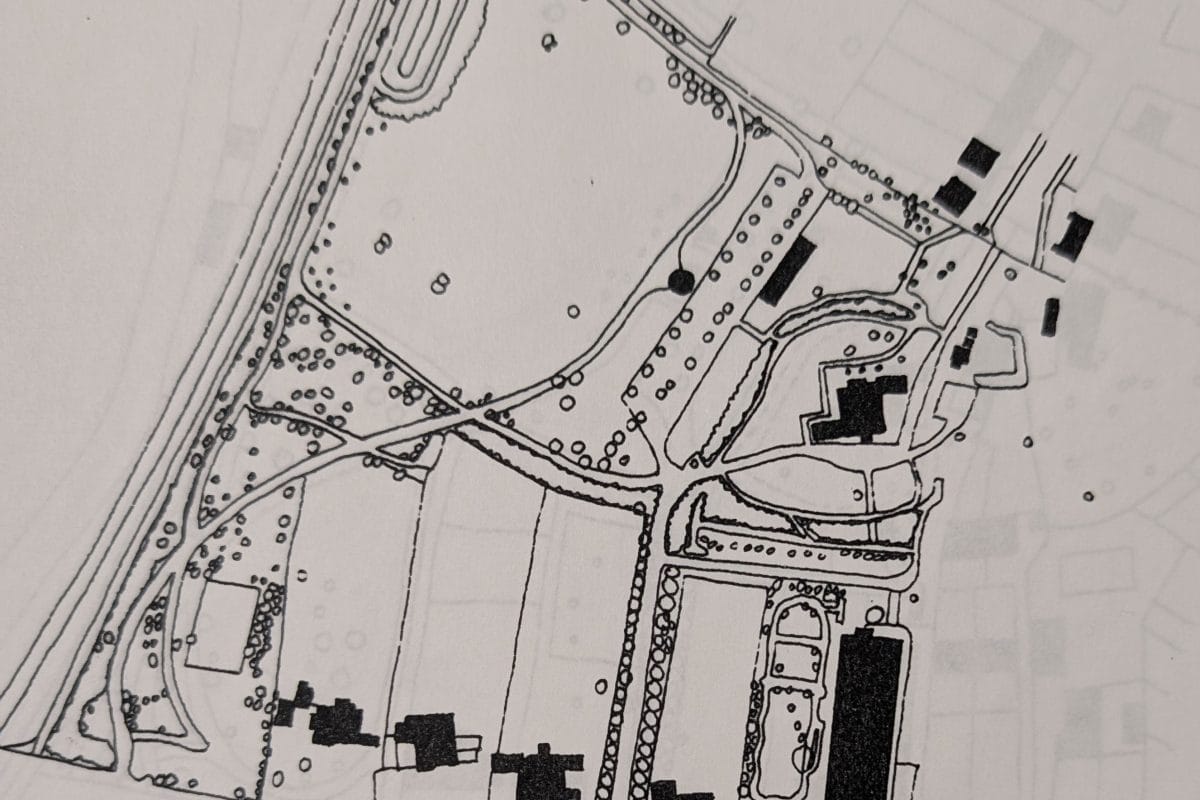
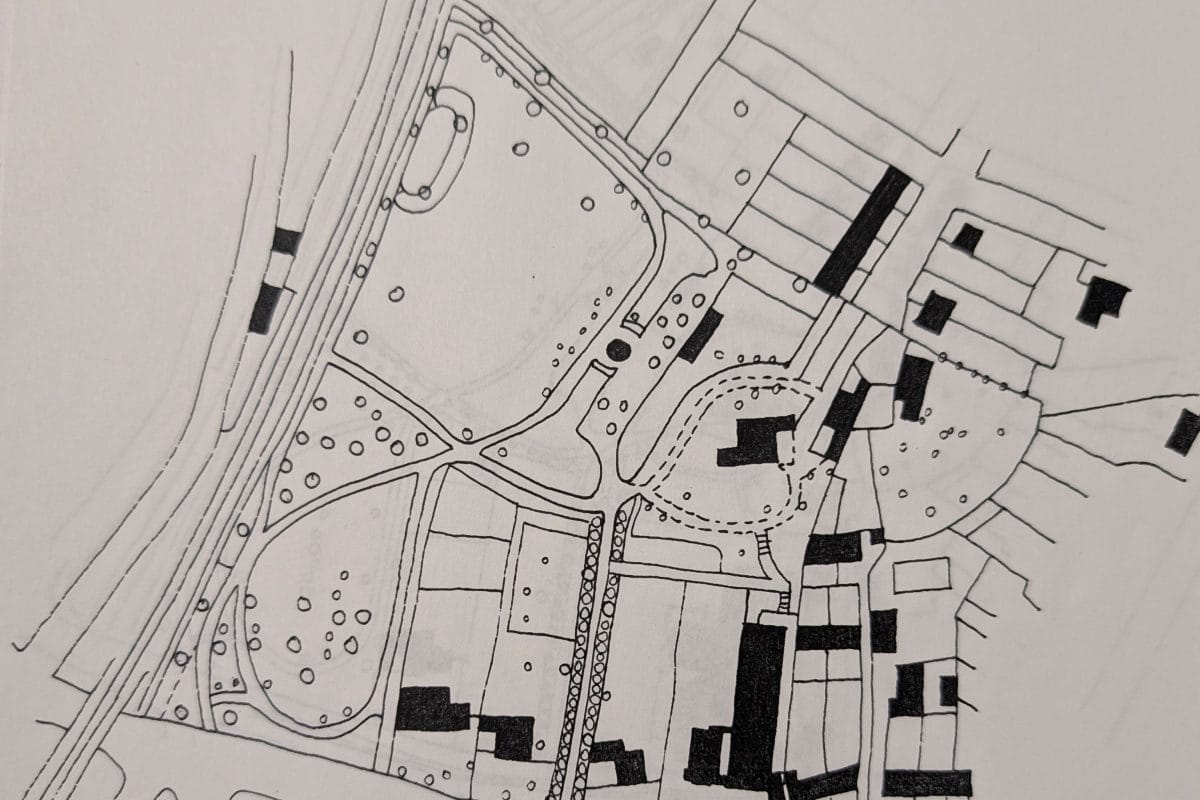
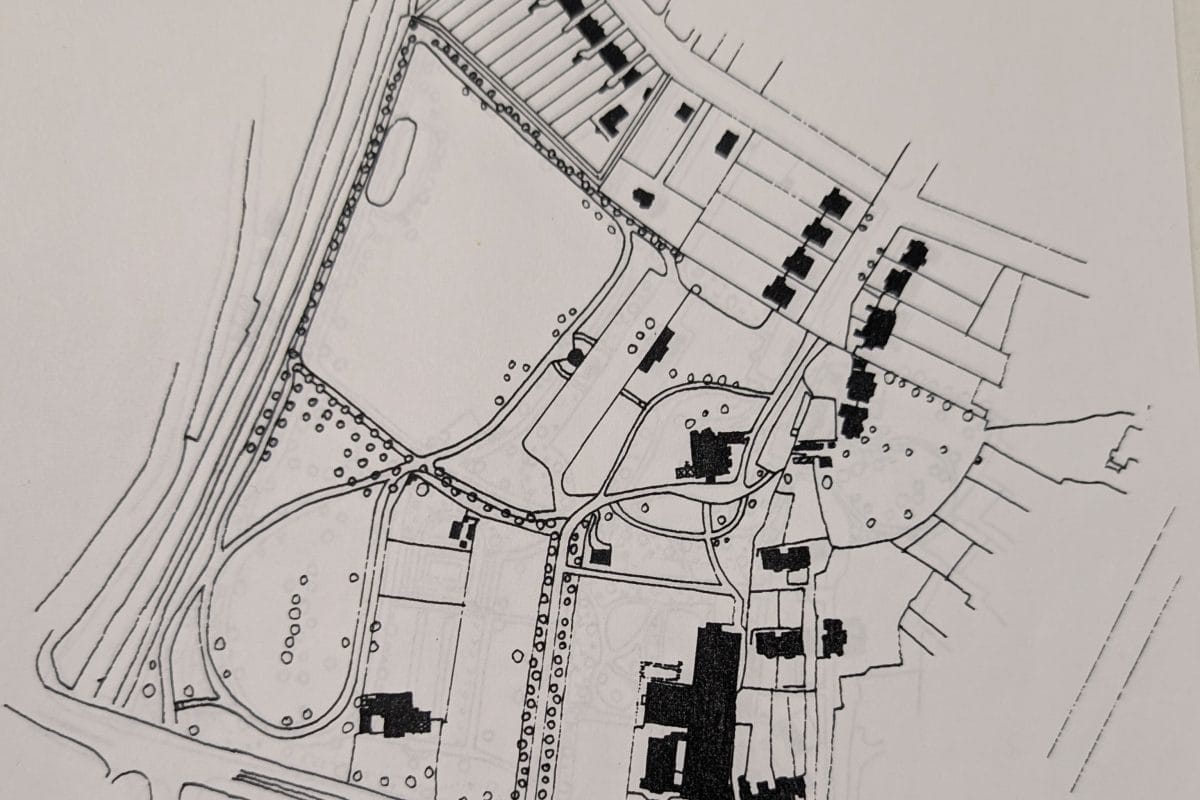
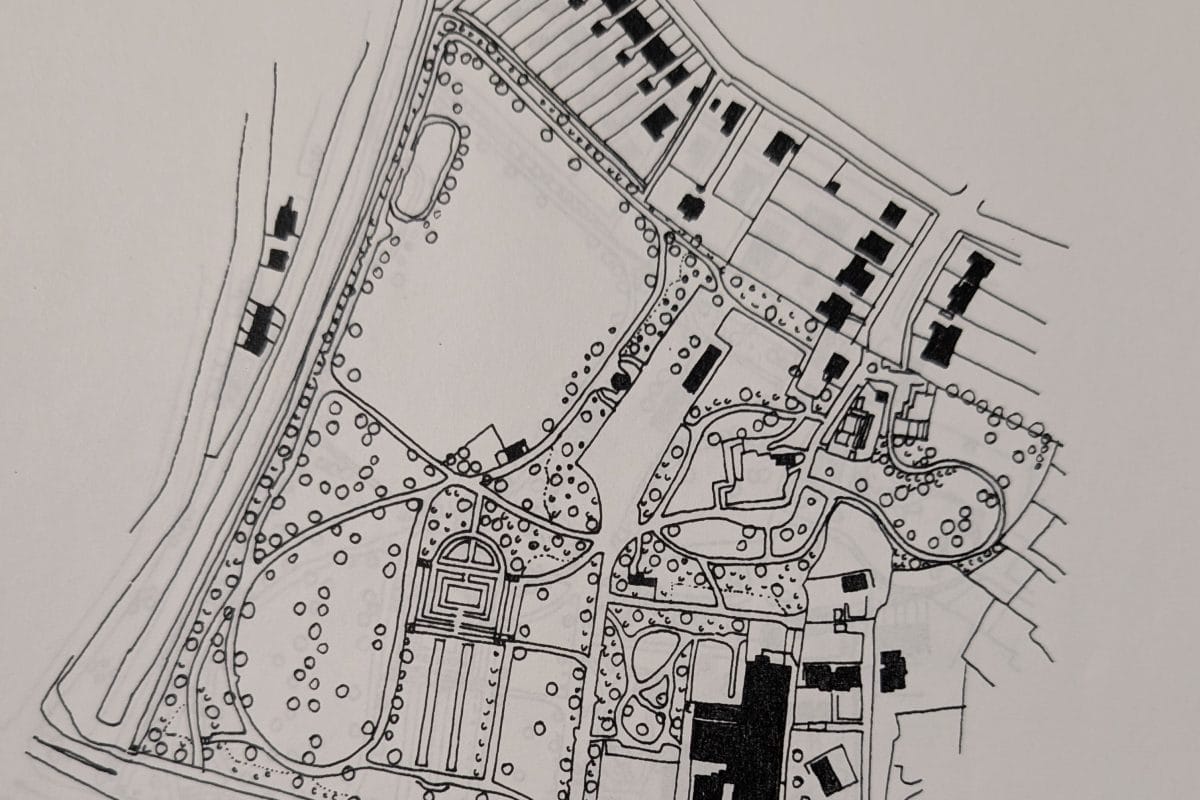
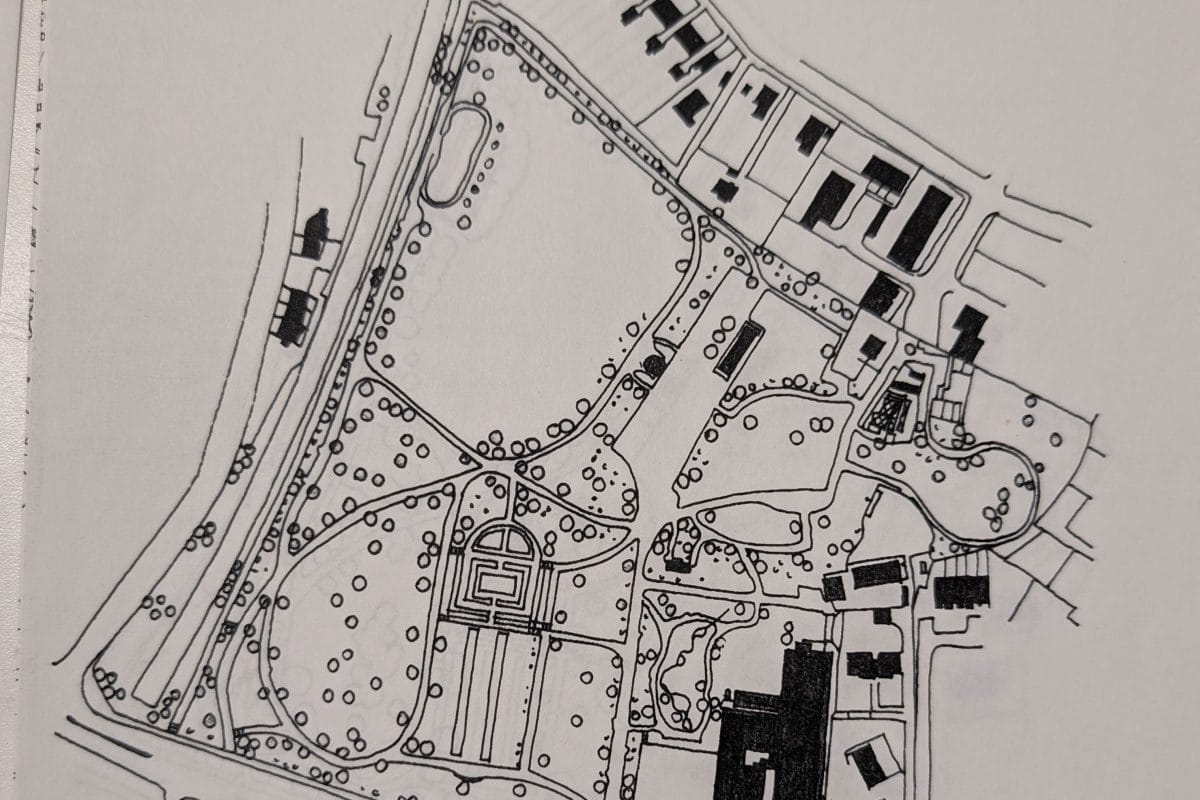
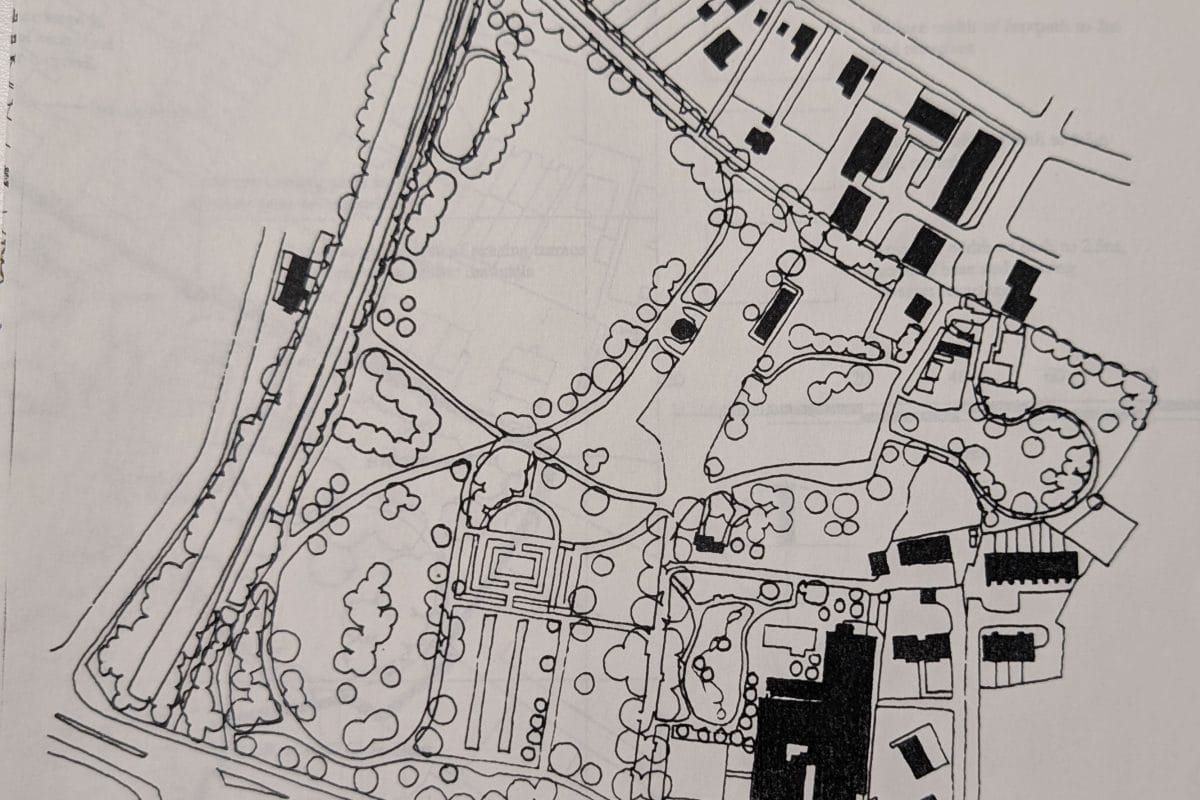
The early Museum and Surrey Mount
Despite the reported move to Surrey Mount to get away from the museumification of Surrey House, Surrey Mount was also… full of things.
We have records in our collection of a ‘rough lists of objects in store at Surrey Mount chiefly east bedroom and dining room.’ Which show not just their location, but an object number, type, description and place made – much like the rest of the museum collection.
Around 1895, Frederick built two houses on Westwood Park behind Surry Mount, calling them Penryn House and Falmouth House for his constituencies as an MP. He gave a key to the Gardens to the owners of these houses, which were not yet open publicly – read more about the history of one of these families.
In 1895, Frederick Horniman’s wife, Rebekah died and was buried in Camberwell Old Cemetery close to the Museum. He quickly married again to Minnie Louisa in 1897 and they moved to Hyde Park Corner.
After the move, Surrey Mount became a refreshment room and continued to be used in that way following the opening of the current Horniman Museum in 1901. The building continued to house parts of the collection and the top floor was used as accommodation for the ‘foreman in charge of the gardens’. For the remainder of the house, Frederick Horniman offered to adapt to house a ‘county of London museum’ which the Council accepted.
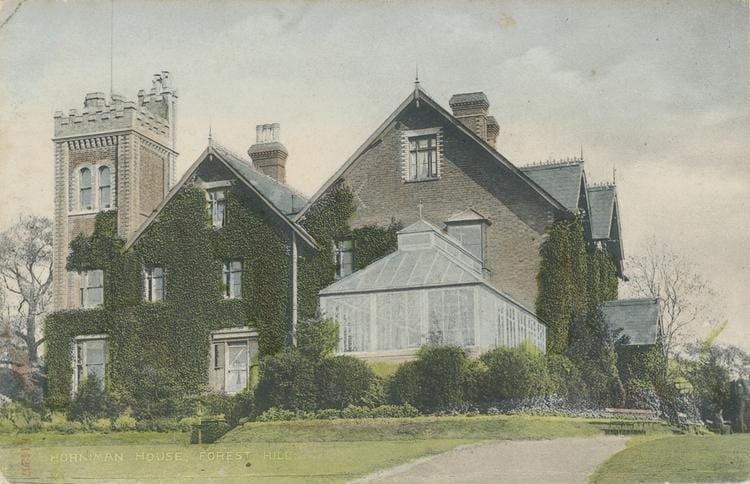
A postcard of Surrey Mount, in colour
Dr. Haddon prepared this display, the care of which transferred over to the new Museum of London, now London Museum.
In 1904, Herbert Spencer Harrison became Curator of the Museum and remained in this position until retiring due to ill health in 1937. Harrison was responsible for reorganizing and extending the collections, introducing a scheme of lectures and several small popular guides to the collections written by Harrison himself.
We find him in the 1911 census, at 38 years living at 8 Gaynesford Road in Forest Hill, with his wife Eva (39), their son Geoffrey (4) and servant Alice Mutton (31).
He would only have two years overlapping with Frederick Horniman, who died in 1906.
The end of Surrey Mount
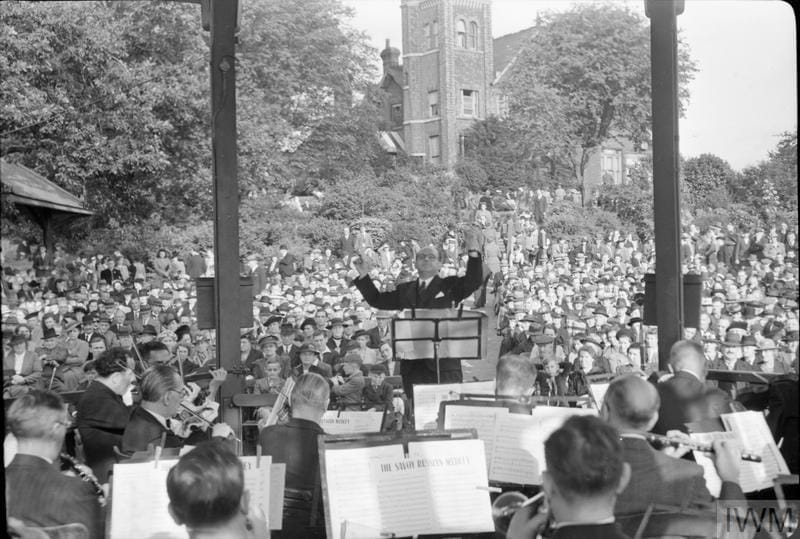
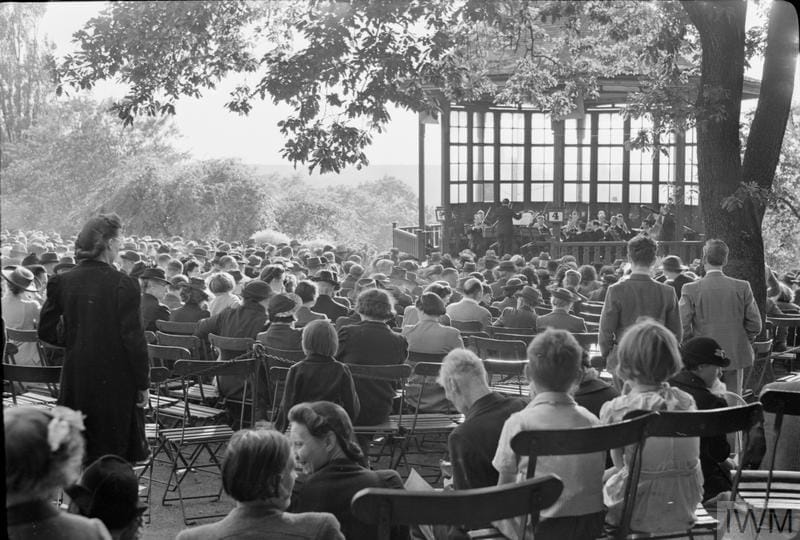
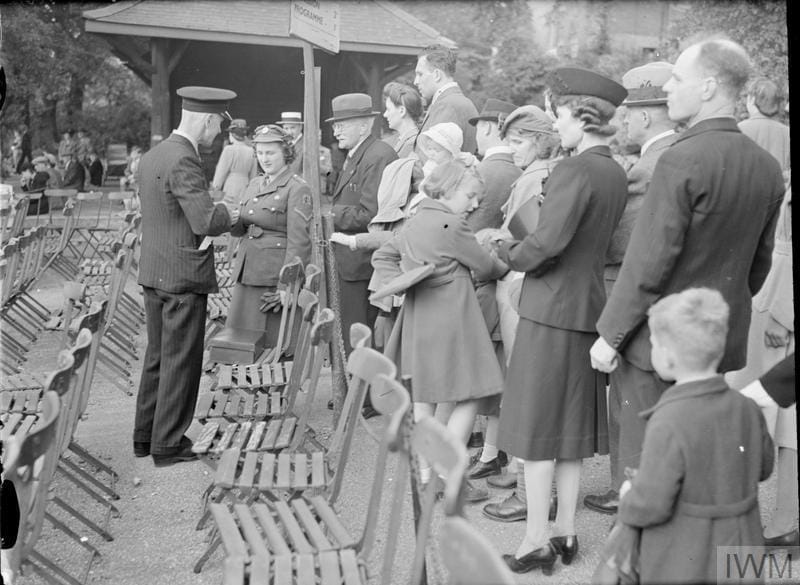
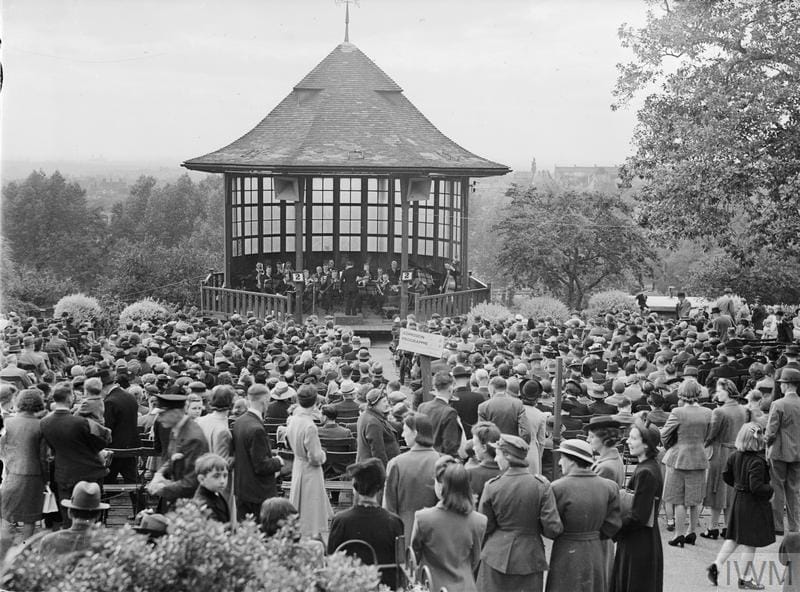
The Bandstand in the Horniman Gardens has been used for events and performances since it was first built. On a Sunday in 1943, the Bandstand featured concerts at lunchtime to help boost civilian morale during the Second World War. Other concerts took place in the National gallery as part of the same series.
Jack Gold led his Variety Orchestra in ‘The Savoy Russian Medley’ and the overture to “Poet and Peasant” by Suppe. Tickets were 2p, and a programme 1p.
In the first of these pictures, you get a look at Surrey Mount, showing just how much a part of the landscape it was.
Sadly, the house at Surrey Mount was damaged by bombs in the Second World War, along with some other buildings in the grounds. The conservatory attached to the house irreparably so. The house didn’t seem to be inhabited from this point on, and Surrey Mount was torn down in the 1960s.
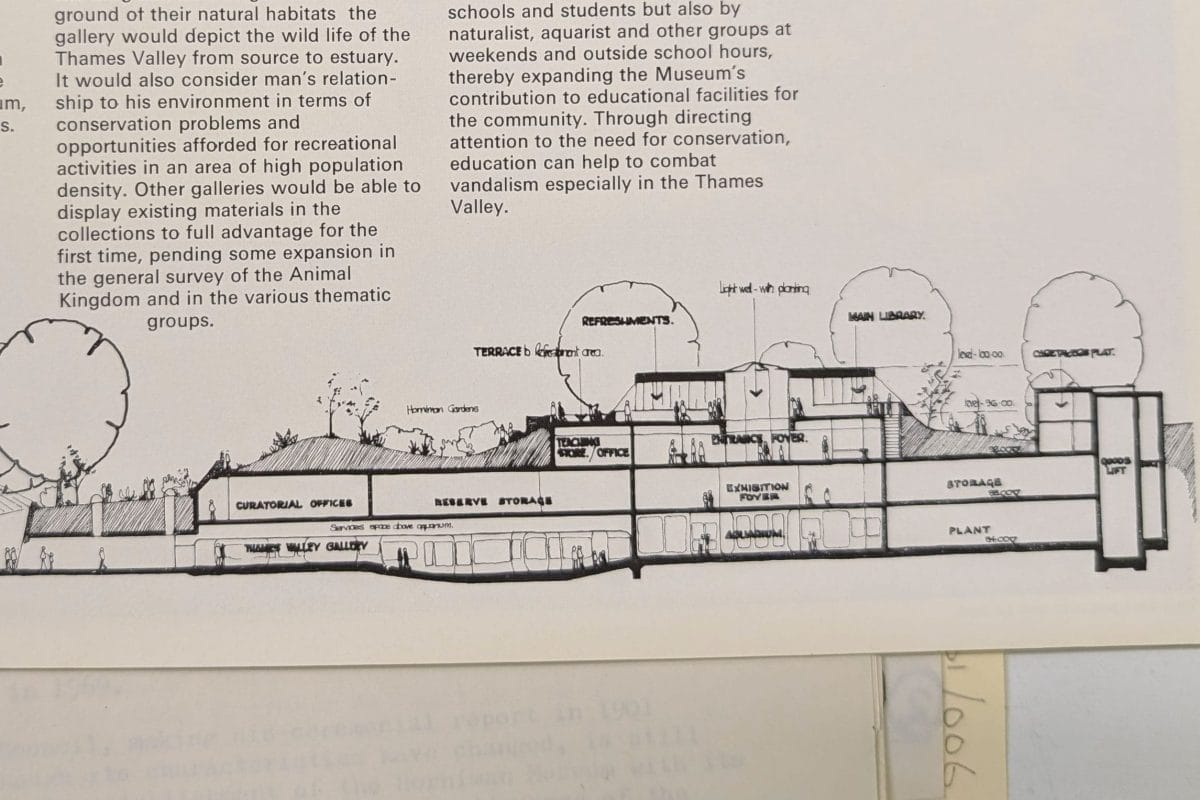
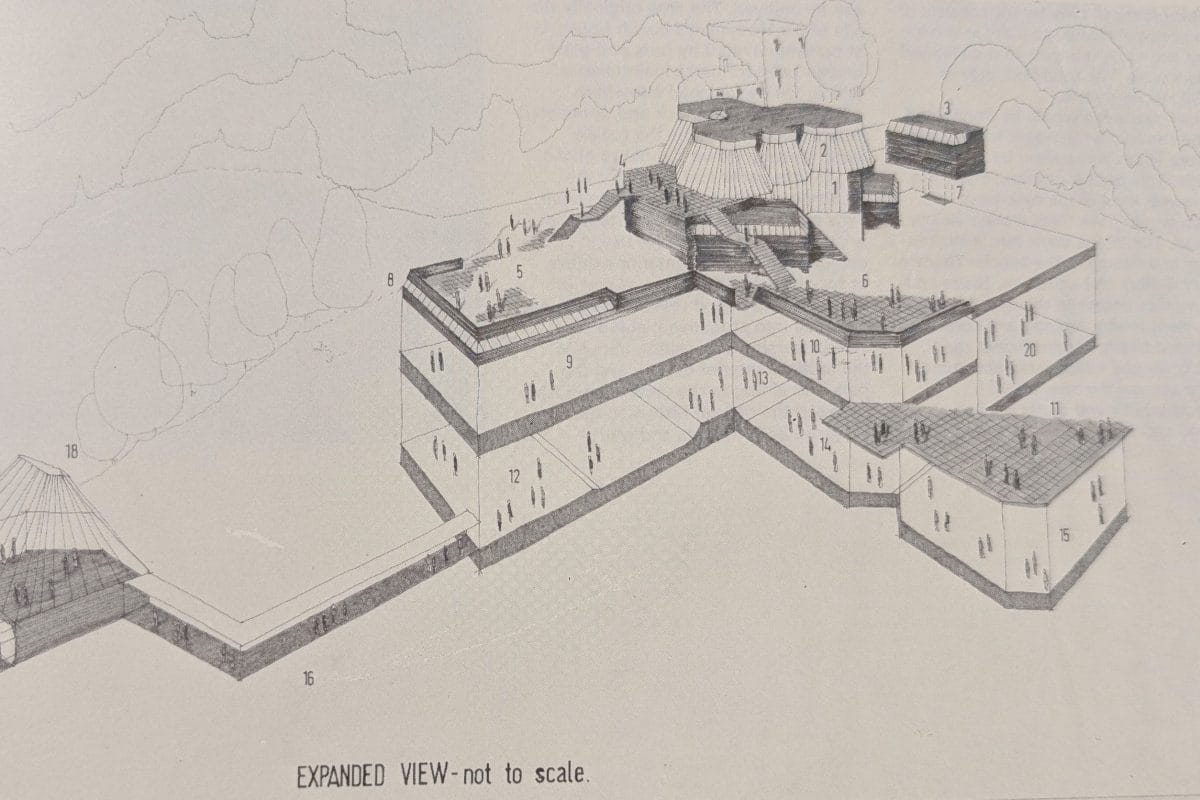
The site on which it stood became a focus for David Boston, the then Director of the Museum, in the 1970s with a project called Horniman’s Dream. The project didn’t proceed due to a lack of funds, but would have seen several stories built below ground, housing the natural history collections as well as an aquarium, library, and a ‘Thames Valley Gallery’.
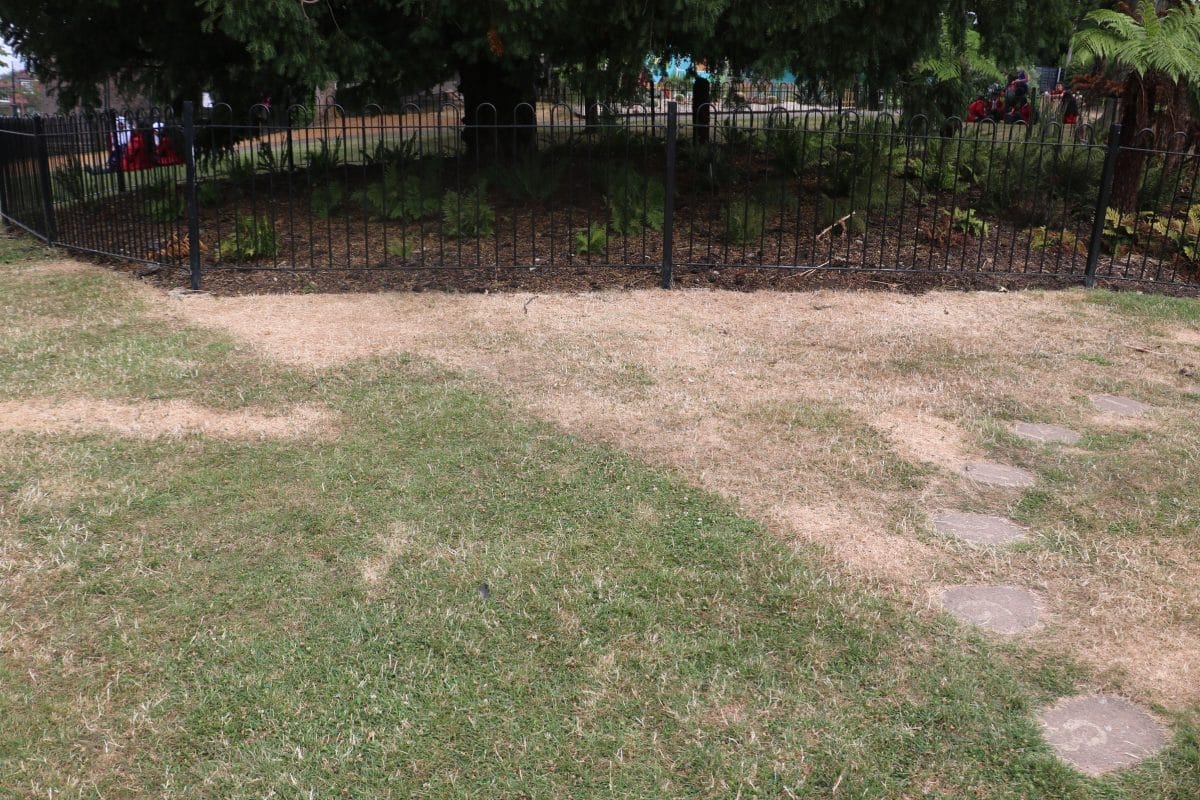
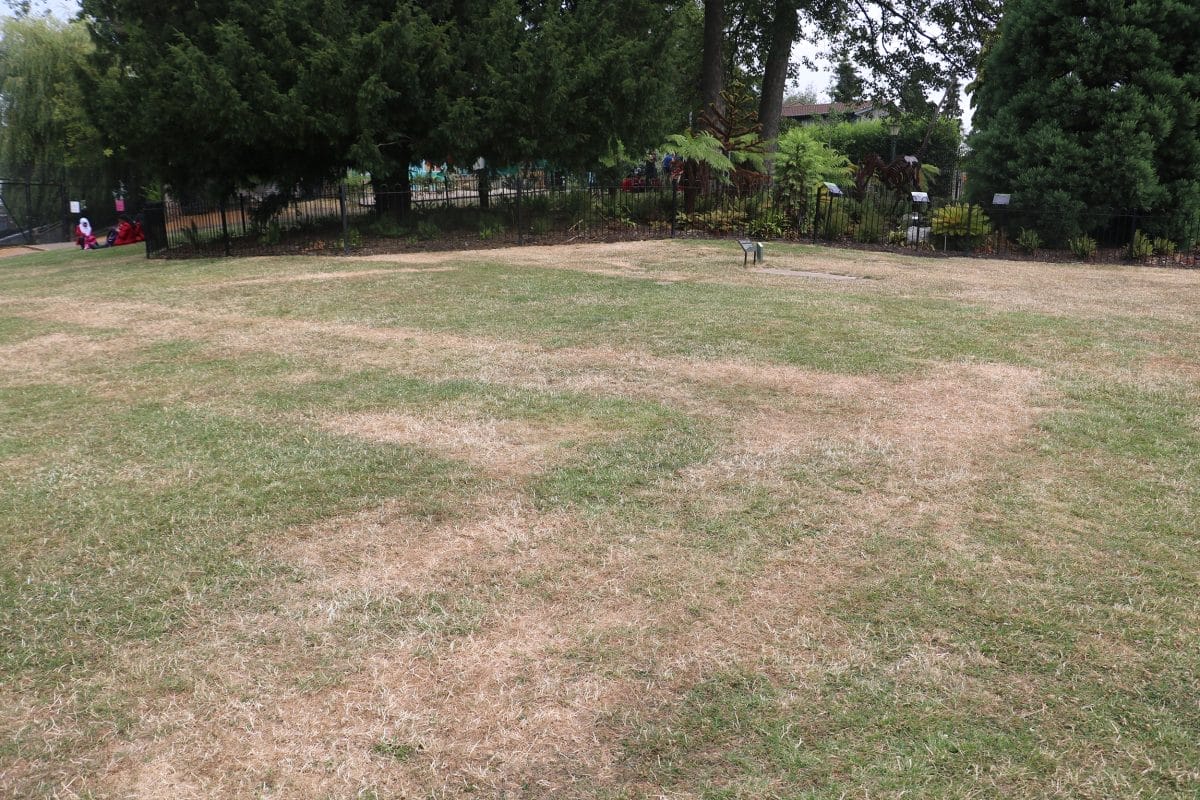
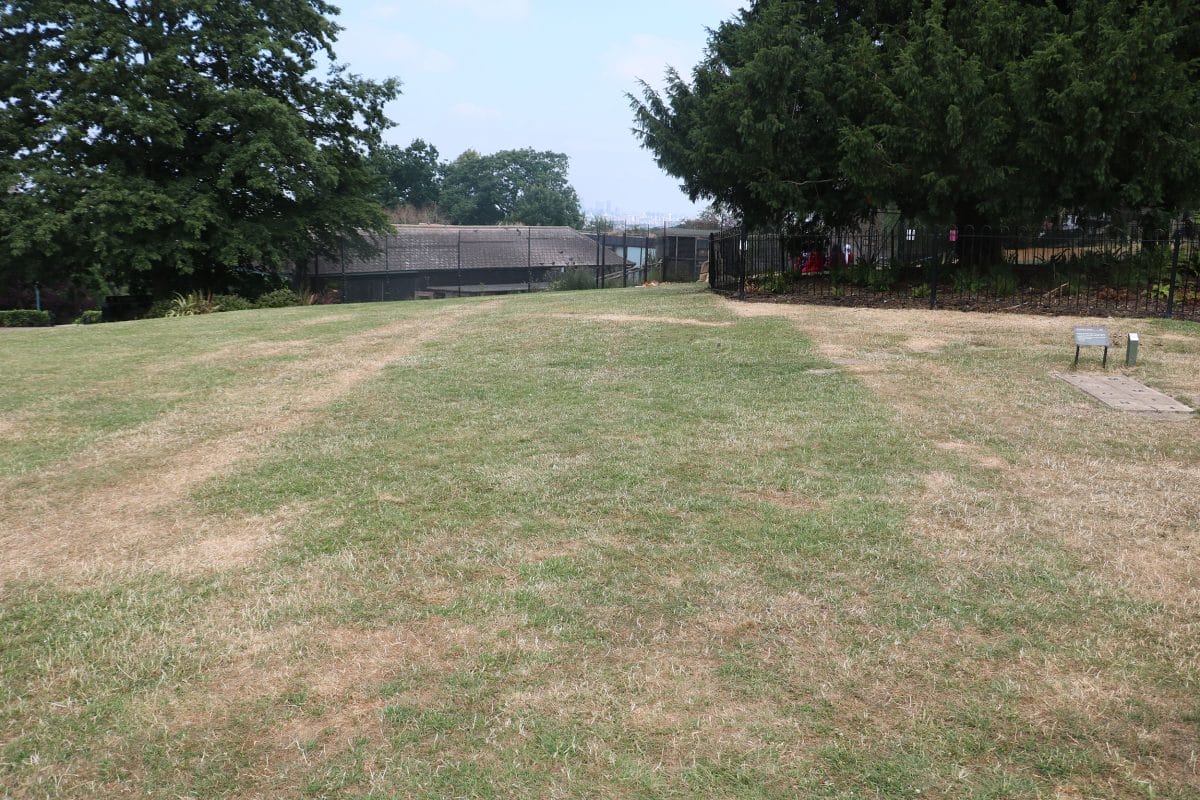
Today, although the building is gone, it still makes itself known. In hot weather, you can see the edge of the building – perhaps the Tower? – under the grass, as well as some of the flowerbeds.
See if you can spot them when we next have a hot, dry spell.
With thanks to Alison McKay for census research.