Decoding the mosaic
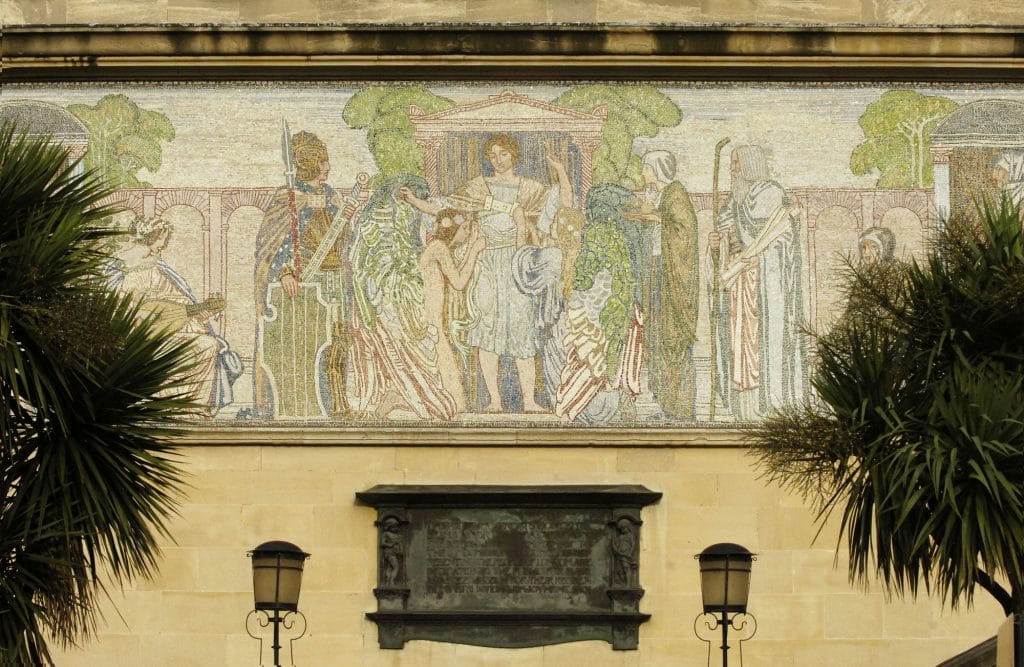
The mosaic on the original Horniman building
The mosaic is titled ‘Humanity in the House of Circumstance’.
The gates on the left-hand side represent Birth and the ones on the right-hand side represent Death. The figure in the centre represents Humanity, and they are surrounded by figures representing Fine Arts, Poetry, Music.
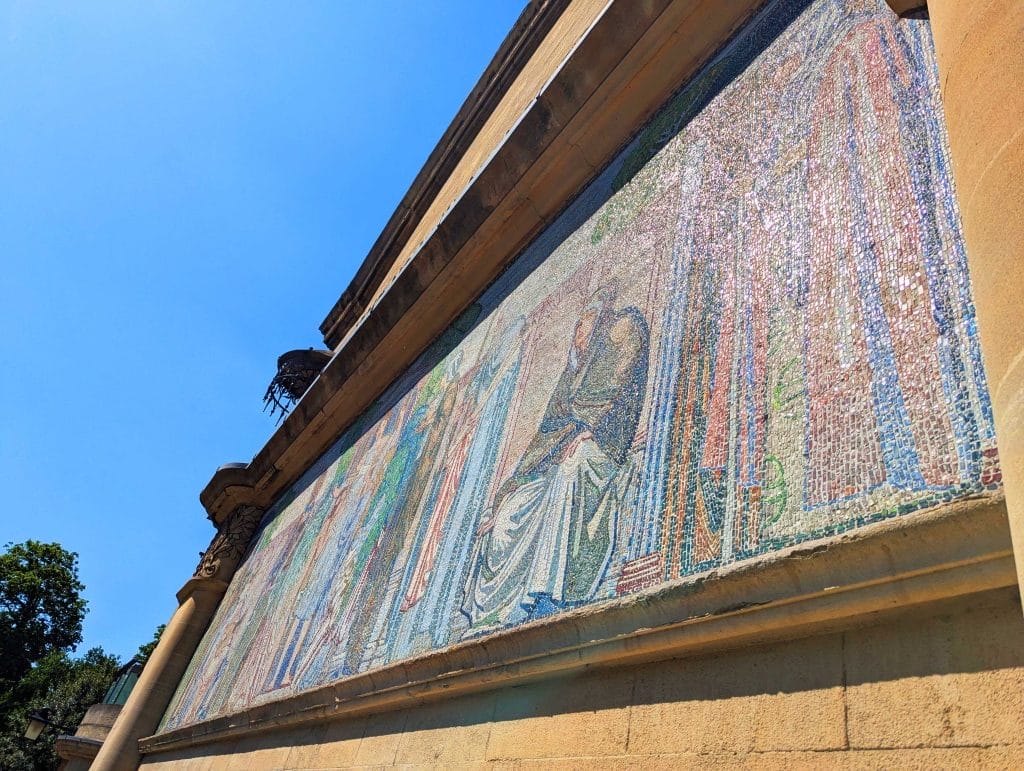
The mosaic frieze on the Horniman
The armed figure holding a shield and sword is Endurance, and the kneeling figures Love and Hope have clothed him with their qualities.
The figure bearing wine and figs represents Charity. The white-haired figure holding a staff represents Wisdom, and the figure on the right-hand side, by the door representing Death, is Resignation.
The mosaic is in the neo-classical style. It was put together over the course of 210 days, mostly by a group of young women. There are more than 17,000 tiles.

The construction of the mosaic
Mr R. Anning Bell has endeavoured to carry into effect the underlying principles which placed the work of the Byzantine mosaicists of the fifth and sixth centuries among the artistic glories of the world.
Robert Anning Bell
Robert Anning Bell was an English architect and designer who was born in 1863.
As a young man he was articled as an architect to his uncle, Samuel Knight. He went on to design the mosaic in the tympanum (a triangular recess in a building) at Westminster Cathedral. His designed came from sketches left by the Westminster architect John Francis Bentley.
His art works include the Chrystal Ball, Mary in the House of Elizabeth and The Pool.
He died in 1933.
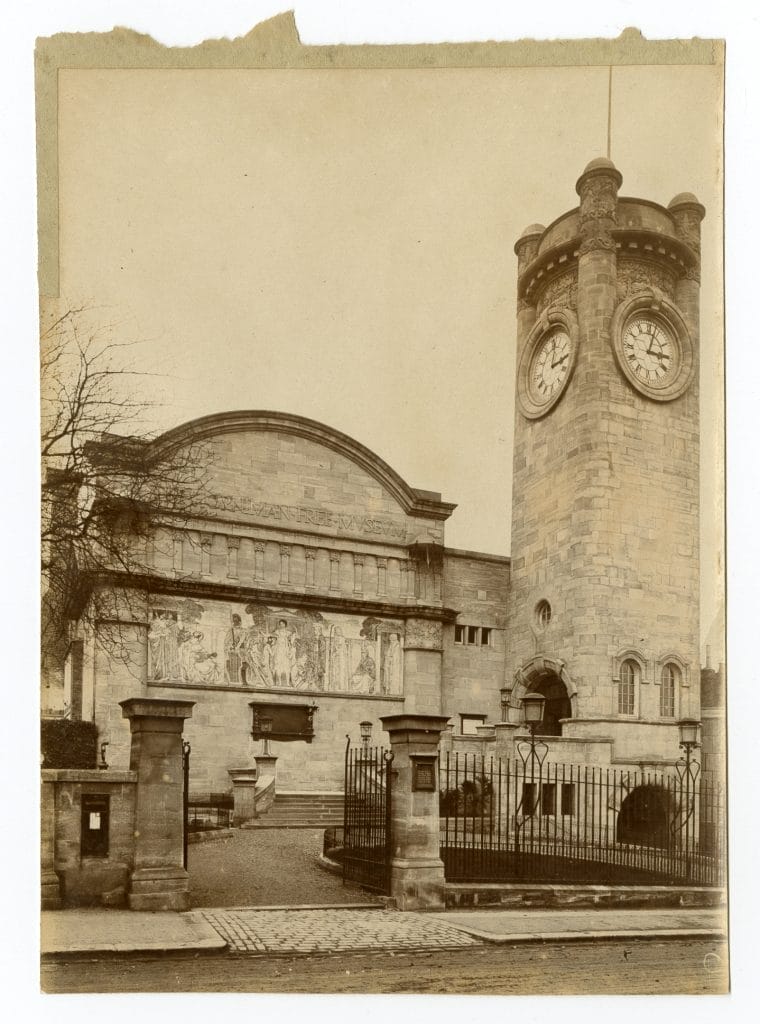
Horniman Clocktower in the early 20th century
Delving into the archive
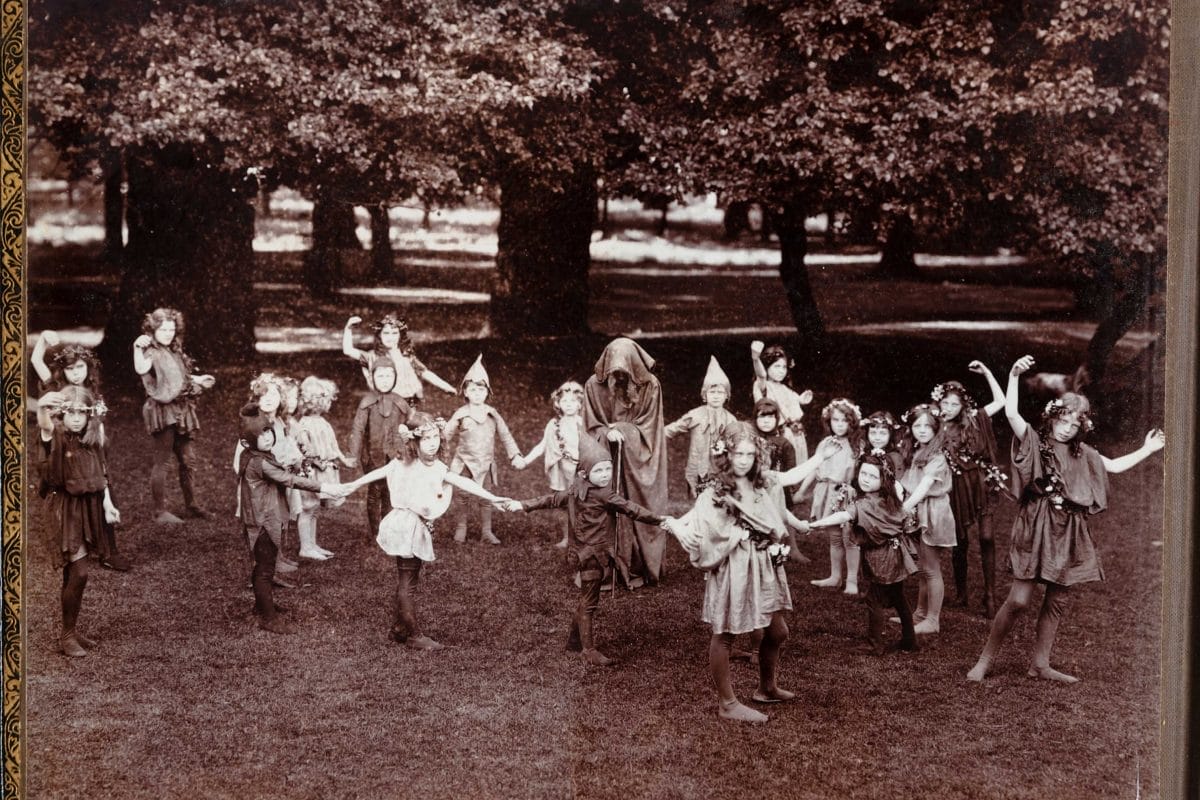
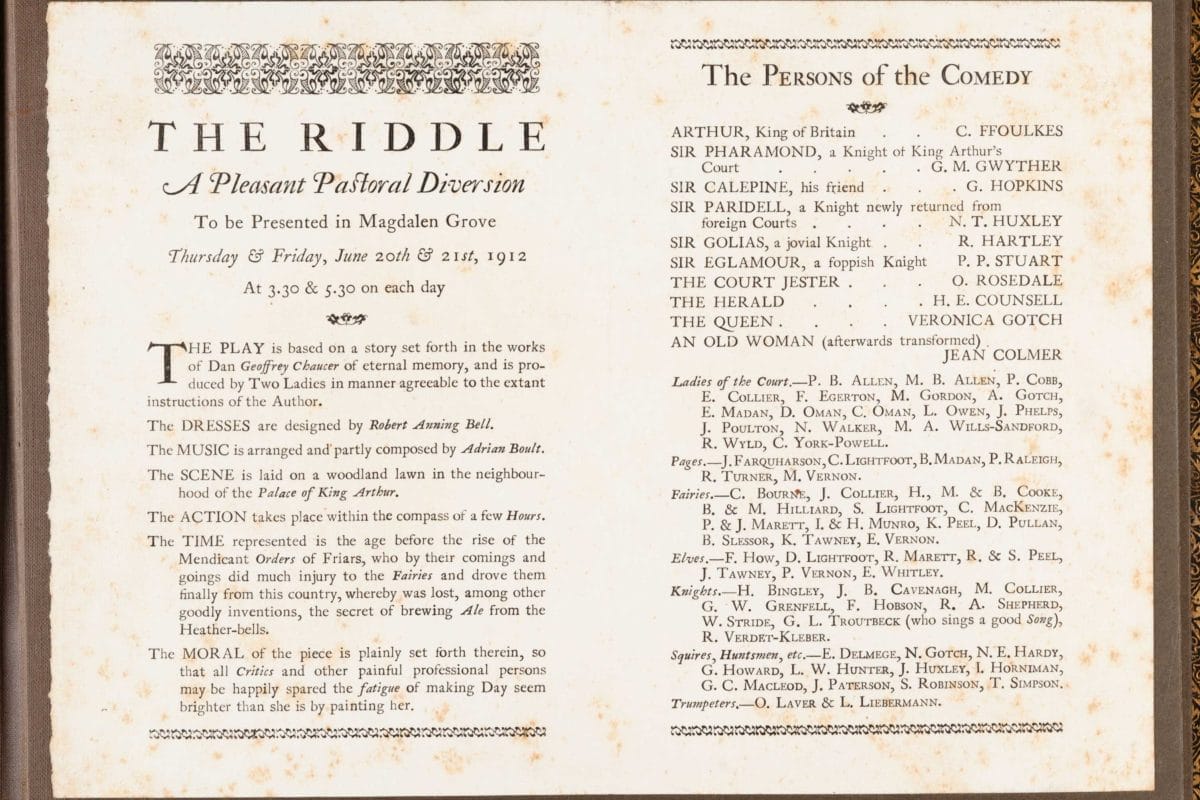
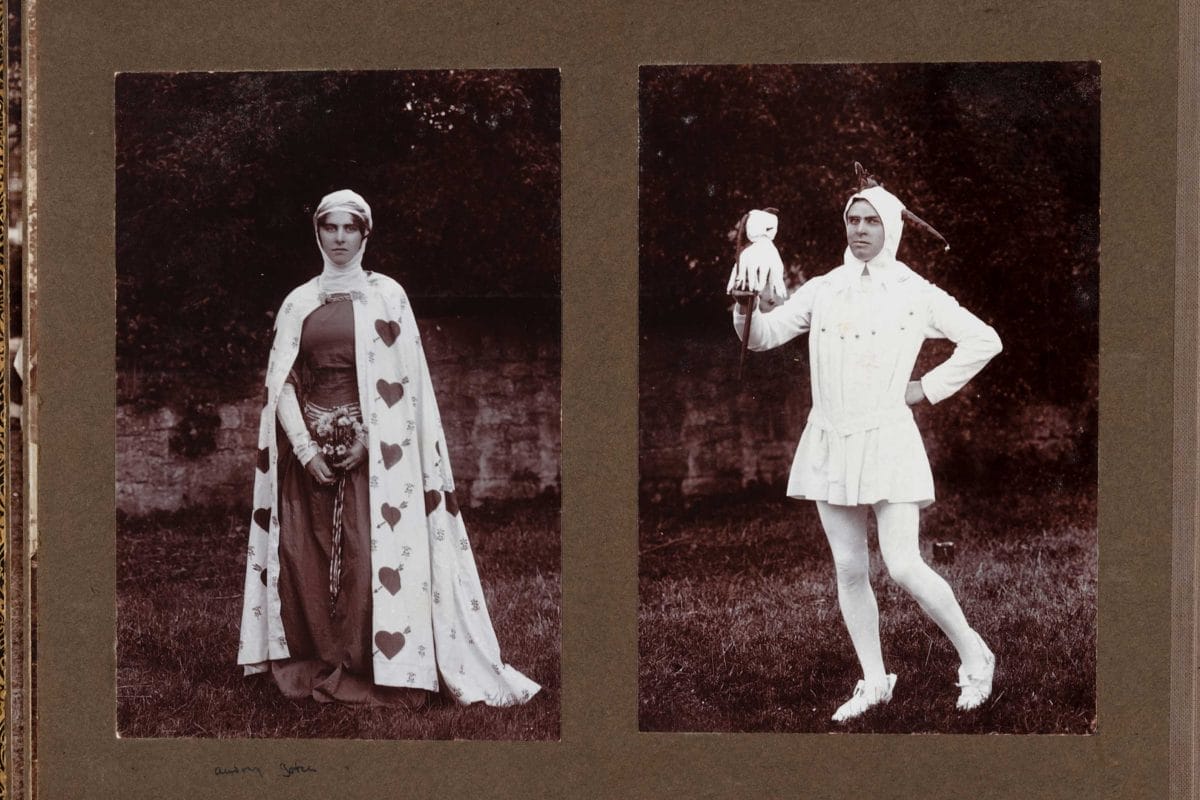
In our archive we hold an intriguing set of images of a staging of The Riddle by Walter Raleigh in 1912. The programme notes that the costumes were designed by Bell.