


As London expanded due to the population boom, so did the need for green spaces to help break up the urban environment, connecting Londoners to nature.
Much like public bandstands, the recreation that a boating lake offered working classes (according to the well-to-do) was to promote and encourage acceptable social behaviour. Aka, not drinking and gambling. Public parks and gardens were viewed as sites for sport or taking a walk, so learning a skill such as boating fit in well. During a time when cholera and tuberculosis were more prevalent, green outdoor spaces were seen as ‘lungs’ for the city.
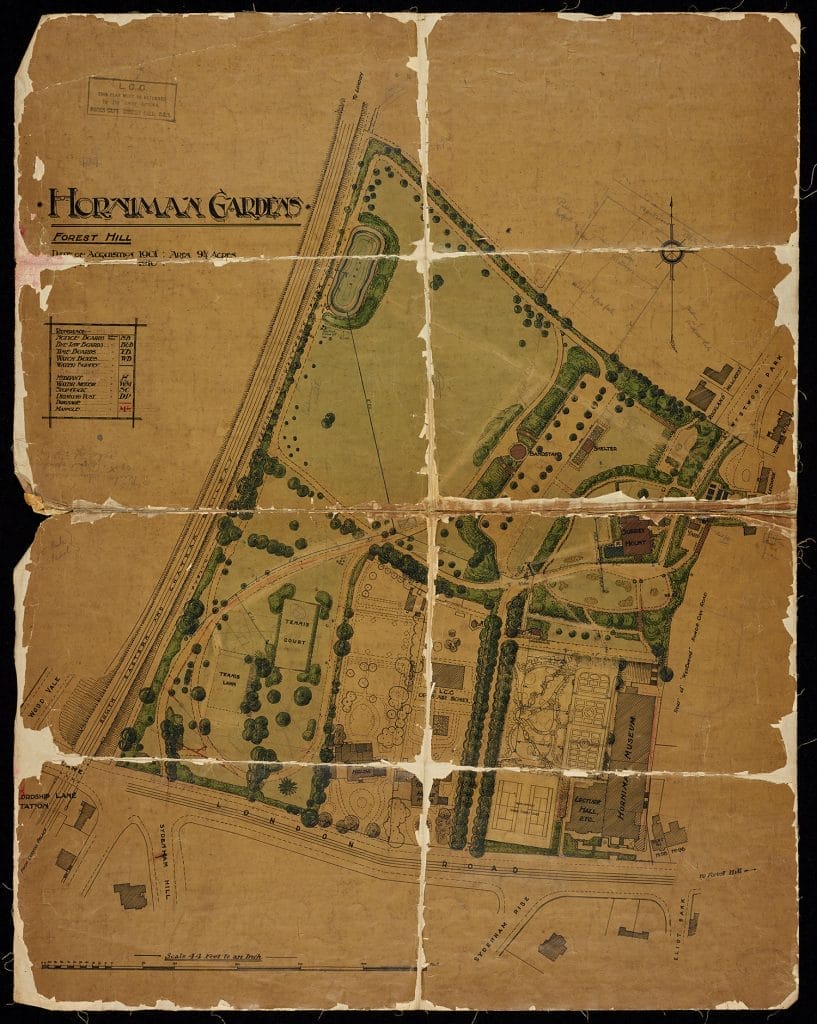
The Horniman Gardens as they would have been in 1901
In some places, boating ponds were large enough for full size boats to be taken out, like Hyde and Regents parks. Others, like the Horniman, were smaller for model boats alone.
It was seen as philanthropic for the wealthy – like Frederick Horniman – to give back in ways like this. By creating the Boating Pond he was providing a free leisure space, that promoted competition and skill in the outdoors.
Our old Boating Pond was part of the original grounds of Surrey Mount, the home the Horniman family moved to in 1889, when the Surrey House Museum opened on the site of the Horniman.
Here you can see a group of children playing by the pond, with a boat being pushed out further back. Behind them you can see the railway, which was still running to Crystal Palace at the time.
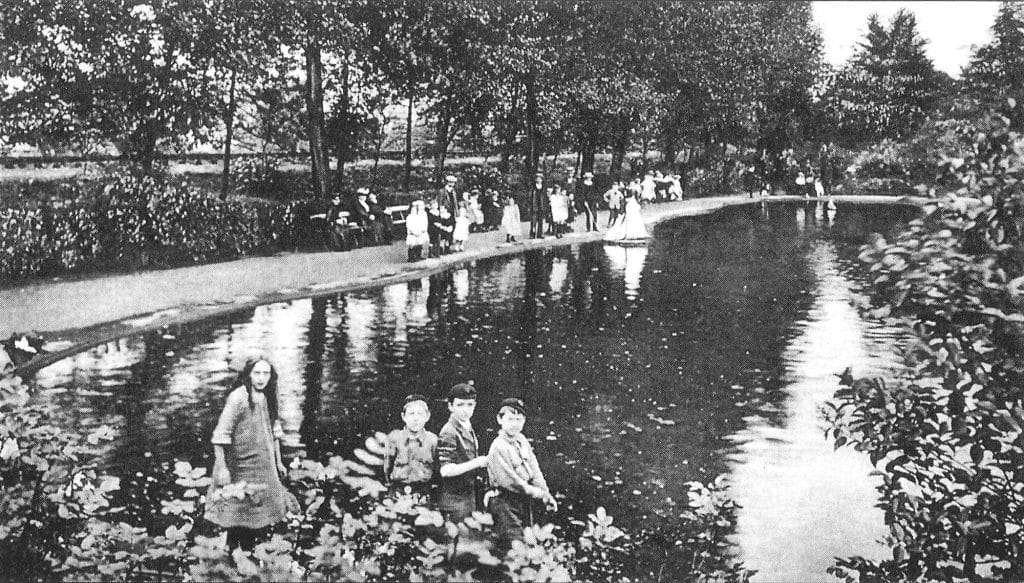
Horniman Boating Pond, as it was when it first opened
Surrey Mount grounds were public gardens from 1895, and the area we call the Meadow Field was used by school children.
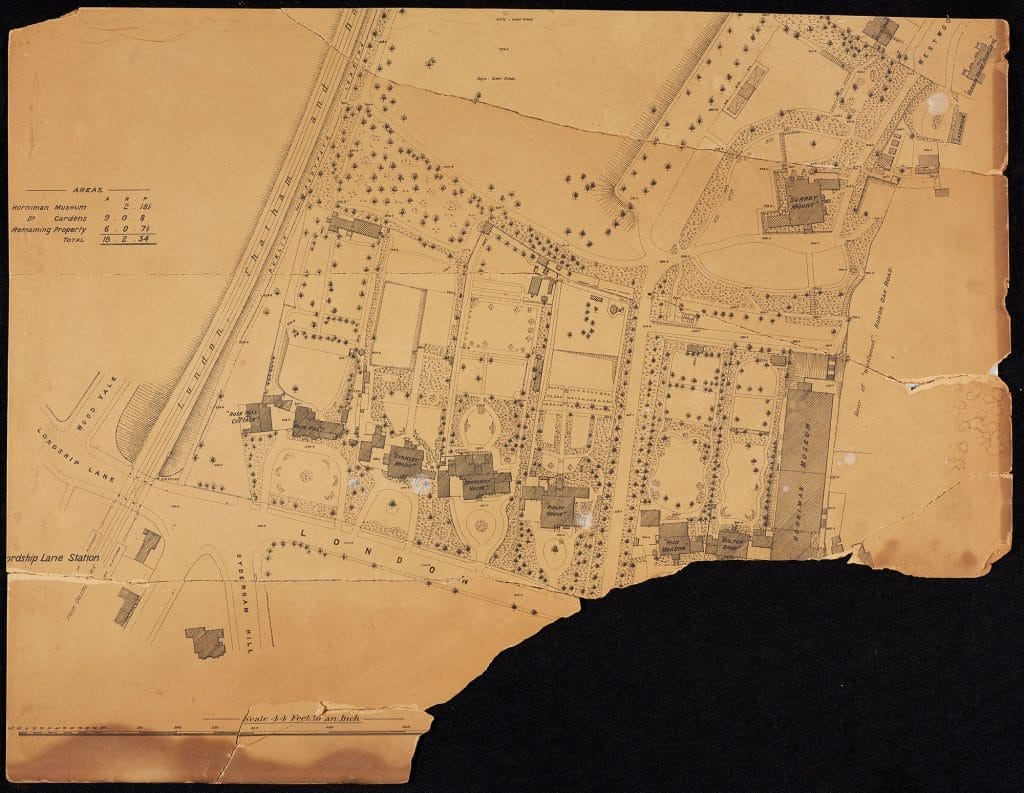
Map showing the large Meadow Field was separated into a boys and girls sections, close to where the pond was
Our Boating Pond has changed over the years. It was reconstructed in the 1920s, making it slightly larger, drained in 1957 and resurfaced in the 1960s when goal posts were added.
However, it was under-utilised for play (often due to flooding), making this corner of the Gardens underused compared to the rest of the site. Now, the original idea behind it has been restored – recreation for visitors to the Horniman, as an area of play.